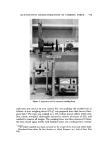
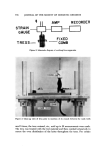
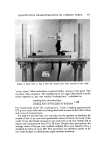
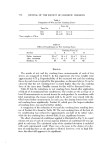
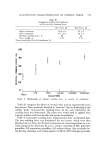
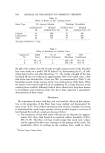
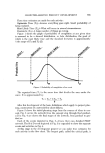
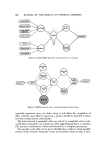
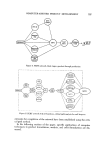
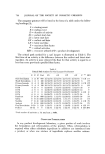
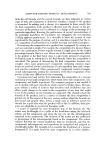
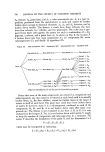
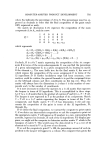
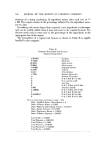
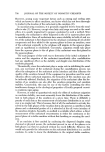
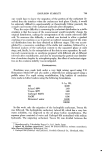
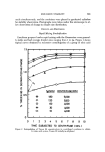
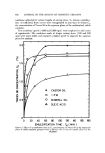
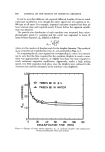
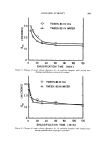
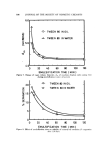
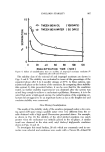
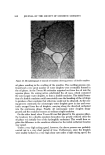
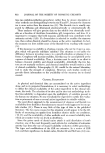
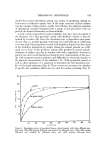
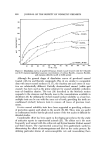
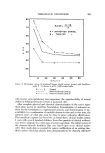
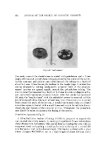
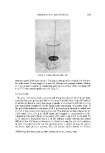
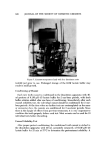
774 JOURNAL OF THE SOCIETY OF COSMETIC CHEMISTS 9•). Over the past few years, investigations of the surface of hair (3) and of various properties of hair due to the nature of this surface have also been re- ported. Schwartz and Knowles, utilizing techniques developed during studies of wool, measured the friction of single hair fibers against a variety of surfaces (4). Nagai and coworkers measured hair-hair friction (5). In another study, reported by Waggoner and Scott (6), the amplified audible noise resulting from combing was used as a measure of conditioning. Each of these papers described investigations of only one of the parameters involved in combing. The actual force of combing, however, would be ex- pected to depend upon a number of interrelated factors which would deter- mine the nature and extent of the fiber-fiber and fiber-comb interactions. The method described in this report was developed to study the total of all of these interactions, i.e., the force needed to comb a hair tress. EXPERIMENTAL A photograph of the apparatus used to measure the combing force is shown in Fig. 1. Figure 9. is a simplified schematic diagram thereof. A strain gauge transducer* (maximum range = +-680 g*) was attached to .a lift mechanism operated by a synchronous motor and positioned directly above a rigidly fixed comb. A hair tress of the proper weight was prepared by attaching the test •air at the root end to a stainless steel dowel with a rubber band. Before the measurement, the dowel was placed in a slot, thereby positioning the tress directly below the transducer. A side view of the tress in place with the hair strands not yet in the comb teeth is shown in Fig. 3. The upper por- tion of the tress is supported by a hard rubber bar made of the same material as the comb through which the hair is to be pulled (in this case, the back of another comb was used). The comb was then slowly raised into a horizontal position by gently pushing on the "comb rod" while the hair strands were evenly distributed between the comb teeth ( Fig. 4). With the tress in place, the voltage output from the transducer was nulled electronically and the motor turned on so as to pull the hair through the comb. After less than a second, the force reached a nearly constant value. Although several preliminary experiments showed that a wide variation in the speed with which the tress is pulled through thc comb does not change the mea- sured value of the force, the motor was adjusted so that the tress was being lifted at a rate of 1.5 ram/sec. Either "wet combing force" or "dry combing force" was measured depend- ing on the use conditions of the product or material to be tested. In all cases, *Stratham Instrument Co. of Puerto Rico, Cat. N'J. GI-24-350. tUnits of mass (grams), rather than force (dynes), are used in this paper to represent combing force, since it w, as considered that this would give the reader a better •rasp of the magnitudes of the forces involved in the combing process.

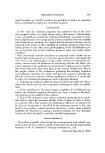
QUANTITATIVE CHARACTERIZATION OF COMBING FORCE 775 Figure 1. Apparatus used to measure combing force each tress was used as its own control. For wet combing, the method was as follows: A tress weighing about 2.75 g* was prepared from dark brown Euro- pean hair.* The tress was washed in a 15% sodium lauryl sulfate (SLS) solu- tion, rinsed, rewashed, thoroughly rerinsed to remove all traces of SLS, and combed to remove all tangles. The combing force was then measured 5 times, the tress rinsed again briefly with distilled water, the combing force remeas- *All weights reported have been corrected for the weight of the dowel and rubber band. •Purchased from either De Meo Brothers or Alfred Klugman, Inc., both of New York City.
Purchased for the exclusive use of nofirst nolast (unknown)
From: SCC Media Library & Resource Center (library.scconline.org)