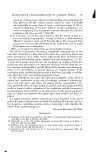
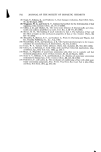
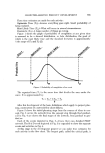
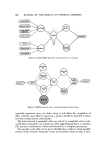
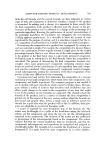
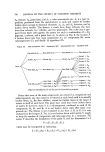
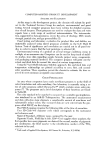
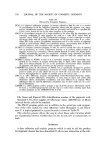
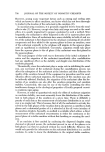
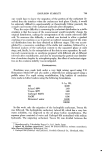
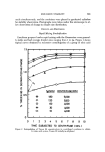
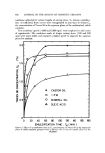
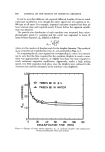
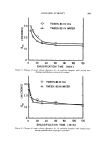
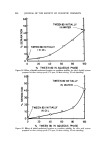
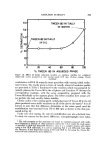
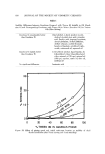
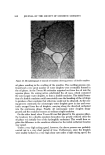
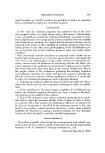
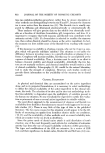
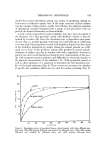
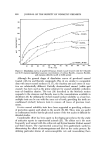
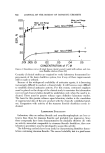
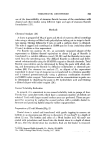
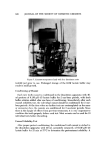
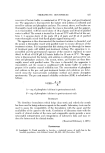
THERAPEUTIC DENTIFRICES 819 eluded that enamel dissolution testing was useless in predicting clinical ef- fectiveness of anticaries agents. One of the major concerns of these authors •vas the number of false positive results. Nevertheless, the judicious selection of operational variables integrated into a group of test procedures (14) can provide the desired information on bioavailability. A wide variety of powdered enamel solubility tests have been described in the literature (15). One procedure useful with dentifrice slurries is that de- scribed by Gershon (16). Since the dissolution rate is dependent upon parti- cle size (Fig. 1), powder passing a 125-mesh sieve and held up on a 225-mesh sieve was used. Enamel powder treated with dentifrice slurries was then freed of the dentifrice ingredients by simply rinsing the enamel powder on a 225- mesh sieve. Some of the problems arising with powdered enamel include: reduction of surface area due to reaction with active ingredient, decrease in particle size due to add dissolution during the test, contamination of the pow- der with treatment reaction products, and difficulties in observing changes in the physical characteristics of the substrate (15). With powdered enamel as well as other substrates, it is important to determine the full dissolution pro- file of all treated substrates (Fig. 2). These curves are necessary for selection of spedfie test conditions which may be used for routine screening (Pig. 8). 24 2O "' 16 o 12 10 20 30 40 50 60 70 80 90 MINUTES Figure I. Dissolution curves of powdered human dental enamel with three different par- ticle sizes, (100-200) passing 100-mesh and retained by 200-mesh sieve, (200-325) passing 200-mesh and retained by 325-mesh sieve, and (325) passing 325-mesh sieve

820 JOURNAL OF THE SOCIETY OF COSMETIC CHEMISTS 3O 22 o IO • ...,,..a• u NTRE AT E D ./o'"'•' SnCIs,- ENAMEL . .,,.•' X..,,. •' • ........ •NaF - ENAMEL • • .•' .-Z ................ / -- •SnF• - ENAMEL • ,x•. ' .X Z -• •WATER - BLANK X'•.Z' • ........... tO 20 30 40 70 80 90 I00 I10 50 eO MINUTES 120 Figure 2. Dissolution curves of powdered human dental enamel treated with 0.1% fluoride and 0.3% stannous equivalent aqueous concentrations o[ sodium fluoride, stannous fluoride, and stannous chloride in pH 4, 0.2M acetate Although the general shape of dissolution curves of powdered enamel treated with tin and fluoride compounds (Fig. 4) are similar to comparable data with intact enamel surfaces (9, 17), the reaction rate and extent of reac- tion are substantially different. Partially demineralized enamel (white spot enamel) has been used as the prime substrate for enamel solubility reduction tests of dentifrice slurries. The test (18) described in the Methods section responds to the stannous and fluoride ions in the concentrations available in dentifrices (9). By utilizing the etched enamel surface solubility as a base line, multiple tests can be run with the same set of teeth, providing the teeth are conditioned (etched) between tests to remove all traces of previous treat- ments. In vivo enamel solubility tests have been suggested as providing evidence of protection against acid attack in the mouth (19, 20). These tests are useful in confirmatory studies but the physical nature of the test makes it difficult for detailed studies. Considerable effort has been spent in developing procedures for the study of anticaries agents in experimental animals (21). The albino rat is the most frequently used animal with the cotton rat and Syrian hamster distinct second and third choices. The experimental animal has been particularly useful in determining the effect of microorganisms and diet on the caries process. By utilizing particular strains of caries-susceptible rats and innoculating them
Purchased for the exclusive use of nofirst nolast (unknown)
From: SCC Media Library & Resource Center (library.scconline.org)