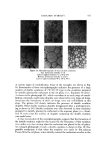
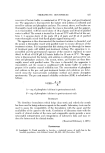
THERAPEUTIC DENTIFRICES 823 ure of the bioavailabilty of stannous fluorde because of the correlations with clinical and other studies using different types and ages of stannous fluoride formulations (23). Methods Chemical A,mlysis (24) A slurry is prepared of 10 g of paste and 30 ml of water in a 50-ml centrifuge tube using a stirring rod fitted with polyethylene tubing cut in strips to facili- tate mixing. Stirring follows for 2 min or until a uniform slurry is obtained. The tube is capped and centrifuged at 15,000 rpm for 5 min (total time about 15 min.) to obtain a clear supernatant. For fluoride ion analysis (6, 13), an accurately measured aliquot of the supernatant or dilution thereof equivalent to about 1-2 /xg of fluoride is transferred to a suitable diffusion vessel (25, 26) and the fluoride ion is sepa- rated from the interfering ions. The diffused fluoride is collected and deter- mined colorimetrically using the SPADNS reagent or fluoride electrode. Total fluoride concentration can be determined by fixing the paste with alkali, ash- ing, and determining the fluoride by diffusion-colorimetric or electrode pro- cedure (24). For stannous ion analysis (7), an aliquot of the supernatant equivalent to about 3 mg of stannous ion is transferred to a titration assembly and is titrated potentiometrically using a platinum combination electrode and 0.005N iodate reagent. Total stannous and tin concentrations in paste can be determined by dissolving the paste in 6N hydrochloric .acid and fitrating a diluted aliquot with iodate reagent (24). Enamel Solubility Reduction In general, it is convenient to run enamel solubility tests in groups of four. Twenty-four caries-free teeth which have a minimum number of defects are selected. Teeth with larger enamel surface areas are preferred. These are pre- pared for mounting by scaling the enamel surface with a suitable dental in- strument and pumicing lightly using the rubber cup procedure. Preparation of Tooth Mounts (Fig. 5) Dental stone is mixed and transferred with gentle tapping to remove air bubbles to an aluminum pan (55 mm in diameter x 17 mm deep*) to a depth of about 12 min. The bottom and sides of a 50-ml beaker (o.d. 42 mm)* are coated with petrolatum and forced into the dental stone to a depth of about 10 mm. After the dental stone has reached a final set, the beaker is removed. *S•5725, Sargent-Welch Scientific Co., Skokie, Ill. 60076. ?No. 1000, Corning Glass Works, Corning, N.Y. 14830.

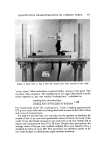
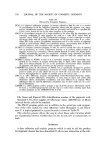
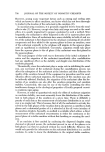
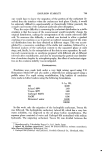
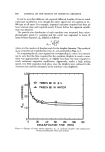
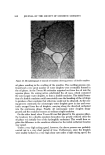
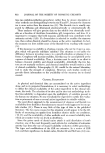
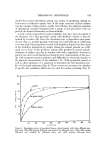
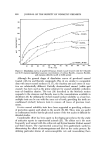
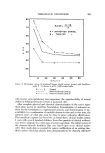
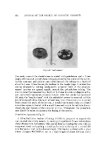
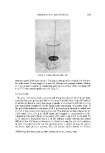
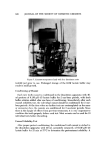
824 JOURNAL OF THE SOCIETY OF COSMETIC CHEMISTS ß :.:'. ..• '.• ,---? ........ .:,,: . • 'I• ß :.• .{ :. • ":!!"'"::: *•" "' - '"'¾'! "•"• ' ¾% ' ,•...•, ..... ?..• •.... .. Figure 5. Tooth mount The cavity area of the dental stone is coated with petrolatum and a 5-ram length of 10-ram i.d. polyethylene tubing is placed in the center of the cavity. Acrylic monomer and polymer are added around the tubing to a depth of about 3-4 mm. When the acrylic hardens to the dough stage, 6 carious-free crowns obtained by cutting mechanically extracted teeth at the cemento- enamel junction are spaced equally around the polyethylene tubing. The crowns should be immersed to a depth of 1-2 mm to achieve adequate adhe- sion and overall uniformity of crown height. After the acrylic has hardened (20 rain), the "acrylic donut" with the embedded crowns is removed and the acrylic is coated with a thin layer of hard inlay wax. The excess wax is carved from around the necks of the crowns. A suitable instrument such as a dental excavation spoon is heated with a small flame and wax is flowed into the oc- clusal pits and fissures of the mounted crowns. Throughout the procedure, care should be taken to minimize the drying of the crowns. Dissolution Apparatus (Fig. 6) A 180-ml tall form beaker (Coming #1140) is prepared to support the wax-covered donut-like mounts by making 4 equidistant 5-mm indentations about 30 mm from the bottom. This can be done by heating the area with an oxygen-air torch and pushing a metal probe such as the tip of a rat tail file into the beaker wall to the desired depth. This beaker is fitted with a glass stirrer (Sargent #5-76667-A) cut to a shaft length of about 130 mm and a
Purchased for the exclusive use of nofirst nolast (unknown)
From: SCC Media Library & Resource Center (library.scconline.org)