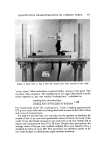
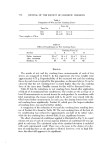
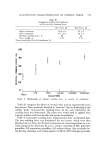
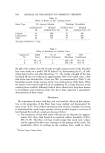
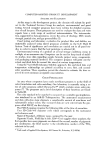
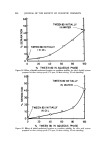
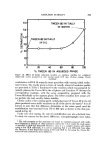
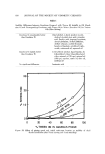
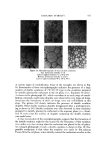
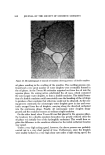
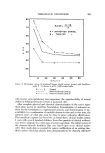
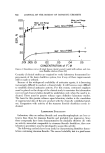
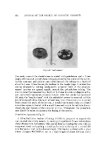
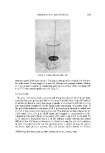
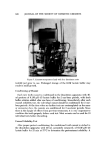
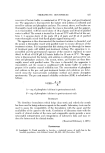
THERAPEUTIC DENTIFRICES 827 reservoir of lactate buffer is maintained at 37øC for pre- and post-treatment use. The apparatus is disconnected the lactate etch solution is collected and saved for calcium and phosphate analyses. The mount, stirrer, and beaker are thoroughly rinsed with purified water, the rinse is discarded, and the apparat- us is reassembled. A 20-ml mixed slurry of 10 g of paste and 30 ml of purified water is added. The mount is treated for 5 •nin at 37øC with 20 ml of the uni- form 1:3 aqueous slurry of the paste (10 g of paste and 30 ml of purified water thoroughly mixed with flared plastic tipped stirring rod). The apparatus is then disconnected, the treatment mixture is discarded, and the mount is thoroughly rinsed with purified water to remove all traces of the treatment mixture. It is important that this rinsing step be thorough for traces of treatment paste will inhibit post-treatment etching. The apparatus is re- assembled and the pretreatment exposure of the mount is repeated, in exact detail, to 40 ml of O.1M pH 4.5 lactate buffer for 15 min at 37øC. The appa- ratus is disconnected the lactate etch solution is collected and saved for cal- cium and phosphate analyses. The mount, stirrer, and beaker are then thor- oughly rinsed with purified water. The rinse is discarded, the apparatus is reassembled, and the mount is conditioned with lactate buffer in order to prepare it for another enamel solubility test. The concentration of phosphate and calcium in the pre- and post-treatment lactate etch solutions are deter- mined using the Lucena-Conde molybdate method and atomic absorption spectrometry. The per cent enamel solubility reduction (ESR) is calculated as follows: A-B % ESR--- A A = mg of phosphate/calcium in pretreatment etch B = mg of phosphate/calcium in post-treatment etch SUMMARY The dentifrice formulation which helps clean teeth and refresh the mouth has been used to bring anticaries agents to the mouth. Laboratory tests can be used to assess the compatibility of the formulation with the agent and the availability of the agent to the teeth. Correlation of laboratory tests with the results of clinical studies of the same and comparable agents permits a more meaningful interpretation and extrapolation of laboratory data and may re- duee the future need for clinical studies. ( Received February 1, 1973) REFERENCES (1) Lundquist, C., Tooth mortality in Sweden, a statistical survey of tooth loss in the Swedish population, Acta Odontol. Scand., 25, 289-322 (November 1967).

828 JOURNAL OF THE SOCIETY OF COSMETIC CHEMISTS (2) Socransky, S. S., The use of saliva and plaque tests in evaluating anticaries thera- peutic agents, Proc. Conf. Clin. Testing Cariostatic Agents, American Dental Associa- tion, Chicago, II1., 1972, p. 2. (3) Proc. Conf. Clin. Testing Cariostatic Agents, American Dental Association, Chicago, II1., 1972. (4) Pit and fissure sealants, Report of Council on Dental Materials and Devices and Coun- cil on Dental Therapeutics, J. Amer. Dent. Ass., 82, 1101 (1971). (5) Accepted Dental Therapeutics 1971/1972, Council on Dental Therapeutics, Ameri- can Dental Association, Chicago, Ill., 1971. (6) Hefferren, J. J., Qualitative and quantitative tests for stannous fluoride, J. Pharm. Sci., 52, 1090 (1963). (7) Heiferten, ]. ]. Zimmerman, M., and Koohler, H. M., Reactions of stannous flouride with some inorganic compounds, J. Dent. Res., 45, 1395 (1966). (8) Cooley, W. E., Reactions of tin (II) and fluoride ions with etched enamel, Ibid., 40, 1199 (1961). (9) Cooley, W. E., Applied research in the development of anticaries dentifrices, ]. Chem. Edu½., 47, 177 (1970). (10) Cooley, W. E., Availability to enamel of tin (II) ion as altered by complcxing, pre- sented at I.A.D.R. Meeting, Toronto, Canada, July 1965, Abstract No. 282. (11) Mellberg, J. 1t, Use of uptake tests for evaluation of anticaries agents, Pro½. Conf. Clin. Testing Cariostatic Agents, American Dental Association, Chicago, Ill., 1972, pp. 26-30. (12) Pearlman, R., Heiferten, J. J., and Lyon, H. W., Determination of tin in enamel and dentin by atomic absorption spectroscopy, J. Dent. Res., 49, 1437 (1970). (13) Wharton, H. W., Isolation and determination of microgram amounts of flouridc in materials containing calcium and orthophosphate, Anal. Chem., 34, 1296 (1962). (14) Brudevold, F., and McCann, H. C., Enamel solubfiity tests and their significance in regard to dental caries, Ann. N.Y. Acad. Sci., 153, 20 (1968). (15) Gray, ]. A., A critique on enamel dissolution testing for anticariogenic agents, Conf. Clin. Testing Carlostatic Agents, American Dental Association, Chicago, Ill., 1972, pp. 18-25. (16) Cershon, S. D., Neiditch, O. W., and Lee, R. H. C., The effect of flourides on solubil- ity of powdered enamel, Proc. Sci. Sect. Toilet Goods Ass., 28, 14 (1957). (17) Gray, J. A., Acid dissolution rate of sound and white-spot enamel treated with tin (II) and flouride compounds, J. Dent. Res., 44, 493 (1965). (18) Holliday, W. M., Schweizer, H. C., and Norris, P. E., U.S. Patent, 3,105,798 (October 1, 1963). (19) Eigen, E., Volpe, A. R., Lapeyrolerie, F. M., Weiss, S., and King, W. J., An in vivo technique for determining the effect of agents on enamel solubfiity in human subiects, Arch. Oral Biol., 7, 459 (1962). (20) Miihlemann, H. R., and Wolgensinger, F., In vivo reduction of enamel solubfiity in children using an organic fiouride dentifrice, Helv. Odontol. Acta, 3, 35 (1959). (21) Johnsen, E., The use of experimental animals in the screening of anticaries agents, Pro½. Conf. Clin. Testing Cariostatic Agents, American Dental Association, Chicago, Ill., 1972, p. 7. (22) Council on Dental Therapeutics, Evaluation of Crest Toothpaste, ]. Amet. Dent. Ass., 61, 272 (1960). (23) Zached, W. A., Clinical evaluation of an aged stannous fluoride-calcium pyrophos- phate dentifrice, ]. Canad. Dent. Assn., 4, 155-7 (1972). (24) Heiferten, ]. J., Laboratory analysis of toothpastes containing anticaries agents, I. So½. Cosmet. Chem., 18, 135-40 (1967). (25) Nicholson, C. R., Multicell diffusion trays for determination of inorganic fluoride in •hysiological materials, Anal. Chem., 38, 1966-7 (1966). (26) Rowley, R. ]., and Farrah, C. H., Diffusion method for determination of urinary fluoride, Amer. Ind. Hgg. Ass. ]., 23, 314 (1962).
Purchased for the exclusive use of nofirst nolast (unknown)
From: SCC Media Library & Resource Center (library.scconline.org)