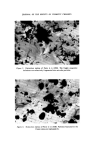
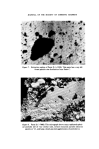
J. Soc. Cosmet. Chem. 26 477-483 (1975) ¸ 1975 Society of Cosmetic Chemists of Great Britain The examination of particulate inclusions in toothpaste, by freeze-fracture, replication and transmission electron microscopy W. B. DAVIS* and A. C. MACDONALD$ Synopsis--ELECTRON MICROSCOPIC techniques have been adapted to permit an examina- tion of the size, distribution and state of solid particles, and to reveal heterogeneities in the liquid phase or phases, within a formulated TOOTHPASTE as it is extruded from the TUBE. Solid particles are included in the formulations of toothpastes to assist in the cleaning and polishing actions of toothbrushing, to improve the rheological properties of the extruded strip of paste, and, in some cases, to enhance dispersion of the product in the mouth. The performance of a toothpaste can be greatly affected by the size, state, and distribution of such solid particles at the time of use. Subsequent to extensive research into the tribological properties of dentifrices, a rapid procedure for their examination in situ was required. The examination of the particles prior to incorporation into toothpastes and after extraction from the complete toothpaste creates no particular problem. The clean particles can be examined directly as dry mounts by both transmission and scanning electron microscopy. The behaviour of the particles in the complete toothpaste cannot be deduced from such studies the fragmentation, dispersion, and coating of the particles 'in the tube' must be detected by other means. * Beecham Products Research Department, Applied Research and Evaluation Laboratories, Randalls Road, Leatherhead, Surrey. , Chemotherapeutic Research Centre, Beecham Pharmaceutical (Research Division), Brockham Park, Betchworth, Surrey. 477

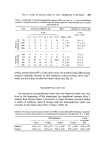
478 JOURNAL OF THE SOCIETY OF COSMETIC CHEMISTS Gels and gums cannot be directly examined in electron-beam equipment because the high vacuum and the interaction of the electron beam with the specimen lead to calamitous distortions. There is a possibility that the un- coated (i.e. lacking a vacuum-deposited electrically conducting and/or secondary electron-emitting coating) frozen toothpaste could be examined in the scanning electron microscope, as and when an efficient freezing-stage becomes available. In this case a fresh fracture-face, possibly cleaved actually in the microscope's specimen chamber, would be the most suitable area for examination. Such a fracture-face may be examined by replication for the transmission electron microscope. The technique is known as 'freeze, fracture and replication' (freeze-fracturing) and is used in conjunc- tion with 'etching' (freeze-etching), on biological material. The method described below was applied to a range of toothpastes covering a wide spectrum of liquid and solid phases. The main feature of this method is that it can be used to study the conditions of various com- ponents of toothpastes under exactly the same conditions as they would be applied to the teeth during normal usage. Thus, phenomena that were previously impossible to study were examined, for example, the distribution of solid and liquid components, and the deterioration of the structure of solid particles caused by formulation stresses and long term storage. Examples considered in this paper are categorized in Table I, according to their appearance and types of solid particles. Table I. Proprietary toothpastes and the proposed British Reference paste studied by the freeze-fracturing technique, listed in descending order of abrasivity with respect to dentine Paste code Solid constituent Optical properties British Reference (BR) Chalk White, opaque A Chalk White, opaque B Silica Pink, clear C Silica Pink, clear D Silica Pink, clear E Polymer spheres White, opaque METHOD This procedure utilizes an Edwards High Vacuum freeze-etch module mounted upon an Edwards El2 E4 vacuum coating unit. Equivalent results
Purchased for the exclusive use of nofirst nolast (unknown)
From: SCC Media Library & Resource Center (library.scconline.org)