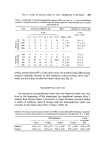
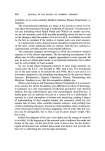
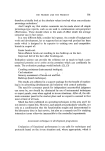
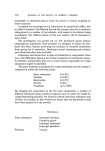
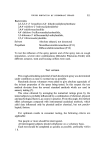
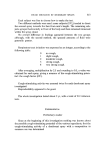
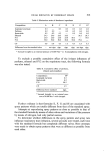
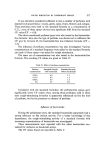
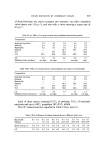
COUGH IRRITATION BY DEODORANT SPRAYS 519 of these formulae was used to prepare two aerosols' one with a standard valve (spray rate 1.0 g s-•), and one with a valve ensuring a spray rate of 0.5 g s -•. Table VI (a). Effect of varying solvents and propellants (bactericide present) Composition: lsopropyl myristate 0.3 0.3 0.3 0.3 0.3 Perfume 0.2 0.2 0.2 0.2 0.2 Bactericide 0.2 0.2 0.2 0.2 0.2 Ethanol -- -- 24.3 39.3 39.3 Fll -- 79.3 25.0 -- 50.0 F12 99.3 20.0 50.0 60.0 10.0 CF 5.0 5.5 6.0 5.0 3.5 Difference from standard not sign. not sign. -- not sign. sign. Table VI(b). Effect of varying solvents and propellants (in absence of bactericide) Composition: [sopropyl myristate 0.3 0.3 0.3 0.3 0.3 Perfume 0.2 0.2 0.2 0.2 0.2 Bactericide ..... Ethanol -- -- 24.5 39.5 39.5 Fll -- 79.5 25.0 -- 50.0 F12 99.5 20.0 50.0 60.0 10.0 CF 1.0 2.0 1.5 1.5 1.5 Difference from Formula D not sign. not sign. -- not sign. not sign. Each of these sprays contained 0.2•o of perfume, 0.3• of isopropyl myristate and up to 100• propellant (F1 l/F12: 60/40). The CF values found are reported in Table VII(a) and (b). Table VII(a). Influence of ethanol concentration at different spray rates Bactericide 0.1 0.1 0.1 0.1 0.1 0.1 0.1 0.1 0.1 0.1 0.1 0.1 Ethanol 3.0 3.0 6.0 6.0 12.0 12.0 25.0 25.0 50.0 50.0 Spray rate (g s -•) 0.5 1.0 0.5 1.0 0.5 1.0 0.5 1.0 0.5 1.0 0.5 1.0 CF 3.0 3.0 4.5 4.5 4.0 4.0 4.0 4.5 4.5 4.0 3.0 2.5

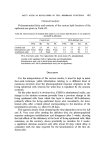
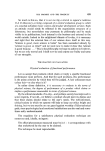
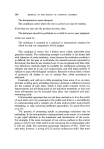
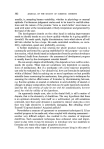
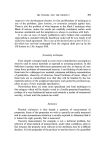
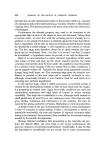
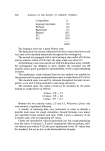
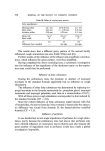
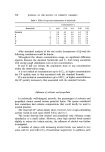
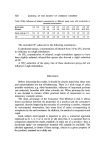
520 JOURNAL OF THE SOCIETY OF COSMETIC CHEMISTS Table VII(b). Influence of ethanol concentration at different spray rates with bactericide at increased concentration Bactericide 0.2 0.2 0.2 0.2 0.2 0.2 0.2 0.2 0.2 0.2 0.2 0.2 Ethanol 3.0 3.0 6.0 6.0 12.0 12.0 25.0 25.0 50.0 50.0 Spray rate(gs -x) 0.5 1.0 0.5 1.0 0.5 1.0 0.5 1.0 0.5 1.0 0.5 1.0 CF 4.5 4.0 6.5 6.0 6.0 6.5 6.0 6.5 6.0 5.5 3.5 3.5 The recorded CF values led to the following conclusions: In deodorant sprays, concentrations of ethanol from 3.0 to 25•o showed no influence on cough stimulation. At 50•o concentration of ethanol, cough stimulation appears to have been slightly reduced ethanol-free sprays also showed a slight reduction of CF. A 50•o reduction of the spray rate of these deodorant sprays did not influence cough stimulation. DISCUSSION Before discussing the results, it should be clearly stated that these tests and measurements are not all-embracing. There is a wide range of other possible variations, e.g. other bactericides, influence of important perfume raw materials, formulae with other solvents, etc. When planning the tests, it was decided to remain within practical limits of importance to con- temporary cosmetic science. The main advantage of the Consumer Test Method is that it allows direct correlation between the properties of a product and the consumer's appraisal, thereby bypassing the necessity of converting a number, obtained by instrumental observation, into some kind of index corresponding to acceptance by the end consumer. In addition, the method is inexpensive and rapid. Each subject interrogated is expected to give a numerical appraisal expressed as 0, 1, 2, 3 or 4. As he or she does this, it is essential that no comparison material be made available in daily use of a product--here a deodorant spray--no comparison material will actually be available. The absolute appraisal, in terms of these ratings, relates to a given property of the product, assessed as in daily use.
Purchased for the exclusive use of nofirst nolast (unknown)
From: SCC Media Library & Resource Center (library.scconline.org)