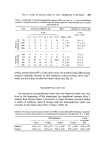
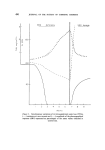
COUGH IRRITATION BY DEODORANT SPRAYS 511 Bactericides 2,3,5,2',3',5' hexachloro-6,6' dihydroxydiphenylmethane 2,4,4' trichloro-2' hydroxydiphenylether 3,4,4' trichlorocarbanilide 4,4' dichloro-3-trifluoromethylcarbanilide, 3,5-dibromo-3' trifluoromethyl-salicylanilide, 2,5,4' tribromosalicylanilide. Solvent Absolute ethanol, not denatured Propellant Monofluorotrichloromethane (F 11) Difluorodichloromethane (F12) To test the influence of the spray pattern and of the spray rate on cough stimulation, several valve combinations (Deutsche Pr//zisions-Ventil) with different actuator, stem and housing orifices were used. TEST METHOD The cough-stimulating potential of each deodorant spray was determined under conditions as near to normal use as possible. Randomly chosen volunteers were asked to give absolute appraisals of the irritant properties of the spray being tested. In this respect the test method deviates from the several standard methods which are used in sensory testing (7). The value obtained by averaging the numerical ratings given by the tested subjects is probably influenced by a combination of chemical, physical and psychological factors, as occurs in practice. From this angle, the method offers advantages compared with instrumental analytical methods, which yield data influenced only by physical and/or chemical, but not psycho- logical, factors. For optimum results in consumer testing, the following criteria are applicable: Ten people or more should be interrogated. All interrogated subjects should collaborate on a voluntary basis. Each test should be completed as quickly as possible, preferably within lh.

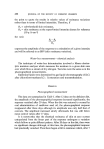
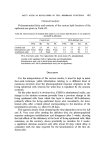
512 JOURNAL OF THE SOCIETY OF COSMETIC CHEMISTS The assessment procedure for an individual subject should be as brief as possible, avoiding complicated or long and tedious procedures Not more than two tests should be carried out daily with a given subject in the panel and the interval between two successive tests should not be less than 4 h. Each subject should be clearly told what characteristics of the test pro- duct should be considered. The way in which the testing procedure is carried out should be chosen individually by the subject. The investigator should ensure that subjects cannot influence each other's opinion. During each test, each subject should give an absolute appraisal about a given feature no comparison material whatever should be available at any time during the test. The subject's appraisal about the feature being tested should be ex- pressed by a rating: 0, 1, 2, 3 or 4 (4 = greatest effect, whether good or bad). To find out if there is any significant difference between two test series, the Wilcoxon's Q-test may be used, with a one-side overrun probability of 5%. For each consumer test, the ratings obtained were averaged and multi- plied by 2.5. The figure so obtained was called the factor for the aspect being investigated. (Minimum value 0, maximum value 10.) The factor on a 0-10 scale gave a figure suitable for ready interpretation of cough stimulation. After statistical analysis by the Q-test it became evident that a difference of 1 point between two factors was significant. All factors, therefore, were rounded to 0.5. Observations concerning the application of the test method to deodorant spray cough stimulation were: The cough stimulation test panel included 11 women and 21 men, aged between 18 and 45. No difference appeared bet•veen appraisal by men and by women, or between age groups. Two sprays were investigated each day, one in the morning and one in the afternoon. Hardly any difference appeared between morning and after- noon tests.
Purchased for the exclusive use of nofirst nolast (unknown)
From: SCC Media Library & Resource Center (library.scconline.org)