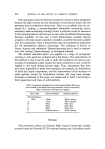
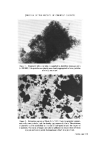
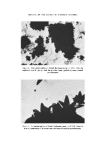
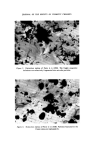
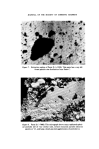
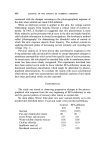
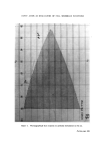
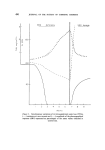
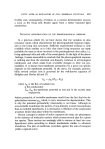
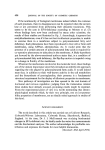
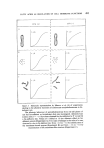
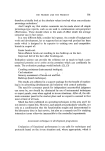
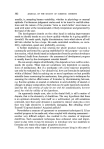
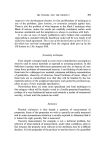
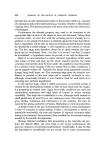
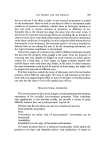
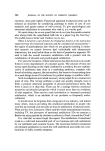
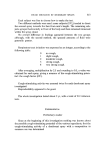
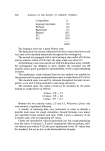
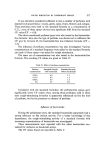
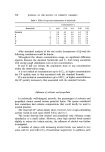
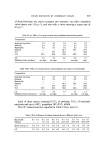
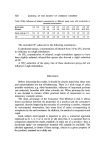
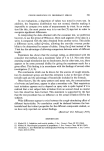
JOURNAL OF THE SOCIETY OF COSMETIC CHEMISTS Figure 7. Extraction replica of Paste D ( x 2300). This paste has a very dif- ferent particle size distribution from Paste C. Figure 8. Paste E ( x 7000). This micrograph shows many replicated spheri- cal particles (all of very similar size), several extracted particles (electron opacity at 'e'), and large, closely-packed agglomerates of particles (c).

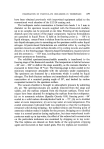
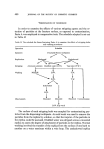
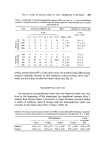
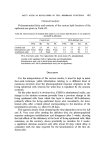
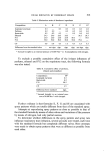
EXAMINATION OF PARTICULATE INCLUSIONS IN TOOTHPASTE 483 measurable, but detrimental, factor. The pastes examined in this paper are, nevertheless, ranked in order of decreasing abrasivity in Table I.* Conclusions The freeze fracture and replication method can be used for a wide variety of toothpastes, and gives, in less than 1 h, a realistic representation of the morphology of solid and liquid phases present in a strip of toothpaste as extruded from the tube. With practice such micrographs can be used to categorize pastes into classes of likely performance. REFERENCES (1) Bull, W. H., Callender, R. M., Pugh, B. R. and Wood, G.D. The abrasion and cleaning properties of dentifrices. Brit. Dent. J. 125 331 (1968). (2) Wilkinson, J. B. and Pugh, B. R. Toothpastes--cleaning and abrasion. J. $oc. Cosmet. Chem. 21 595 (1970). (3) Ashmore, H., van Abbe, N.J. and Wilson, S. J. The measurement in vitro of dentine abra- sion by toothpaste. Brit. Dent. J. 133 60 (1972). * The technique used to measure the abrasivities with respect to dentine is fully described in reference 3.
Purchased for the exclusive use of nofirst nolast (unknown)
From: SCC Media Library & Resource Center (library.scconline.org)