"j. Soc. Cosmet. them., 28, 259-271 (May 1977) •.. :.• Thin-layer chromatography (TLC) of redox reaction products of oxidative hair dyes i':?• MUKUND J. SHAH Gillette Research Institute, Rockville, MD :,??•:: 20852. 5:'. ?!:?: R•dvd a•g•,, 26, •9Z6. P•,•ntd O•,ob• 1 •, 197•,J•i•, AOAC- :•.:: : • SCC Symposium on Cosmetic Analytical Techniques, Washington, D.C. Synopsis OXIDATIVE or permanent HAIR DYES are based on ALKALINE PEROXIDE OXIDATION of PHENYLENEDIAMINE (PDA) or related AROMATIC AMINES. These amines, when oxidJzed alone or in combination with other phenolic and aromatic amino compounds (couplers), yield a mixture of colored oxidation products. This paper describes the use of thin-layer chromatography (TLC) for the qualitative ' analysis of these complex mixtures of oxidation products. Effects of variables including the nature of ad- sorbency, layer thickness, water content, development of chromatograms, and sample application techniques are presented. Scopes and limitations of chromatography for the isolation and the identification of these dyes are discussed. (?•!:!:: !:: INTRODUCTION Permanent hair dyes, which are presently available commercially, are mostly oxidative •?,i!i•: :i dyes which contain 2 main ingredients. One ingredient is a dye precursor, while the :.•.::: ::i!:!• ??::' ------ other ingredient is a developer or oxidizer, usually hydrogen peroxide. The dyeing process involves mixing the dye precursors with the dye developer in an alkaline me- dium generally around pH 9 to 10. The dye precursors and oxidizer diffuse in the hair fibers where chemical reactions leading to color development take place inside the hair fiber. Dye precursors contain 2 main ingredients: primary intermediates and couplers. Primary intermediates used in oxidative dyes are mainly ortho- and para-aromatic aliamines or aminophenols, which are colorless, but, upon oxidation, give colored oxi- dation products. The most commonly used primary intermediates are p-phenylene- diamine (PDA), p-toluenediamine (TDA), and p-aminophenols (PAP).

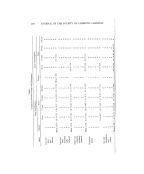
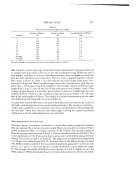
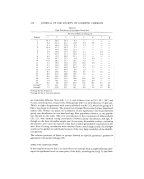
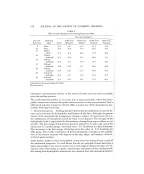
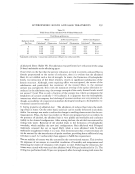
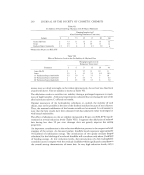
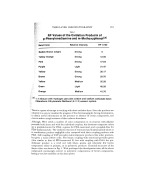
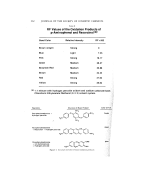
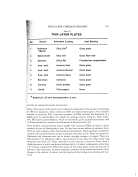
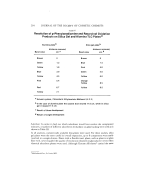
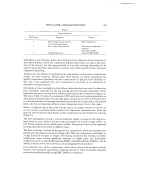
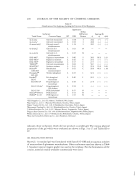
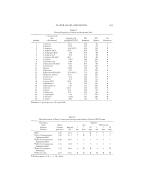
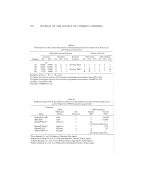
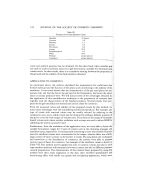
260 JOURNAL OF THE SOCIETY OF COSMETIC CHEMISTS Color couplers are compounds which produce little or no color when oxidized alone in the hair fiber, but which produce new colored species when used in the presence of primary intermediates. These color couplers include m-diamines, m~aminophenols, polyhydric phenols, etc. The most commonly used couplers are resorcinol (R) and 2,4 diaminoanisole (DAA), which when oxidized with p-phenylenediamine give green and blue colored products, respectively, along with many other minor products. When studying these dyes, it is important to ascertain the primary intermediates and couplers used in a particular dye, and secondly, the colored oxidation products formed from the dye precursors with the dye developer, i.e., hydrogen peroxide. To study these aspects, improved methods are needed for the separation and identification of oxidative hair dyes. Much work has been done in developing separation techniques to identify dye inter- mediates and other components present in oxidative hair dyes. These methods include the use of paper chromatography (PC) (1-6), gas chromatography (GC) (7-10), thin- layer chromatography (TLC) (11-19), and/or combinations of these chromatographic techniques (11,16), and other methods (20-23). In order to understand the mechanisms of the color-forming reaction, it is vital to identify the colored species produced during the hair dyeing process. Application of chromatography of the oxida- tion products of primary intermediates alone or in the presence of various couplers .: essential. Chromatography separation of the oxidation products of oxidative hair dyes has been reported (24-31), which emphasizes the importance of understanding the:.:::: redox reaction products of the dye intermediates. In the field of separation methods, chromatography occupies a rather unique pOsition,•)i and TLC provides the best answer to this problem in many cases. This paper describes' 7151 a comprehensive study of TLC of the oxidation products and their application to tire hair dye analysis. It presents the effect of 3 main factors of chromatographic•-:•!i:i! ' separations, i.e., solutes (nature and amount) sorbents (quality and nature, thicknesS?• ' and uniformity, activation and sotrage) and solvent (quality and nature, vapor saturaf!i!i! tion) of the separation of oxidative dyes. Also, an isolation procedure for the desired component of the oxidation mixture afte•)• their separation is shown. This paper should (a) serve as abackground of informatiø:n•'•'i!• for those who would be utilizing this technique for identifying oxidation dye and (b) establish variables of this analytical method to provide the best separation nique for the multicomponent dye product. EXPERIMENTAL AND DISCUSSIONS The use of TLC for oxidative dyes presents 2 specific problems: first is the stability, and second is the problem of closely related structures of the products (Tables I, II). As mentioned previously, 2 of the primary ingredients are matic diamines and polyhydric phenols. The chemical transformation in the react• system, once initiated, may continue indefinitely. Even the individual fractions iso are self-reactive and/or react with each other and with foreign agents such as air, rn ture, sunlight, proteins, etc. which are manifested by several types of reactions in state or in solution. ,':•i•
Purchased for the exclusive use of nofirst nolast (unknown)
From: SCC Media Library & Resource Center (library.scconline.org)