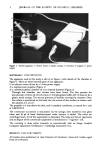
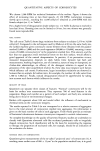
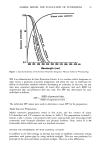
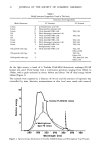
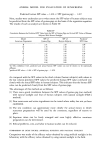
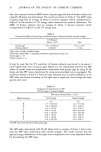
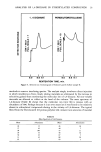
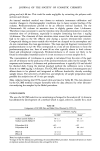
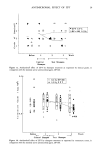
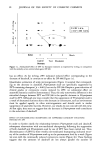
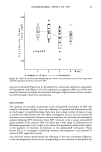
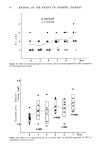
2 JOURNAL OF THE SOCIETY OF COSMETIC CHEMISTS . 5 Figure 1. Turbine apparatus. 1--electric motor 2--plastic syringe 3--chamber 4--support, 5--power supply. MATERIALS AND METHODS The apparatus used in this study is shown in Figure 1 with details of the chamber in Figure 2. There are three essential parts of our apparatus: 1) an electric motor driven by a 5 volts power supply 2) a stainless steel propeller (Figure 2) 3) a cylindrical plastic chamber of 2-cm internal diameter (Figure 2). Through this chamber, two cavities have been bored: The first permits the introduction of three ml of 0.1% triton X-100/phosphate buffer pH 7.9 mixture by a plastic sterile syringe. The second prevents air bubbles entering the chamber. Once the turbine is positioned on the body site, the extent of skin surface in contact with the solution is 3.14 cm 2. The propeller is 5 mm above the skin, and in standard conditions, is rotated for ! min at 2,500 R.P.M. The corneocyte suspension is reaspirated via the syringe, then transfered into glass tubes and 50 /xl of basic fuschin/crystal violet mixture is added. The tubes are centrifuged and 2 ml of the supernatant is discarded. The tubes are shaken vigorously and an aliquot of the corneocyte suspension is introduced to "Nageotte" cell. The counting is done either manually or automatically with an Image Analysis Computer: Quantimet 720 (Imanco--Cambridge Instrument Co.). RESULTS AND DISCUSSION All studies were performed on volar forearms of volunteers, males and females, aged from 25 to 60 years.

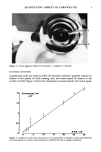
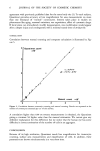
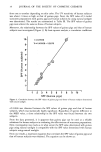
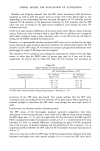
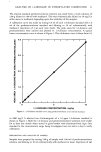
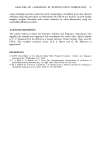
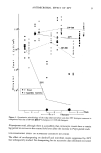
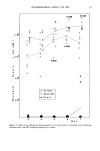
QUANTITATIVE ASPECTS OF CORNEOCYTES 3 2 Figure 2. Turbine apparatus. Detail of the chamber. 1--propeller 2--chamber. STANDARD CONDITIONS A preliminary study was made to define the standard conditions: propeller material (in relation to the quality of cells), rotating time, and motor speed (in relation to the number of cells). Figure 3 shows that numeration increases linearly with motor speed. 10 Z5 2.5 , Corneocytes/cm R.P.M. x 10 • 0 5 10 15 2'0 25 •0 Figure 3. Number of corneocytes extracted per cm • of skin surface in relation to motor speed (R.P.M.) for a fixed period of 1 minute. Arrow indicates the 2500 R.P.M. used in standard conditions.
Purchased for the exclusive use of nofirst nolast (unknown)
From: SCC Media Library & Resource Center (library.scconline.org)