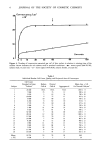
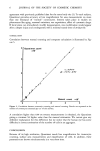
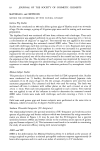
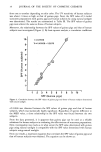
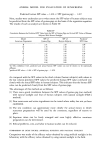
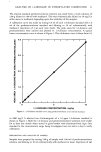
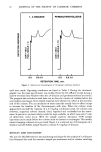
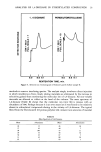
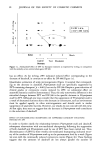
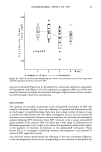
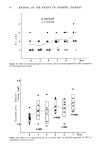
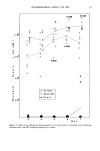
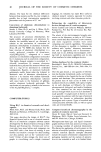
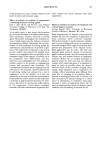
4 JOURNAL OF THE SOCIETY OF COSMETIC CHEMISTS 30 ÷ 2O 10 Corneocytes/cm • X 10 3 Second ' 120 Figure 4. Number of corneocytes extracted per cm 2 of skin surface in relation to rotating time of the turbine. Arrow indicates the one minute used in standard conditions. --O-- motor speed 2500 R.P.M. subject male, 35 years old. --O-- motor speed 350 R.P.M. subject female, 25 years old. Table I Individual Results: Cell Count, Quality, and Projected Area of Corneocytes Cell Count Number/cm2/min Broken Normal Mean Area + S.E. Subject "Turbine" Cells % Cells % Aggregates % for Normal Cells/•m 2 1 24 000 N.D. N.D. N.D. 1 005 _+ 8 2 7 800 15 73 12 990 _+ 12 3 2 820 5 62 33 700 + 18 4 10640 6 77 17 815 + 11 5 6 800 10 68 22 930 + 11 6 6240 8 82 10 814_+ 5 7 1 570 15 60 24 673 + 21 8 2 990 6 75 20 760 + 19 9 3 440 11 58 32 720 _+ 12 10 5 920 11 81 8 946 + 7 11 34 500 7 44 49 1 030 + 7 12 20 100 12 69 19 1 000 + 8 13 12 500 15 70 15 912 + 8 14 31600 7 70 23 807 + 10 15 8 200 8 72 20 900 _+ 12 16 2 880 11 76 13 795 + 13 17 2 600 10 68 22 788 _+ 9 18 2 650 24 70 6 828 + 15 19 11 700 8 79 13 958 m 8 20 16 100 5 78 17 825 + 15 Mean 10 750 10 70 20 860 + S.E. 2 190 1 2 2 24

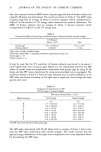
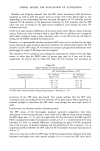
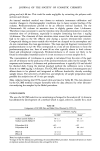
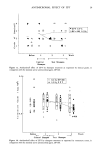
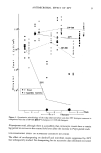
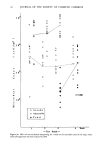
QUANTITATIVE ASPECTS OF CORNEOCYTES 5 We choose 2,500 RPM for technical limitations of the turbine. Figure 4 shows the effect of increasing time at two fixed speeds. At 350 RPM, numeration increases slowly up to 120 sec., reaching the 12,500 cells/cm 2 obtained at 2,500 RPM with this female subject (no. 13 in Table I). For a higher level of desquamation (male subject no. 1 in Table I), plateau is reached in less than 30 sec. Rotating time can be limited to 30 sec, but one minute was generally found more reproducible. CELL COUNT The cell count (Table I) shows large variations from subject to subject (1,570 to 34,500 cells/cm2). Compared to the techniques used by Marks et al (6) on the same body site, the turbine machine gives corneocyte counts between those obtained with the passive method (1,000 to 2,000) and the scrub apparatus (90,000 to 130,000), assuming a mean count of 10,000 corneocytes/cm 2 in the population studied here. This amount, and the fact that our apparatus avoid mechanical stress on the skin surface, would afford a good approach of the natural desquamation. In practice, if no precaution occurs, measured desquamation depends on daily habits (time between last bath and measurements, washing frequencies, use of cosmetics, nature of soap or shampoos), on clothes-skin relationships, on efficacy of the detergent solution in regard to the greasiness of the skin (unpublished results). So, these data may integrate such factors which influence cell counts. Furthermore, larger intersubject variations are observed in humans than in animals. In hairless mice, for example, the number of cells varies from 1,500 to 3,500/cm 2. Finally, natural desquamation should be apprehended by taking into account such factors which influence the results. QUALITY OF CELLS Quantimet can separate three classes of features: "Normal" corneocytes will be the basis for surface area measurements. They represent 70% of total features in the suspension. Shape and number are a pattern of each subject and body site, variations being due to local or environmental changes. Broken cells represent about 10% and would reflect the influence of mechanical or chemical stress on the corneocyte integrity. The results reported in Table I do not correspond to a relative amount of aggregates but to the total amount of corneocytes implied into aggregates. No information is given on the basic number of cells in each aggregate. These would provide an estimate of horizontal cohesiveness between corneocytes compared to vertical cohesiveness. To complete knowledge on the quality of harvested features, studies are undertaken to classify with Quantimet abnormal cells like nucleated parakeratic cells or irregularly shaped corneocytes. Such classification will be the basis for monitoring the response to therapy: the proportion of nucleated cells, for example, should be an indication of the evolution of a lesion. SURFACE AREA OF CORNEOCYTES Quantimet gives measurements of the so-called "projected area" of corneocytes (5). A resulting mean surface area of 860 _ 25/•m = in the population studied here, is in good
Purchased for the exclusive use of nofirst nolast (unknown)
From: SCC Media Library & Resource Center (library.scconline.org)