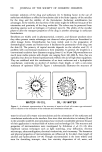
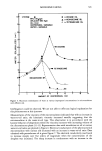
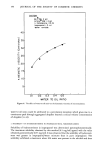
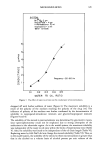
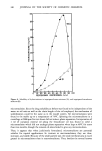
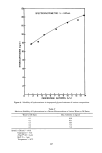
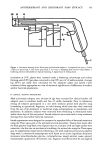
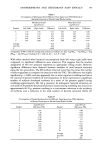
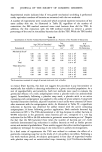
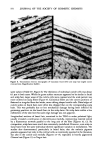
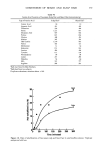
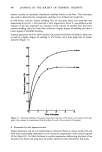
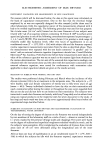
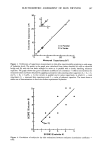
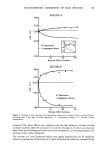
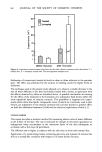
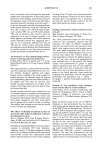
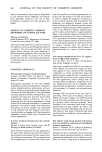
352 JOURNAL OF THE SOCIETY OF COSMETIC CHEMISTS in the presence of a buffer containing surfactant. Certain problems are encountered with the mechanical scrub procedure, particularly in situations in which a panelist's axillae must be repetitively extracted. In these cases mechanical scrubbing can result in localized edema and irritation of the test site. In the present investigation we describe the use of a more gentle, pressurized spray technique (Thran bacterial sampler) to quantitatively evaluate total aerobic axillary microbial populations (16). The Thran bacterial sampler was compared to the mechanical scrub procedure, and was subsequently employed to demonstrate the efficacy of a solid stick antiperspirant as well as a deodorant soap containing trichlorocarbanilide (TCC). EXPERIMENTAL A. BACTERIAL SAMPLING Bacterial sampling of the axillary vault was performed utilizing both the mechanical scrub procedure of Williamson and Kligman (5) and the pressurized spray gun technique of Thran (16). In the case of the mechanical scrub method, a glass cylinder which circumscribed a 3.8 cm 2 area was firmly placed onto the exposed skin of the axilla, and 3 ml of 0.075 M phosphate buffer pH 7.9 containing 0.1% Triton X-100 was added. The circumscribed skin surface was rubbed with moderate pressure for one minute with a blunted teflon scrubber sampling fluid was removed by aspiration, and the procedure repeated. The two samples containing extracted bacteria were pooled and stored on ice prior to serial dilution. Recoveries for the sampling fluid averaged 90%. The Thran spray gun bacterial sampler was obtained from Dr. Med Vet. Volker Thran, Smetslaan 9, B 1900 Overijse-Maleizen, Brussels, Belgium. In principle, the Thran spray gun technique involves the use of air pressure to aspirate a sampling solution over an isolated region of the skin surface (see Figure 1--a complete description of the apparatus can be found in reference 16.) A jar containing a 100 mi. aliquot of bacterial sampling fluid consisting of 0.075 M phosphate buffer pH 7.9 containing 0.005% Triton X-100 was attached to the spray gun along with an empty sterile collection jar. To extract bacteria the silicon rubber tip of the spray gun was firmly pressed against the axillary vault, and the sampling solution was simultaneously sprayed onto and aspirated from a 1.77 cm 2 area. With a compressed air pressure of 1.8 bars, aspiration times averaged 65 seconds and sampling fluid recovery averaged 98% for the 100 ml sample. Following extraction, bacterial collection jars were removed from the spray gun and stored on ice prior to serial dilution. The Thran spray gun was sterilized between uses by consecutive rinses with sterile water (15 ml), 3A alcohol (15 ml), and one final sterile water rinse (25 ml). Total aerobic bacterial count was determined by serially diluting I ml aliquots from each sample in 10 fold steps with 0.0375 M phosphate buffer, pH 7.9 containing 0.05% Triton X-100. In deodorant soap and antiperspirant experiments 0.5% lecithin and 5.0% Tween-80 were added to this dilution buffer to neutralize any antimicrobial activity associated with the active ingredients. Diluted samples were plated in duplicate in trypticase soy agar supplemented with 0.25% dextrose, 0.1% yeast extract, and 0.2% Tween-80 to facilitate growth of diphtheroids (17). Following a 48 hour aerobic

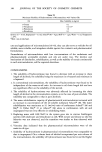
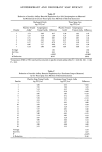
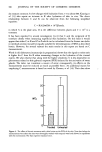
ANTIPERSPIRANT AND DEODORANT SOAP EFFICACY 353 I0 9 4 Figure 1. Schematic drawing of the Thran spray gun bacterial sampler. 1. Compressed air entry 2. Valve 3. Entry to spray head 4. Exit from spray head 5. Air vent 6. Sampling fluid reservoir (detachable) 7. Collecting reservoir (detachable) 8. Special fastening 9. Spray head 10. Sealing band. incubation at 37øC, plates were counted under a dissecting microscope and colony forming units (CFU) per plate converted to log CFU per cm 2 of axilla sampled. Average log CFU's per axilla were calculated for the duplicate plates and paired t-tests conducted when appropriate as a test of statistical significance of differences in axillary aerobic bacterial populations. B. CLINICAL TESTING PROCEDURES Male and female subjects over 18 years of age were recruited for clinical studies. All subjects were in excellent health and free of visible dermatitis. Prior to laboratory testing all iubjects participated in a one week washout period with placebo soap (containing no germicide, fragrance, or color) during which time they were restricted from the use of all deodorant or medicinal soaps, antiperspirants or deodorants, and antibiotics. In addition, subjects were restricted from swimming in chlorinated water within three days of the test period. Female subjects were instructed to stop underarm shaving three days before bacterial extraction. Initial experiments were designed to compare the reproducibility of bacterial extraction using the Thran spray gun or the mechanical scrub procedure. Twenty-four hours after the final placebo soap wash, two adjacent sites on a subject's left and right axillae were extracted--the first site via mechanical scrubbing, the second site using the Thran spray gun. In antiperspirant experiments, following a one week washout period and a placebo soap wash, a commercial antiperspirant stick based on an active ingredient aluminum zirconium tetrachlorohydrex glycine, cyclomethicone, stearyl alcohol, water, glyceryl monostearate, quaternium-18 hectorite, talc, fragrance and SD alcohol 40, was applied
Purchased for the exclusive use of nofirst nolast (unknown)
From: SCC Media Library & Resource Center (library.scconline.org)