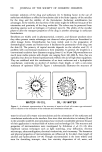
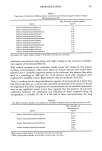
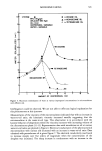
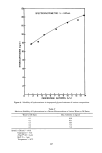
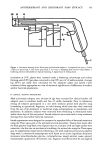
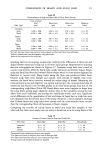
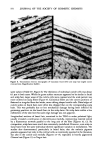
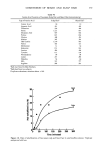
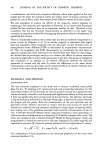
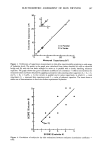
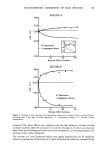
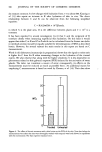
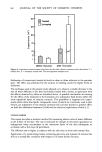
336 JOURNAL OF THE SOCIETY OF COSMETIC CHEMISTS isotropic solutions of the drug and surfactant (2). A limiting factor in the use of surfactant solubilizers as effective formulation aids is the finite capacity of the micelies for the drug and the stability of the formulation. Surfactant solubilization has advantages. In the micelie, the reactivity of the solute might be different because of the orientation and proximity of the drug molecu/les. The solute may be protected from attacking species such as hydrogen or hydroxyl ions (3). The ability of the miceliar phase to alter the transport properties of the drug is another advantage in surfactant formulations. Emulsions are widely used in pharmaceutical, cosmetic, and skincare products since they often possess certain advantages not observed when products are formulated in other dosage forms. Emulsification has been widely used in the preparation of dermatological creams and lotions since it facilitates the penetration of the drug into the skin (4). The potency of topical steroids depends on the vehicles used (5). A problem with conventional emulsions is their instability. In general, the droplets in a conventional emulsion have diameters ranging from 0.2 to 50/am. Microemulsions are much more stable systems with droplet size ranging from 100-1000/•k. Also, they are optically clear they are formed spontaneously without the aid of high shear equipment. They are stabilized with the combination of an ionic surfactant and a hydrophobic cosurfactant, commonly an alcohol of medium chain length, or with a non-ionic surfactant of optimum HLB (7). Figure 1 schematically illustrates the structure of WATER-IN-OIL OIL-IN-WATER H20 Figure 1. A schematic representation of the structure of water-in-oil and oil-in-water type microemul- sions in relation to the orientation of the surfactant and cosurfactant molecules. water-in-oil and oil-in-water microemulsions and the orientation of the surfactant and cosurfactant molecules at the interface. Ever since their introduction in industry (8) and in the scientific world (9), microemulsions have received considerable attention because of their application in various fields of science and technology (10). The structure and properties of microemulsions were investigated by Schulman et al. (11-14), who employed various techniques such as light scattering, x-ray diffraction, electron microscopy, ultracentrifugation, electrical conductivity, and viscometry. The formation and physical properties of microemulsions are influenced by the alkyl chain length of alcohol and hydrocarbons (15-19). Though microemulsion is the most widely used term for describing isotropic, clear, low viscosity dispersions of oil, water, and

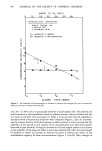
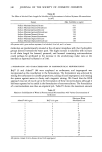
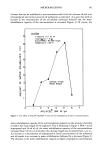
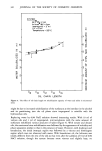
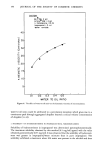
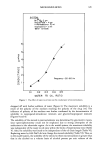
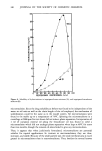
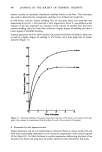
MICROEMULSIONS 337 emulsifiers, alternate terminology has been proposed by various workers (20-25). A survey of pharmaceutical literature revealed that microemulsions have not been explored at all as vehicles for drug delivery in spite of their unique properties. Thus, the present study was undertaken to explore the potential of microemulsions as drug delivery systems, particularly in the area of topical preparations. The dissolution, solubilization, and stability of hydrocortisone in various vehicles have been reported by previous workers (26-29). In this paper we report some of our findings on the solubilization of hydrocortisone in conventional microemulsions as well as in micro- emulsions formulated with pharmaceutically acceptable surfactants. EXPERIMENTAL The microemulsions were prepared by mixing the surfactant(s), alcohol, hydrocarbon oil, and water in suitable proportions and stirring the mixture to clarity with a magnetic stirrer. Sodium myristate was a K & K laboratories product (Practical grade), and sodium stearate was obtained from ICN Pharmaceutical Company. Both Brij © 35 and Arlacel © 186 were purchased from ICI Americas Inc. Alcohols (Fisher Scientific Company) and oils (Chemical Samples Company or Phillips Petroleum Company) of 99 mol. % purity were used. Micronised hydrocortisone was a gift from Alcon Pharmaceu- tical Laboratories. Solubility studies in microemulsions based on sodium stearate and sodium myristate as surfactants were carried out by stirring excess of the solid steroid in the solvent at room temperature, centrifuging till clear, and assaying the resulting solution spectrophotometrically at 243 nm. With Brig © 35 and Arlacel © 186 as the surfactants, the spectrophotometric method could not be employed since the surfactants absorbed strongly in the ultraviolet region. Therefore, a gravimetric method was employed. This involved stirring a known excess of the drug in a known volume of the microemulsion and filtering the resulting solution quantitatively through a sintered medium porosity crucible. A known excess of the drug was accurately weighed into a known volume of the microemulsion and was allowed to equilibrate for a period of three hours while the solution was kept stirred magnetically using a teflon coated magnetic bar. After equilibration, the solution was filtered quantitatively through a medium porosity sintered crucible using an aspirator. The drug remaining in the crucible was washed free of the emulsion several times with distilled water and the corresponding oil, and dried at 70øC to constant weight. From the weight of the drug remaining in the crucible, the amount dissolved was computed. The accuracy of the gravimetric method was checked in the case of sodium stearate microemulsions wherein solubility of hydrocortisone could be determined spectrophotometrically. The accuracy of the method was found to be within _+0.5%. Viscosity measurements were carried out in a Cannon-Fenske viscometer at room temperature, while the conductivity data were obtained using a Beckman conductivity bridge. RESULTS AND DISCUSSION 1. SOLUBILIZATION OF HYDROCORTISONE IN MICROEMULSIONS BASED ON SODIUM STEARATE AND SODIUM MYRISTATE AS SURFACTANTS The maximum solubilities of hydrocortisone in various pure alcohols are given in Figure 2. The solubility of hydrocortisone in water has been reported to be 7.43 x 10 -3
Purchased for the exclusive use of nofirst nolast (unknown)
From: SCC Media Library & Resource Center (library.scconline.org)