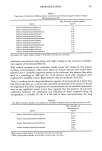
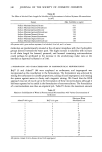
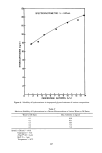
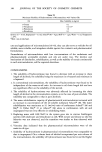
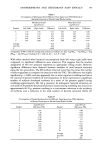
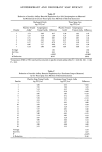
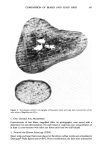
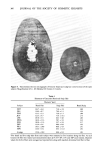
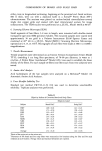
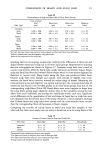
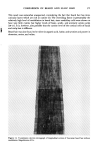
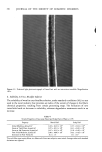
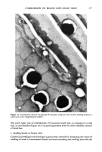
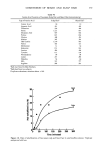
COMPARISON OF BEARD AND SCALP HAIR 367 either cross or longitudinal sectioning, beginning at the proximal end. Serial sections, 600 • thick, were cut with a diamond knife in a Sorvall © Porter Blum MT-2 ultramicrotome. The sections were placed on carbon-backed nitrocellulose-covered single slot copper grids and stained with lead citrate/uranyl acetate for image enhancement. The TEM studies were performed on aJ.E.O.L. Model 100 B at 80 kV. 6. Scanning Electron Microscopy (SEM ) Small segments of hair fibers, 5-8 mm in length, were mounted with double-coated transparent tape onto SEM specimen holders. The mounted samples were coated with approximately 30 nm gold in a Polaron Instruments E5100 Sputter Coater and examined at 60 ø tilt in a J.E.O.L. Model JSM-U2 Scanning Electron Microscope, operated at 6, 9, 15, or 24 kV. Micrographs of each fiber were made at 300x to 10,000x magnifications. 7. Tensile Measurements Tensile properties were determined on an Instron Tension Compression Tester Model TT-D, extending 5 cm long fiber specimens, of 70-90 #m diameter, in water at 1 cm/min. A Perkin Elmer Autobalance © Model AD-2 was used to establish the linear density of the fibers. For each sample 20 fibers (ten fibers each from two subjects) were tested. 8. Amino Acid Analysis Acid hydrolysates of the hair samples were analyzed on a Beckman © Model 119 Automatic Amino Acid Analyzer. 9. Urea- Bisulfite Solubility Test Standard test method I.W.T.O.-11-54 (18) was used to determine urea-bisulfite solubility. Triplicate analyses were performed. Table II Ellipticity Indices of Caucasian Beard and Scalp Fibers Ellipticity Index a Subject Beard Hair b Scalp Hair b CMT 2.08 _+ 0.18 1.42 _+ 0.21 DLS 1.72 _ 0.50 1.58 _ 0.20 GHS 1.55 _+ 0.27 1.41 _+ 0.05 JGY 1.81 + 0.32 1.35 + 0.19 LHE 1.55 _+ 0.18 1.48 _+ 0.12 MDG 1.97 + 0.23 1.44 + 0.07 NHS 1.58 + 0.27 1.20 + 0.11 PHY 1.83 + 0.13 1.27 + 0.17 PKA 1.80 _+ 0.15 1.74 + 0.22 SDN 1.35 + 0.24 1.46 + 0.22 Average 1.72 + 0.20 1.44 + 0.15 aRatio of the major axis to the minor axis. bDiameters of five beard and five scalp fibers were measured at five locations along the fiber and five axial rotations at each location. Average values and standard deviations are reported.

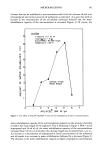
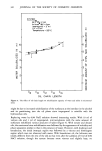
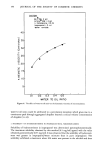
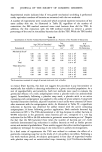
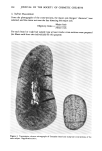
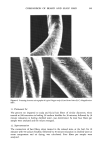
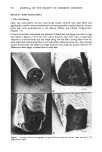
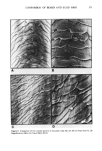
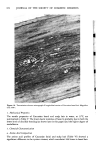
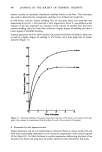
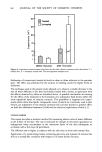
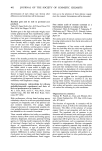
368 JOURNAL OF THE SOCIETY OF COSMETIC CHEMISTS 10. Swelling in Formic Acid Volume swelling of beard and scalp hair fibers in 97% formic acid was determined according to Caldwell and Milligan (19). The diametral swelling of beard and scalp fibers of comparable diameters was measured on microbiological culture slides, in 97% formic acid, under a coverslip, at one minute intervals, in the view of the light microscope. Figure 5. Scanning electron micrographs of typical Caucasian scalp hairs (A) and beard hairs (B, C, D). Magnification 300x.
Purchased for the exclusive use of nofirst nolast (unknown)
From: SCC Media Library & Resource Center (library.scconline.org)