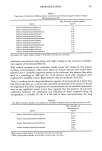
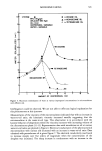
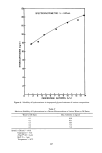
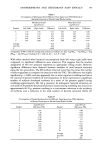
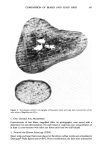
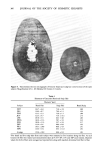
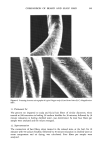
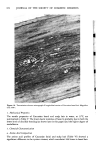
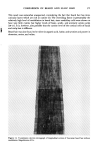
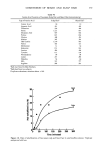
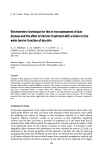
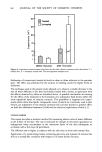
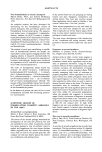
COMPARISON OF BEARD AND SCALP HAIR 375 This result was somewhat unexpected, considering the fact that beard hair has more cuticular layers which are rich in cystine (5). The overriding factor is presumably the relatively high level of medullation in beard hair, since medullary cells were shown to have very little cystine but higher levels of basic, acidic, and aromatic amino acids (20-21). It is, however, also possible that the cystine level of the cortical cells of facial and scalp hair is different. Beard hair was also found to be richer in aspartic acid, lysine, and tyrosine and poorer in threonine, serine, and valine. Figure 11. Transmission electron micrograph of longitudinal section of Caucasian beard hair without medullation. Magnification 915 x.

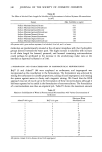
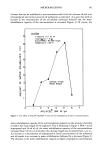
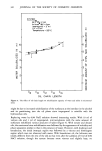
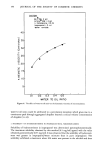
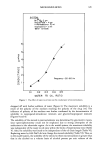
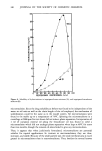
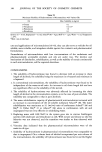
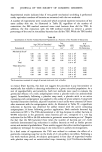
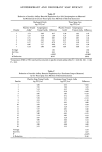
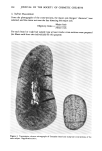
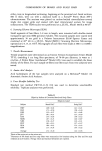
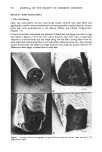
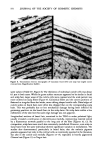
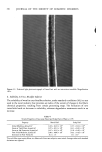
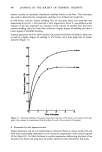
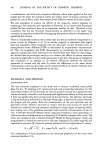
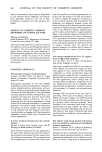
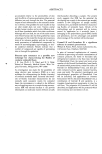
376 JOURNAL OF THE SOCIETY OF COSMETIC CHEMISTS ß _e ' .,.? ,• . •.- • . • . . . Figure 12. Polarized light photomicrograph of beard hair with an •termittent medulla. Magnification 150x. b. Solubility in Urea-Bisulfite Solution The solubility of wool in urea-bisulfite solution, under standard conditions (18), is a test used in the wool industry that provides an index of the extent of change in the fiber's chemical properties, resulting from certain processing steps. The formation of new cross-links leads to decrease in solubility, whereas degradative treatments result in an increase. Table V Tensile Properties of Caucasian Beard and Scalp Hair in Water at 21øC Property Beard Hair" Scalp Hair" Initial Modulus, dynes/cm 2 Stress at Yield Point, dynes/cm 2 Stress at 20% Extension, dynes/cm 2 Post Yield Modulus, dynes/cm 2 Extension to Post Yield, (%) (1.18 + 0.22) x 10 •ø (3.57 -+ 0.51) X (4.47 _+ 0.53) x 10' (3.60 + o.8o) x 10' 26.2 _ 1.4 (1.55 + 0.13) X 10 •ø (4.3• + o.21) x (5.18 + 0.42) X 10 (4.92 + 0.42) X 109 25.1 + 0.7 "For each fiber type twenty fibers, ten fibers each from two subjects, were tested. Average values with standard deviations are reported.
Purchased for the exclusive use of nofirst nolast (unknown)
From: SCC Media Library & Resource Center (library.scconline.org)