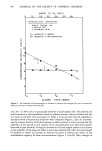
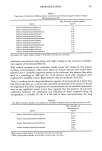
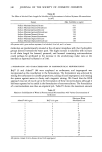
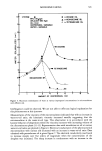
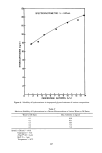
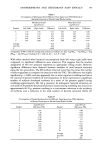
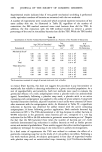
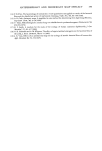
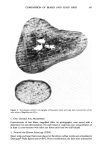
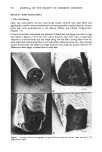
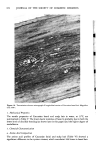
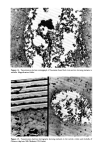
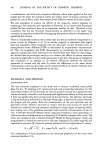
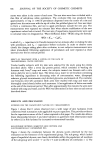
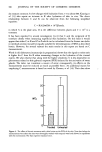
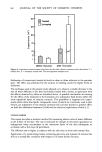
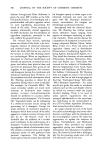
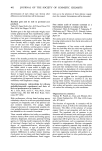
342 JOURNAL OF THE SOCIETY OF COSMETIC CHEMISTS z SYSTEM: Bri?35.f 2 gm Ar lecele186 = 4grn Isopropenol = 3 ml Oil = I0 ml Tempereture = 20eC I I i C8 CIO CI2 614 CI6 OIL CHAIN LENGTH I I I. iJ Figure 4. The effect of oil chain length on solubilization capacity of water and saline in microemul- sions. might be due to increased solubilization of the surfactant at the interface in the alcohol and its partitioning into the oil phase since isopropanol is miscible with the hydrocarbon oils. Replacing water by 0.9% NaC1 solution showed interesting results. With 10 ml of various oils and 3 ml of isopropanol, microemulsions with the same amount of surfactant solubilized various amounts of saline (Figure 4). With octane and decane oils, the maximum brine solubilization was followed by the appearance of turbidity and phase separation similar to that in the presence of water. However, with dodecane and tetradecane, the initial isotropic region was followed by a viscous and birefringent region which was not observed with water. With hexadecane oil, the behavior was totally different from the rest of the oils so that even after the addition of 9 ml of 0.9% NaC1 solution, though the system became more viscous and slightly hazy, no

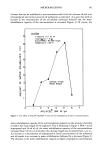
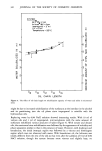
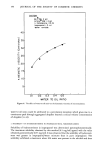
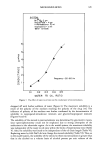
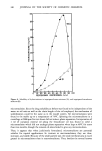
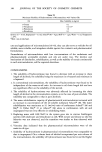
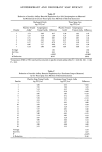
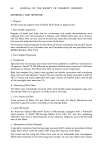
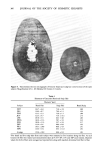
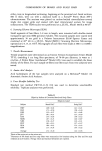
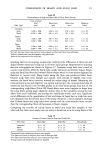
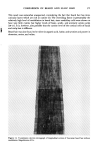
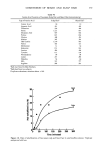
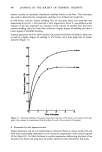
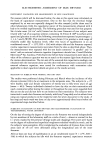
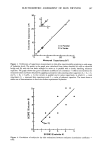
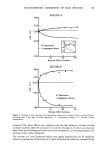
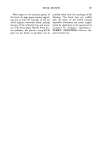
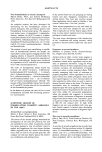
MICROEMULSIONS 343 IO 8 9 SYSTEM: 0 I 2 BRIJ $5'.•. gm ARLACEE' 186: 4gm OIL: IOml ISOPROPANOL- VARIABLE WATER - VARIABLE ß n-DECANE OIL ß n-HEXADECANE OIL 0 n-TETRADECANE OIL ,• DECANE / HEXADECANE •,\\ ,•TETRADECANE 3 4 5 6 AMOUNT OF ISOPROPANOL (ml) I I 7 8 9 Figure 5. Maximum solubilization of water at various isopropanol concentrations in microemulsions with different oils. birefringence could be observed. We are not able to offer any logical explanation for this phenomenon at this juncture. Measurements of the viscosity of the microemulsions indicated that with an increase in water-to-oil ratio, the kinematic viscosity increased steadily suggesting that the microemulsion is the water-in-oil type. This observation is in accordance with the known behavior of dispersions where the viscosity increases with increasing volume of the discontinuous phase (31-32). Representative data with tetradecane as oil at various water-to-oil ratios are plotted in Figure 6. Electrical conductance of the pharmaceutical microemulsion with various oils increased with an increase in water-to-oil ratio. Data obtained with pentadecane oil is given Figure 7. The electrical conductivity was found to increase steeply over five orders of magnitude when the concentration of the droplets was increased. The sharp increase in conductance with an increase in the
Purchased for the exclusive use of nofirst nolast (unknown)
From: SCC Media Library & Resource Center (library.scconline.org)