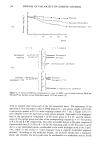
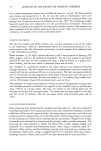
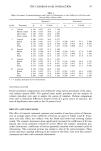
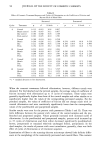
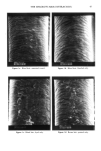
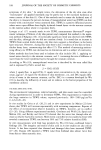
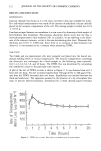
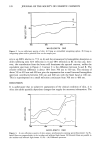
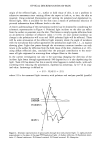
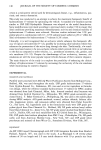
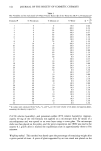
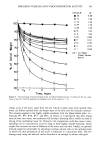
EMULSION VEHICLES AND VASOCONSTRICTOR ACTIVITY 149 lO0 9O 8O • 7O Formul. o # • ß 36 5.59 ß t3 t.34 0 t9 t.34 [] 24 1.34 X 28 t.34 ß 3t 1.34 © 6 t.34 /x 23 0.88 ß t7 0.57 [] lO 0.35 • 2 O. J9 o 1 0.06 (,•' -- Oi[/Water Phase- VoLume Ratio) 200 i • 1/2 t 2 • 4 Time, hours Figure 3. The percentage of initial weights of the 12 selected hydrocortisone 17-valerate 0.2% o/w emul- sions in four hrs. The bar indicates the standard error of the means (n = 3). always occur if the water vapor from the o/w vehicle is taken away more quickly than water can diffuse upward from the deeper layer of the skin into the stratum corneum. The situation applied to the highly volatile emulsions with low phase-volume ratio, i.e., formulas #1, #2, #10, #17, and #23. In theory, it is speculated that after losing most of their own water, the emulsions will develop a draining effect, which can lead to drying of the underlying tissue (2). However, the evaporation could also cause a corre- sponding rise in concentration of active drug in these highly volatile formulas, which might then increase the rate of diffusion of the active into the skin. Ideally, an optimal formula might be achieveable by adjusting its phase-volume ratio to the optimal point in which the skin permeation of the active is enhanced to a maximum level. The fol- lowing study using the selected twelve formulas is an attempt to achieve this goal.

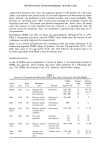
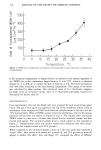
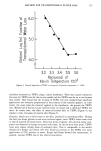
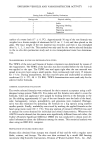
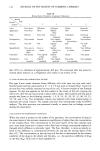
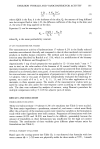
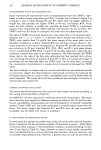
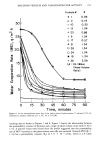
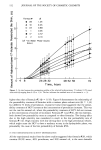
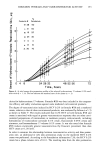
150 JOURNAL OF THE SOCIETY OF COSMETIC CHEMISTS TRANSEPIDERMAL WATER LOSS DETERMINATIONS Figure 4 presents the experimental results of transepidermal water loss (TEWL), repre- sented in terms of water evaporation rate (WE). A similar trend is found in Figure 4 as in Figures 2 and 3, where formulas # 1 and #2, which show the highest volatility or weight loss, also provided the highest TEWL in 90 rain, and formula #36, which shows the least volatility or weight loss, provided the lowest TEWL at a practically constant water evaporation rate. Other formulas were between the two extremes. The TEWL trend was also found to correspond well with their o/w phase-volume ratio. The mean of TEWL of bare skin measured as a base value prior to the emulsions deter- mination was 7.7 +-- 2.1 g/m2h. It is therefore safe to assume that formulas with a TEWL value smaller than 5.6 g/m2h (the lower margin of the mean value) can be plausibly considered as occlusive. Formula #36 was the most occlusive vehicle it pro- vided occlusivity at the time of the application. Formulas # 1 and #2 did not provide any occlusivity in 90 min. Formulas #19, #24, #28, and #31 with phase-volume ratio (1.34) provided TEWL below 5.6 g/m•h 30 min after application, indicating that occlusivity occurred after most of the water evaporated. The other formulas had TEWL values close to the value of the bare skin, indicating that they provided little occlusi- vity. Increasing the amount of mineral oil from 0% to 10% at a constant percentage of petrolatum did not materially affect the TEWL value. On the other hand, increasing the concentration of petrolatum at a constant level of mineral oil decreased the TEWL values. The above findings, in contrast with the conventional belief that o/w emulsions provide no occlusivity, suggest that these emulsions could provide occlusivity by increasing the o/w phase-volume ratio to a level at which a hydrophobic layer could be formed after the water evaporates. The results also reveal that petrolatum provides higher occlusivity to vehicles than does mineral oil. COSMETIC ACCEPTANCE EVALUATION The twelve selected formulas were then tested for their cosmetic attributes according to the scoring system described in Table III. An ANOVA F test was conducted for individual and overall characteristics. The results show that there were significant differences among the means at the 5 % level for odor, texture, spreadability, and greasiness, but not for homogeneity. A multiple comparison method, Tukey's HSD test, was further performed to establish which means were dif- ferent. The results suggest that formulas #31 and #36 were the least cosmetically acceptable, and the others were similar in acceptance. IN VITRO HUMAN SKIN PERMEATION STUDIES In vitro human skin permeation studies were conducted on the twelve selected formulas. Figure 5 represents the skin permeation profiles of formulation in group 1, while Figure 6 represents these in group 2. The permeability constants calculated according to equa- tion (2) are listed in Table IV. Large variation occurred in some studies, presumably due to unidentified factors, such as individual skin variations, skin site variations, and uncontrolled experimental errors. However, a general trend can still be seen from the
Purchased for the exclusive use of nofirst nolast (unknown)
From: SCC Media Library & Resource Center (library.scconline.org)