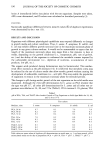
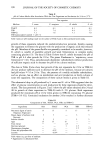
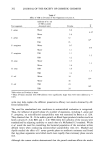
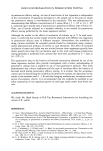
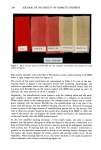
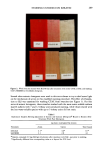
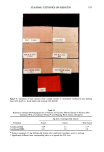
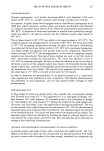
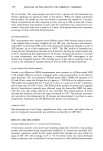
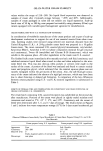
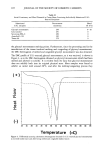
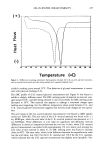
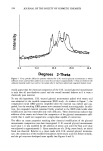
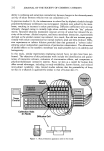
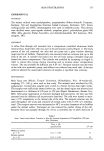
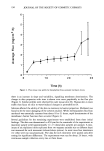
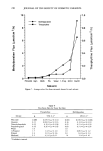
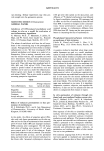
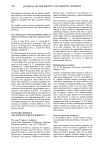
208 JOURNAL OF THE SOCIETY OF COSMETIC CHEMISTS CTAC CTAC/C-$ CTAC/C-10 [ CTAC/C-12 CTAC/C-14 ALKYL SULFATES Figure 1. Wool swatches stained with Red-80 dye after treatment with CTAC and washing with alkyl sulfate detergents. SAC-treated swatches with either SLS or ALS leaves no stain, while washing with SDES leaves a light orange-red stain (see Figure 2). The results of this tracer experiment are summarized in Table I. In view of the dye- staining results of Figure 2, the radiotracer results were surprising. Surprisingly, the radiotracer experiment shows more SAC on the lauryl sulfate-washed swatch that did not stain with Red-80 than on the swatch washed with SDES that picked up stain. In addition, the ratio of anion to cation is roughly 1. Apparently, the stearalkonium cation interacts with the washing anion and the resul- tant complex is either washed into the aqueous phase or it deposits on the keratin. When lauryl sulfate is the washing anion, the complex binds so firmly that on subse- quent staining with the anionic Red-80 dye, the stearalkonium ion is not free to in- teract with the anionic dye and therefore staining does not occur. This lack of staining occurs in spite of the large amount of stearalkonium species left on the keratin. Not only is there less cationic bound to the swatch after washing with SDES vs. ALS, but some of the anionic dye can displace the deceth sulfate and bind to the stearalkonium cation and thereby stain the SDES-washed swatch. In this new modified staining procedure, if the swatch stains, not only is cationic present, but the anionic detergent is either not bound to the cationic conditioner or it does not bind firmly enough to the cation to prevent staining on subsequent treatment with anionic dye. If staining does not occur, then either no cationic conditioner is present, or the deposited cation binds so firmly to the washing anionic detergent that the anionic dye cannot displace the anionic species and staining cannot occur. In our experience, when staining does not occur, this latter condition is the usual situation for most commonly used cationic conditioning agents (6).

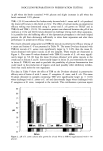
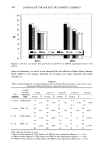
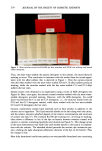
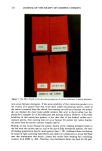
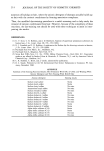
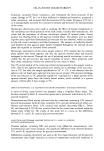
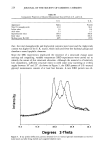
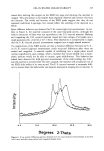
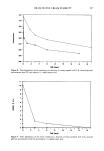
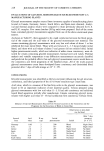
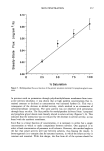
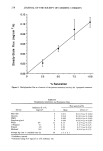
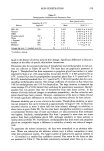
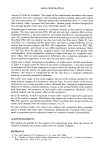
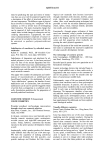
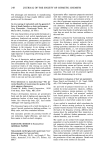
STAINING CATIONICS ON KERATIN 209 CTAC CTAC/C-10 i CTAC/C12 SAC SAC/CI0-2 SAC/C!2 • Figure 2. Wool swatches stained with Red-80 dye after treatment with either CTAC or SAC and washing with C10[SDES] or C12[ALS] detergents. Several other anionic detergents were used in this test scheme to try to shed more light on the mechanism of action in this modified staining procedure. The effect of ethoxyla- tion to SLS was examined for washing CTAC from swatches (see Figure 3). For this series of anionic detergents, those swatches washed with the more water-soluble sodium laureth sulfates with 7 and 12 ethoxy units produced staining, while those treated with the less water-soluble species with up to 5 ethoxy units did not stain. Table I Radiotracer Analysis Showing Quantities of Anionic and Cationic Detergents # Bound to Keratin After Treatment With Pure Detergents mg Ionic moiety/gm Dry keratin Treatment Anion Cation Total bound SAC/ALS 4.1' 4.6* 8.7* SAC/SDES 2.1 2.0 4.1 # Keratin contained 6.9 mg SAC/gm dry keratin after treatment with SAC, just prior to washing.. * Significantly different from corresponding value at or beyond the 95% level.
Purchased for the exclusive use of nofirst nolast (unknown)
From: SCC Media Library & Resource Center (library.scconline.org)