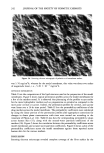
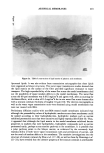
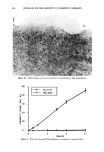
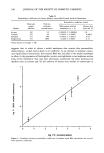
j. Soc. Cosmet. Chem., 43, 275-284 (September/October 1992) Silicones as conditioning agents in shampoos KAZUYUKI YAHAGI, Tokyo Research Laboratories, Kao Corporation, 2-1-3 Bunka, Sumida-ku, Tokyo 131, Japan. Received April 29, 1992. Presented at the XXIII CED Meeting on Surfactants, Barcelona, March 11-13, 1992. Synopsis A one-step shampoo, generally called a "2 in 1" shampoo, exerting both cleansing and conditioning functions, differs to a great degree from conventional shampoo products, with its superb conditioning effects eliminating the necessity of a further conditioning step. Conditioning agents especially effective in such types of products are silicones, especially dimethicones with high molecular weight, dimethicone copolyol with low hydrophilic-lipophilic balance (HLB), and amodimethicone. In this work, the condi- tioning effects of these silicones are discussed in terms of the surface deposition and alteration in hair surface characteristics by measuring the kinetic frictional coefficient of hair fibers in relation to the chemical types and the molecular weight of silicones. The improvement in surface kinetic characteristics was primarily noted with dimethicones with high molecular weight. Dimethicone copolyol with low HLB lowered the kinetic friction of the wet hair surface by forming liquid crystals. Amodimethicone improved manageability of hair by adsorbing strongly onto the damaged, and therefore more polarized, hair cuticles, which facilitated hair styling without blow-drying. INTRODUCTION The use of silicones as lubricating and hydrophobic agents is found in a number of hair care products, e.g., shampoos, rinse conditioners, conditioners, hair sprays, styling mousses, setting lotions, hair colorings, permanent wave solutions, etc. Ease in comb- ing, as well as a soft and smooth feeling without greasiness is the most valuable benefit obtained with silicones in hair care products. Another important factor is that silicones are non-toxic and non-irritating, and essentially safe. In the present day, approximately 40% of Japanese females wash their hair daily with younger generations this figure rises to approximately 70%. Therefore, a one-step shampoo, generally called a "2 in 1" shampoo, with double functions of shampoo and conditioner, is highly beneficial to these users for its ease and convenience. While its foaming and cleansing performance is comparable to an ordinary conditioning shampoo, the conditioning effect of a "2 in 1" shampoo is far greater than that of an ordinary conditioning shampoo. The groups of conditioning agents utilized in a "2 in 1" sham- poo include silicones, hydrocarbon oils, fatty alcohols, cationic polymers, and cationic surfactants. There are some types of silicones that are especially effective as conditioners in detergent systems. 275

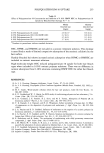
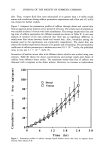
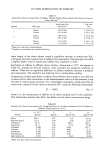
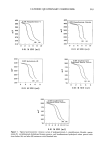
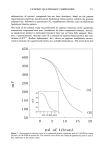
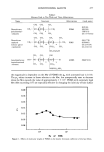
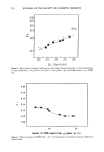
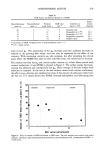
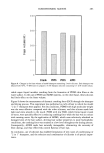
276 JOURNAL OF THE SOCIETY OF COSMETIC CHEMISTS In this work, the conditioning effects of dimethicone, dimethicone copolyol, and amodimethicone are investigated. The performance of these silicones is discussed in terms of silicone deposition onto hair surface and alteration in the characteristics of hair. EXPERIMENTAL MATERIALS Samples of silicone were obtained from Shin-etsu Chemical Co. (KF-96, X-21-7501G, KF6005, X-22-4110, and X-22-4104), Dow Corning Toray Silicone Co. (SH200, SH377X, and SM8702C), and Toshiba Silicone Co. (TSF451). All of the chemical ingredients for formulating shampoos were of commercial grade and were utilized without further purification. Table I shows the abbreviated designations for the silicones utilized. METHODS The following analytical instruments equipped with standard-type laboratory appara- tuses were utilized: a scanning electron microscope (JEOL JSM-840), an electron probe microanalyzer (Tracor Tothern TN-503), an inductively coupled plasma (ICP) emission spectrometer (Seiko Instruments & Electronics Ltd. SPS-1200A), and a kinetic frictional coefficient meter (Nippon Rheologykiki Co., Type NRF-II). The method of determi- nation of the critical surface tension of hair, estimated from the wetting force and the kinetic frictional coefficient measurement on a rotating nylon pulley, was done in accordance with the method described elsewhere (1). Measurement of dynamic combing force (2) during the shampooing process was performed with the modified combing method as described previously (1,3). The procedure for determining silicone deposition is as follows: Approximately 0.5 g of hair sample, normal Japanese female hair with no history of chemical treatment, was extracted twice with 50 ml of chloroform for 20 min. The chloroform was removed by using an evaporator, and was replaced with 5 to 20 ml of methyl isobutyl ketone (MIBK) in order to dissolve the silicone. This solution was analyzed with an ICP emission spectrometer. Correction of silicone deposition on the untreated hair was conducted by analyzing hair samples that were not subjected to silicone deposition study. RESULTS AND DISCUSSION DIMETHICONES (POLYDIMETHYLSILOXANES) Polydimethylsiloxanes (PDMS), also called dimethicones, were among the first com- mercially available silicone products. PDMS, having excellent lubricating properties and being utterly water-insoluble, form very hydrophobic films on the hair surface, and this is the reason why PDMS are frequently found in rinse conditioners, hair sprays, and styling mousses. Figure ! shows the kinetic frictional coefficient (}Xk) of hair fibers treated with PDMS of various molecular weights (Mw). It can be seen from the figure that the formation of PDMS film on the hair surface causes a decrease in Ix k values, and
Purchased for the exclusive use of nofirst nolast (unknown)
From: SCC Media Library & Resource Center (library.scconline.org)