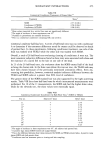
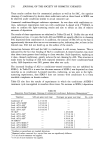
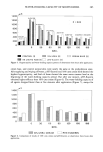
284 JOURNAL OF THE SOCIETY OF COSMETIC CHEMISTS analysis in order to rank and compare the results between the group at level P = 0.05 (Figure 4). Three hours after the application of agents we also used the least significant difference (LSD) analysis in the same manner at level P = 0.05 (Figure 5). We found that conductance of the prehydration state of normal skin is about 180 ItS. After hydrating, normal skin showed high conductance around 800 ItS, but it declined rapidly within 30 seconds and returned to the prehydratic level in 180 seconds. This result implies that the normal skin surface has an ability to absorb water but cannot retain it for long, or that it has a low water-holding capacity (Figure 3). Observation at five minutes after application of the agents (Figure 4) showed that the baseline water content of all agents was better than with control normal skin. PH5- Eucerin and 10% urea cream had the highest level of water content among the agents, followed by 5% lactic acid cream and cream base. After applying drops of water on the testing areas and wiping them off in ten seconds, pH5-Eucerin obtained the highest hygroscopicity, followed by 10% urea cream, 5% lactic acid cream, and cream base that had the same level of hygroscopicity. The water-holding capacity of all agents declined in a slower manner than with control normal skin, and at 180 seconds the water content of 10% urea cream, pH5-Eucerin, and 5% lactic acid cream was more than the cream base and control normal skin levels. The water-holding capacity of 10% urea cream, 5% lactic acid cream, and cream base declined in a slower manner than in PH5-Eucerin, and 10% urea cream was the slowest. From observation three hours after application (Figure 5), we found that at the prehy- dration state, pH5-Eucerin had the highest water content among all agents and that every agent had a lower water content when compared to the same agent five minutes after application. The water content levels of 5% lactic acid cream, 10% urea cream, 1400 1200 - f P = 0,05 1000 800 - 4,5)a)z 400 200 0 0 30 60 90 120 150 180 sec. • CONTROL [11 • 10% UREA [21 • CREAM BASE [31 • 5% LACTIC ACID [4]• pH5-Eucerin [5] Figure 4. Hygroscopicity and water-holding capacity pattern of observation five minutes after application.

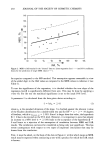
WATER-HOLDING CAPACITY OF MOISTURIZERS 285 1400 1200 1000 800 600 400 200 0 P = 0.05 5)2)4-3)1 •)4)3)1__ • 5)2)4.3) 5)2)4. 5)2) 0 30 60 90 120 150 180 sec. • CONTROL [1l [• 10% UREA [21 • CREAM BASE [3l • 5% LACTIC ACID [4]• pH5-Eucerin [5] Figure 5. Hygroscopicity and water-holding capacity pattern of observation three hours after application. cream base, and control normal skin were nearly the same at the prehydration state. After applying and wiping off water, pH5-Eucerin and 10% urea cream both showed the highest hygroscopicity, and both of them showed the same water content level at the beginning of the water-holding capacity period. But after one minute, pH5-Eucerin obtained higher efficacy than 10% urea cream (Figure 6). The water-holding capacity of all agents dropped faster than at five minutes after application (Figure 7), except for 1400 1200 1000 8OO 6OO 4OO 2OO 0 0 30 60 90 120 150 180 sec. lO% UREA CREAM •PH5-EUCERIN Figure 6. Comparison of results of 10% urea cream and pH5-Eucerin at observation three hours after application.
Purchased for the exclusive use of nofirst nolast (unknown)
From: SCC Media Library & Resource Center (library.scconline.org)