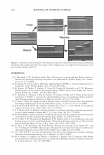
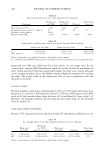
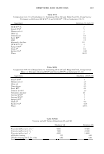
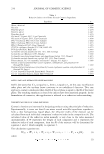
214 JOURNAL OF COSMETIC SCIENCE received nine applications of the test materials to the same sites. Any site reaching a maximum grade (grade 3 or 4 see Table I, scoring scale) was not repatched for the remainder of the study. The test materials are listed in Table II. Irritation was scored classically using a 100-watt incandescent blue bulb lamp as the artificial light source. The scorer was blinded as to the treatment assignments A five-point scale was used (Table I). STATISTICAL ANALYSIS The source data are the actual patch test scores recorded following visual evaluation of the sites on days 2, 3, 4, 5, 7, 8, 9, 10, and 11. Data used in the statistical analyses were the actual scores up to and including termination of patching. When a strong response prohibited repatching, the value at the time of termination was entered into the analyses for all scoring days till the end. Subjects that withdrew from the test were omitted from the analysis. The following statistical analyses were performed: 1. Overall analysis comparing irritation levels of Group 1 (18-45) to those of Group 2 (65-80). 2. Analysis comparing the irritation levels of the test articles within each group. 3. Analysis comparing the irritation levels of Group 1 and Group 2 for each test article. The patch test scores for each test article were summed across all test days for each test subject. For analyses 1 and 3, analysis of variance was utilized for analysis 2, the overall test article scores were ranked within each subject and then analyzed using the Friedman rank sum test. Table I Scoring Scale 0 = No erythema visible 1 = Faint erythema 2 = Moderate erythema 3 = Intense erythema 4 = Erythema with edema, vesicles, or papules A (0.2% SLS) Table II Test Materials B (0.1 % benzalkonium chloride/distilled water) C (50% xylenes/petrolatum) D (0.1 % Retin A cream) E (50% isopropyl myristate/petrolatum) F (75% propylene glycol/distilled water) G (DOAK Formula 405 AHA facial day cream) H (Lachydrin 12 lotion) I (OXY 10 benzoyl peroxide vanishing cream) J (Lacticare lotion) K (Carmol 10)

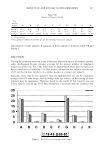
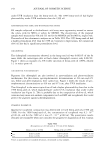
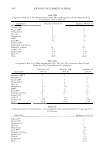
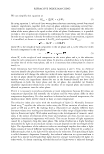
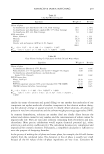
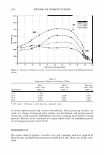
EFFECTS OF AGE ON IRRITATION RESPONSES 215 Due to test subjects being sensitized to test article I (OXY 10 benzoyl peroxide van ishing cream), the statistical analysis was conducted with this article removed. RESULTS The distribution of the 26 test subjects in each group is shown in Table III, and test articles were rank ordered as shown in Table IV. The test articles were essentially rank ordered the same. Allowing for variation in a biological test should explain the flipflop in the rank ordering of test articles B and D, which were the fourth and fifth, and fifth and fourth, most irritating materials in Group 1 and Group 2, respectively. OVERALL ANALYSIS COMP ARING GROUPS The analysis of variance indicated no significant difference between groups (p=O. 1) ! 0) and no interaction of groups and test articles (p = O.4259). A summary of the overall analysis of variance is shown in Table V. Age 25-29 30-39 40-45 Rank 1 2 3 4 5 6 7 8 Table III Distribution of Test Subjects Group 1 (18--45) Group 2 (65-80) n Age 3 65-69 13 70-75 10 76-80 Table IV Rank Order of Test Articles Group 1 (18--4 5) Group 2 (65-80) Test article Test article means Rank Test article G (DOAK, AHA facial day cream) 24.7 G (DOAK, AHA facial day cream) A (0.2% SLS) 22.0 2 A (0.2% SLS) K (Carmol 10) 11.0 3 K (Carmol 10) B (0.1 % benzalkonium chloride) 10.2 4 D (0.1 % Retin A cream) D (0.1 % Retin A cream) 8.7 5 B (0.1 % benzalkonium chloride) H (Lachydrin 12 lotion) 6.7 6 H (Lachydrin 12 lotion) F (75% propylene glycol/distilled 7 F (75% propylene glycol/distilled water) 3.0 water) C (50% xylenes/petrolatum) 0.8 8 C (50% xylenes/petrolatum) 9 J (Lacticare lotion) 0.6 9 J (Lacticare lotion) 10 E (50% isopropyl 10 E (50% isopropyl myristate/petrolatum 0.3 myristate/petrolatum) n 13 9 4 Test article means 22.6 21.8 10.6 7.7 7.0 6.2 1.9 0.7 0.6 0.3
Purchased for the exclusive use of nofirst nolast (unknown)
From: SCC Media Library & Resource Center (library.scconline.org)