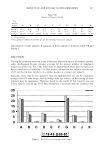
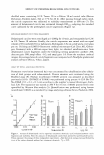
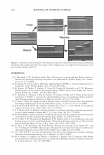
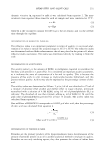
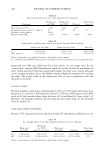
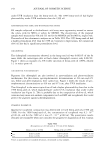
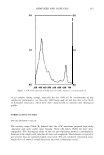
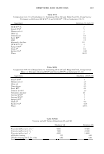
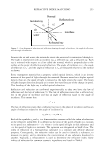
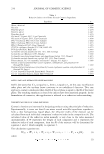
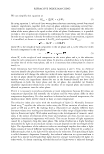
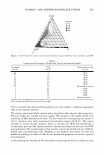
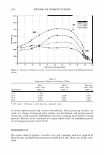
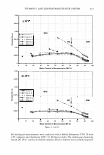
242 JOURNAL OF COSMETIC SCIENCE under UVB irradiation than the hemp-seed oils. The 1998 hemp-seed oil had higher photostability under UVB irradiation than the 1999 oil. MALONDIALDEHYDE (MDA) AND MONOALDEHYDE (MONO) Oil samples subjected to thiobarbituric acid assay were opportunity-treated to extract the colors, pink for MDA or yellow for MONO. The absorptivites of the prepared samples were measured at 450 and 535 nm for the MONOs and the MDAs, respectively. The results of the colorimetric analyses are in Table VIII. The 1999 hemp-seed oil had a higher peroxidation level than the 1998 oil. Contrary to expectations, the commercial olive oil also had a significant peroxidation level. CHLOROPHYLL The chlorophyll concentration observed in the hemp-seed oil was 0.0036% of the fat mass, while the extra-virgin olive oil had a lower chlorophyll content, only 0.0024%. Figure 1 shows an example of a UV-visible spectrum of hemp-seed oil (1998), diluted 1 :2 in maize-germ oil. CHLOROPHYLL PHOTOSTABILITY Pigments like chlorophyll are also involved in auto-oxidation and photo-oxidation mechanisms. For this reason, spectrophotometric determinations at 416 nm and 671 nm, before and after irradiation, were carried out. Figure 2 shows the results of spec trophotometric determinations at 416 nm and 671 nm, after UV A irradiation. The chlorophyll in the extra-virgin olive oil had a higher photostability than that in the 1998 hemp-seed oil, which degraded faster under UV A irradiation than under visible irradiation (see Figure 3). This is probably due to the composition of olive oil, which contains many more anti-oxidant components (such as BHT and tocopherols) that could protect the pigment against photodegradation. VITAMIN E IN HEMP OIL Qualitative tocopherol composition was determined in both hemp-seed oils (1998 and 1999). For the 1998 hemp-seed oil, the concentration of tocopherol was 8.2 · 10- 6 g/100 ml, and for the 1999 oil it was 2.5 · 10- 5 g/100 ml. The quantitative results obtained are reasonable when one considers the progressive degradation of this vitamin Table VIII Absorptivites at 450 nm and at 535 nm of Oil Samples Hemp-seed oil (1998) 0.063 (±0.09) 0.041 (±0.05) Hemp-seed oil (1999) 0.075 (±0.07) 0.048 (±0.08) Values in parentheses are standard deviations, determined on four samples. Olive oil 0.130 (±0.13) 0.087 (±0.03)

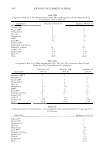
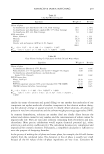
HEMP-SEED AND OLIVE OILS 243 2.0 ------------------2.0 1.0 1.0 0.0 ----------------0.0 350 400 450 500 550 600 650 700 Figure 1. UV-visible spectrum of hemp seed oil (1998), diluted 1 :2 in maize-germ oil. in oil samples during storage, especially for the 1998 oil. In consideration of this satisfactory performance, we chose the 1998 hemp-seed oil and the olive oil as lipids to formulate emulsions, which were then characterized by stability and rheological profile. FORMULATIVE STUDIES EYE GEL-EMULSION 3 (Table IX) The viscosity range (Table X) denoted that the 0/W emulsions prepared were fairly consistent and quite stable upon heating. Their pH values (Table X) were skin compatible. The rheological study of the eye gel-emulsions showed a pseudoplastic behavior with a high yield value for all three oils employed. This behavior is typical of gel systems that are normally highly structured. The gel-emulsion containing extra virgin olive oil showed a small hysteresis area and a thixotropic trend.
Purchased for the exclusive use of nofirst nolast (unknown)
From: SCC Media Library & Resource Center (library.scconline.org)