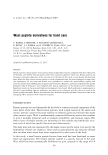
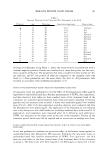
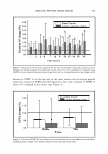
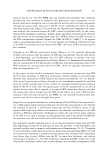
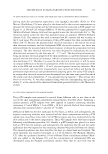
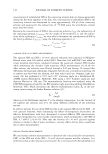
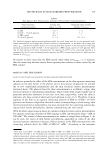
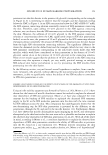
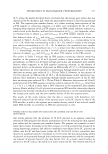
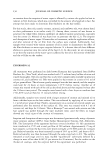
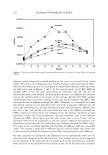
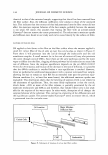
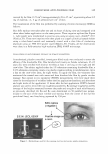
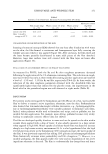
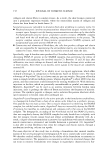
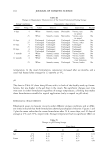
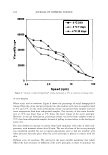
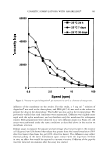
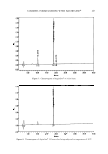
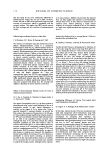
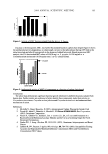
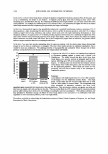
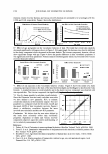
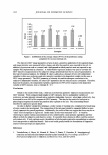
206 JOURNAL OF COSMETIC SCIENCE THE INFLUENCE OF FACIAL EXPRESSION ON THE AGE-DEPENDENT CHANGES IN f ACIAL WRINKLING Kukizo Miyamoto, Ph.D. and Greg Hillebrand, Ph.D. Procter & Gamble Introduction Facial expression helps define who we are. Happy, sad, angry, pensive - these emotions are manifested in the unique facial wrinkle patterns that help us communicate with one another. While skin color, evenness and hyperpigmentation are for the most part static and independent of facial expression, facial wrinkling is a dynamic skin appearance feature exhibiting a large range of variation depending on the particular facial expression. Years and decades of repeated skin folding from everyday facial expressions eventually lead to the character lines and wrinkles that persist in the absence of expression. These include transverse forehead wrinkles, glabellar frown lines and periorbital or crow's feet wrinkles around the eyes. It is generally believed that environmental stress, especially chronic sun exposure, can accelerate this process of persistent wrinkle formation. We were curious about how facial expression influences the age dependence of facial wrinkling and the impact expression might have on how we assess wrinkling clinically. Indeed, the traditional methods for quantifying clinical facial wrinkling have been to use subjective visual grading or objective 2D and 3D measurements of study subjects without any facial expression. At the time we were starting this work, we were conducting large base size cross-sectional surveys on the skin condition in different ethnic populations around the world1 . So as part of those studies, we began collecting images of subjects under both smiling and non-smiling facial expression conditions. A smiling expression was chosen because it accentuates the crow's feet wrinkles around the eyes, an area of particular concern for many people. In this paper we present results of those cross-sectional surveys as well as results of a randomized-controlled clinical trial to evaluate the product performance benefits of a facial moisturizer designed to lessen the appearance of the facial wrinkling that accompanies facial expression. Methods Facial wrinkling was quantified under both smiling and non-smiling facial expression conditions using a facial imaging booth consisting of a high resolution digital camera combined with standardized illumination and fixed head positioning. (VISIA Complexion Analysis System, Canfield Scientific, Inc.). Subjects were prepared for image capture using standard procedures for face wash, equilibration (20 minutes) and use of matt black head and shoulder apparel. VISIA image analysis (IA) software was employed to objectively quantify facial features (wrinkling, texture, pores and hyperpigmented spots) on the left and/or right sides of the face. The same exact area of the face was analyzed for both smiling and non-smiling images and the image analysis overlays were reviewed to confirm the accuracy of skin feature detection. When left and right image views were captured, the average IA value for the left and right measurements was used. For some experiments, measurement error associated with reproducibility of facial expression was further reduced by capturing 3 or more images of the subject in a non-smiling and smiling expression and then calculating the average IA value from each of the images. Results and Discussion Facial wrinkling and hyperpigmentati.on were measured in 147 Japanese women ages 30-55 living in and around Tokyo, Japan. Images of the face (left and right sides) were captured with and without a smiling expression. The graphs below show that both wrinkling and hyperpigmentati.on increased with increasing age. The lines are the best fit curves for the smiling and non smiling data. As expected, smiling greatly increased the amount of facial wrinkling but had no affect on hyperpigmentation. Wrinkling Hyperpigmentation 0.14 0.10 C 0.12 Non-Smiling Non-Smiling 0 Smiling C 0.08 Smiling :g 0 0.10 oO :g u: � 0.06 ro 0.08 0 0 u. 0 0 �- � � 0 ro oO �- 0 00 0 �oglio oe ( 0.06 O 0 � 0 go Q) 00 ( 0.04 0 .o oo o Oo �s o �e� 32 0.04 0 oo 0 0 C 00 � . ft 0.02 oe oe 0.02 .. 0.00 0.00 30 40 50 60 30 40 50 60 Age AQe

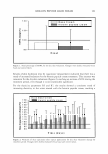
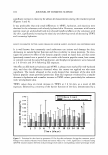
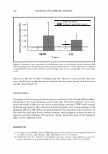
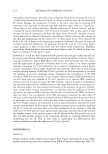
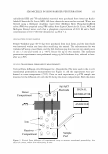
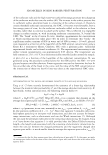
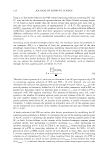
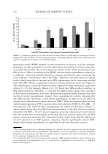
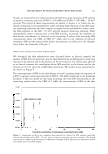
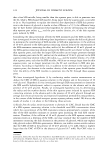
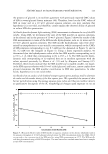
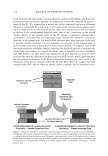
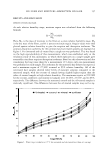
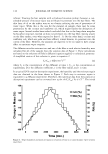
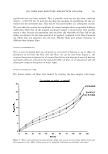
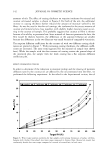
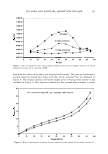
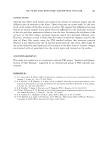
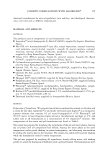
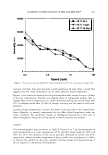
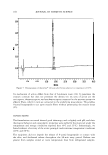
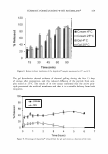
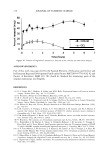
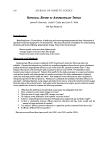
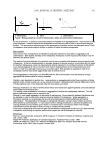
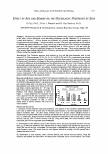
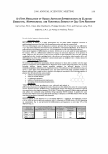
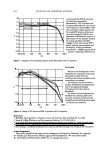
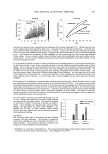
2006 ANNUAL SCIENTIFIC MEETING 207 0.25 C: 0.20 .. 0.15 Ql .:.c G 0.10 32 C: � 0.05 0.00 0 Wrinkling 10 20 30 40 50 60 70 80 Age 0.15 C: 0 LL 0.10 Ql 0.05 32 C: ·c: � 0.00 Wrinkling 0 10 20 30 40 50 60 70 80 Age In another cross-sectional survey, we measured facial wrinkling on 900 Caucasian women ages 10-70. Half the subjects lived in London, England and the other half lived in Rome, Italy. The graphs above show the data from that study. On the left, each point is the facial wrinkle measurement for each person in our study. Open circles show the facial wrinkling with smiling. Close circles show facial wrinkling without smiling. The graph at the right shows the best fit curves for these data segmented by city. Note that there was no difference in facial wrinkling at any age between Rome and London women when measured without smiling. However, when the subjects smiled, the Rome women showed significantly more facial wrinkles than the London women. It is not clear why a smiling facial expression increases facial wrinkling more in the women of Rome vs. their Caucasian counterparts in London. As we inspected the hundreds of images of women with smiling and non-smiling expressions, we noticed an interesting trend. For girls, those less than 15 years of age, we generally observed no clinically significant periorbital wrinkling with or without smiling. For the young women, those between about 20 and 35 years of age, most exhibited no clinically significant facial wrinkling with a non-smiling expression but did show some visible wrinkling in the periorbital region when they smiled. For the women over 50 years of age, clinically significant facial wrinkling was generally observed with or without smiling. This leads us to propose a simple 3-stage model for the age-related changes in facial wrinkling. In the first stage, there are no visible facial wrinkles with or without expression. In the second stage there is visible wrinkling only with expression and there is no visible wrinkling without expression. In the third stage, there is visible wrinkling with and without expression (persistent wrinkling). The lessening of facial wrinkling is an important unmet consumer need around the world. Indeed, Botox® Cosmetic was the most popular physician-administered aesthetic procedw-e in the United States from 2001-2005. This muscular new-otoxin from Clostridium botu/inum bacterium reduces the activity of the facial muscles that cause glabellar frown lines between the brows. Some people consciously try to not smile and frown to prevent their facial wrinkles from showing or out of fear the repeated expression will cause permanent facial lines in the future. Clearly then, facial expression should be considered when evaluating the clinical efficacy of topical products aimed at reducing the appearance of facial wrinkles. We therefore conducted a randomized controlled clinical study to measure the acute skin benefits of a facial moisturizer designed to reduce the appearance of facial wrinkling associated with facial expression. Toe study enrolled 19 Caucasian women between the ages of 25 and 45 years. Before product application, each subject's facial wrinkling was measured with and without smiling. The subjects then applied the test product (2 ug/cm2) to both sides of the face and waited 10 minutes. Facial wrinkling was measured again with and without smiling. The graph shows the results of this experiment The treatment had no effect on facial wrinkling without smiling. However, there was a significant and clinically noticeable reduction in facial wrinkling with smiling. Conclwions One of the first clinical signs of skin aging is the facial wrinkling associated with facial expression. The reduction of expression induced facial wrinkling was used to demonstrate the efficacy of a facial moistw-izer. Facial expression should be considered in the design of any clinical investigation of facial wrinkling. 0.12 �--------------� E 0.10 u � 0.08 u. ti � 0.06 ( � 0.04 C: � 0.0'l Before Treatment - Non-Smiling Smiling After Treatment 1. Hillebrand G. G., Levine M. J. and Miyamoto, K. 2001. The age-dependent changes in skin condition in African Americans, Caucasians, East Asians, Indian Asians and Latinos. IFSCC Magazine, 4( 4 ), 259-266.
Purchased for the exclusive use of nofirst nolast (unknown)
From: SCC Media Library & Resource Center (library.scconline.org)