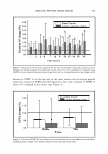
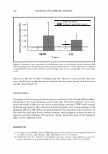
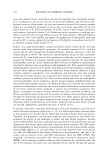
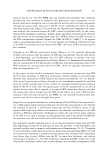
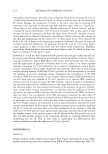
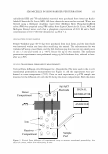
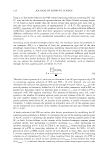
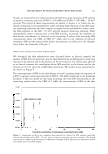
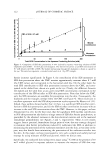
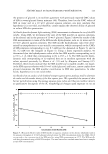
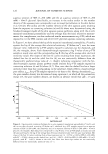
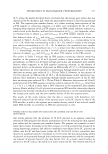
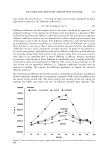
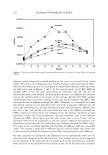
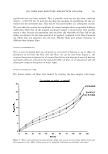
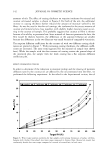
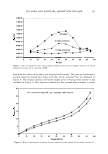
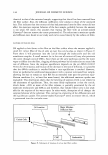
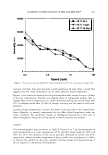
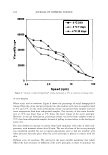
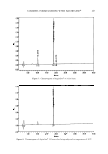
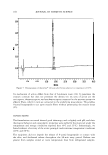
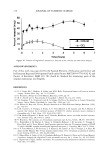
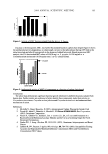
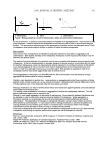
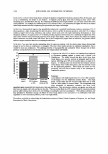
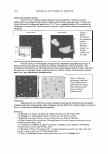
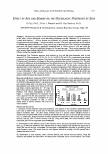
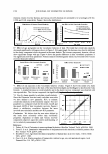
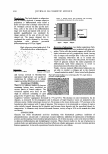
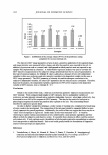
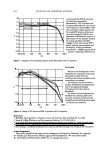
204 ar, .6 .4 V A 0 0 0 0 .2 .0 .8 .6 .4 .2 0 nn � � i::::::--..... t,Jler lrradiat Ion 290.0 300 320 JOURNAL OF COSMETIC SCIENCE Be1 ,:,re lrradiati• n 340 nm 360 � � ' \ It was found that SPF 28 sunscreen has demonstrated excellent photostability. SPF 45 product was not photostable after just 2 hrs of real time exposure or about 6 :MED, which was a somewhat surprising discovery for a high SPF product. At the same time, the findings for SPF 45 are in agreement with Robert M. Sayre et. al data obtained in the specially designed set-up that spectrally resembled sunlight. In this study several SPF 15 and 30 products were evaluated, and the majority of loss of protection occurred by 2 -3 l\ffiD exposure for all 380 \ � products containing avobenzone [ 1] 400.0 Figure 1. Change in UV absorbance spectra of SPF 28 product with UV exposure A 0,V'"l,+------1.,__ __ ...... ___ -+-----1-----'--------1 Conclusion We have now developed an in vitro method for the evaluation of sunscreen photostability under real-time conditions that closely resemble an end use outdoor environment. The technique can be utilized as a product development and optimization tool to distinguish photostable fonnulations from those that are photo labile. The results of such evaluations can be effectively communicated to the sunscreen consumer and can provide straightforward marketing claims based on familiar test conditions. 290.0 300 320 340 nm 360 380 400.0 Figure 2. Change in lN spectra of SPF 45 product with UV exposure References I. Robert M Sayre and John C. Dowdy Cosmetics & Toiletries, Vol. 114, No.5, 85-91 (1999) 2. James R Liffrig Wilderness and Environmental Medicine, 12, J 95-200 (2001) 3. http://www.atlas-mts.com/products/natural-weathering-testing-new/weathering library/testmeth.shtml 4. http://www.ims-usa.com/ittrium/visit?path=A1 x66x.1yl xaOxl x65yl xc6xl x65y1 xccxl x65 5. Eric Chatelain, and Bernard Gabard Photochemistry and Photobiology, Vol. 73, No.3, 401-406 (2001) Acknowledgements We are very grateful for the support of our colleagues at Ciba Specialty Chemicals, Inc., especially Dr. Joseph Lupia, Myriam Sohn, Shiela Loggins and Emily Bazemore. We would like to thank Dr. John Sottery and Peter Sottery of IMS, Inc. for valuable discussions.

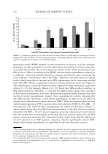
2006 ANNUAL SCIENTIFIC MEETING 205 THE USE OF 1,2-ALKANEDJOLS IN PERSONAL CARE FORMULATIONS Steve Schnittger1 and Joachim Roeding2 1 Estee Lauder Companies 2 Symrise Objective: 1,2-Alkanediols are good moisturizers and skin/hair conditioners. Besides, they are increasingly being used in cosmetic formulations because of their anti-microbial properties to help reduce preservatives. The anti-microbial activity of a material in a formulation, especially an emulsion, depends to a great extent on whether the material is present in the water phase. This paper investigates the influence of solubility and distribution of l ,2-A1kanediols and their mixtures in cosmetic formulations on preservative efficacy. Methods: It has been reported that the minimum inhibitory concentrations (MICs) of a 1: 1 mixture of 1,2-Hexanediol/1,2-Octanediol against microbes like E. coli, P. aeruginosa, S. aureus, C. albicans and A. niger are equal to or even better than that of 1,2-Octanediol, though the MICs of 1,2-Hexanediol are much lower than that of 1,2-Octanediol. In our first study we evaluated the distribution ratio of 1,2-Hexanediol, 1,2-Octanediol and their 1: 1 mixture between water and oil phases. For that purpose we made 1: 1 mixtures of paraffin oil-water and added 1 % each of the individual diols or their mixture. The water and oil phases were mixed, then separated and the concentration of the diols in the water phase was analyzed by reverse phase HPLC and refractive index detection. In the second study we investigated if having the 1,2-Alkanediols in the water phase of an emulsion has an effect on the anti-microbial efficacy of the diols. Three oil-in-water emulsions were prepared by using the same formulation containing 0.3% of a 1: 1 mixture of the two 1,2- Alkanediols and with no preservatives the only difference between the emulsions was the order of addition of the dial mixture- one was made by adding the dial mixture to the water phase, the other was made by adding it to the oil phase and the third was made by adding it after the emulsion was formed. All the three emulsions were then tested as per standard preservative challenge protocol. The test was repeated with emulsions containing 0.5% of the diol mixture. Results and Discussion: The results of our first study indicated that using a 1: 1 mixture of the 1,2-Alkanediols results in a higher concentration of the diols in the water phase of an emulsion compared to using 1,2-Octanediol alone. The preservative challenge tests with three different emulsions showed that the formulation in which the diol mixture was added after the emulsion was formed, has a faster rate of kill. We believe that the addition of the diols to an oil-in-water emulsion after the emulsion was formed helped keep the diols in the external water phase, thereby providing more anti-microbial efficacy. Adding the diols in the water phase did not help as some of the material would have got emulsified during the subsequent emulsification step. Conclusion: The antimicrobial efficacy of 1,2-Alkanediols in formulations is greatly determined by their availability in the water phase. We have showed that it is advisable to have the diols in the water phase of formulations for getting better anti-microbial efficacy from the diols. While making oil-in-water emulsions this is achieved this by adding the diols after the emulsion is formed. These observations greatly help cosmetic chemists to make formulations with better stability against microbial contaminations.
Purchased for the exclusive use of nofirst nolast (unknown)
From: SCC Media Library & Resource Center (library.scconline.org)