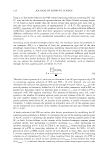
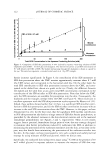
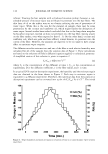
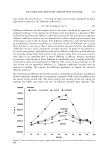
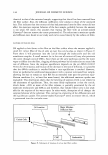
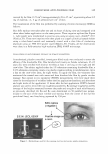
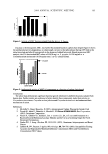
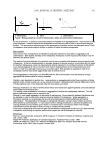
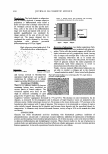
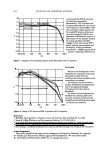
SDS MICELLES IN SKIN BARRIER PERTURBATION 113 radiolabeled SDS and 3 H-radiolabeled mannitol were purchased from American Radio labeled Chemicals (St. Louis, MO). All these chemicals were used as received. Water was filtered using a Millipore Academic water filter (Bedford, MA). Phosphate-buffered saline (PBS) was prepared using PBS tablets from Sigma Chemicals (St. Louis, MO) and Millipore filtered water, such that a phosphate concentration of 0.01 M and a NaCl concentration of O .13 7 M were obtained at a pH of 7. 2. PREPARATION OF SKIN SAMPLES Female Yorkshire pigs (40-45 kg) were purchased from local farms, and the skin (back) was harvested within one hour after sacrificing the animal. The subcutaneous fat was trimmed off using a razor blade, and the full-thickness pig skin was cut into small pieces (2 cm x 2 cm) and stored in a -80°C freezer for up to two months. The surfactant penetration experiments were performed using pig full-thickness skin, referred to here after as p-FTS. IN VITRO TRANSDERMAL PERMEABILITY MEASUREMENTS Vertical Franz diffusion cells (Permegear Inc., Riegelsville, PA) were used in the in vitro transdermal permeability measurements (see Figure 1). All the experiments were per formed at room temperature (25 ° C). Prior to each experiment, a p-FTS sample was mounted in the diffusion cell with the SC facing the donor compartment. Both the donor Ag/AgCl SIGNAL Donor Compartment GENERATOR AMMETER - - G Ions - G Receiver G Compartment G G Sample Port Figure 1. Vertical Franz diffusion cell experimental setup to measure transdermal permeability, skin electrical current, and/or skin radioactivity in vitro.

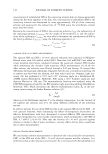
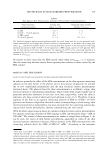
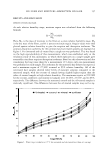
114 JOURNAL OF COSMETIC SCIENCE and the receiver compartments were filled with PBS, and the p-FTS sample was left to hydrate for one hour before the beginning of the experiment to allow the skin's initial barrier property to reach steady state. At this point, the skin electrical current across the p-FTS sample was measured (see below), and only p-FTS samples with an initial skin current 3 µA were used in the permeation studies (a well-accepted criterion for se lecting suitable in vitro skin samples (7 ,13)). The PBS in the donor compartment was then replaced with either 1.5 ml of an SDS aqueous solution or 1.5 ml of an SDS + 10 wt% glycerol aqueous solution. The solution in the donor compartment, referred to hereafter as the contacting solution, contacted the p-FTS sample for five hours. Note that a five-hour exposure of the skin was chosen because this is a sufficiently long time to allow significant SDS skin penetration, yet a short enough time to prevent the saturation of the skin with SDS. Subsequently, the contacting solution was removed and the donor compartment and the p-FTS sample were rinsed four times with 2 ml of PBS to remove any trace chemical left on the skin surface and in the donor compartment. The receiver compartment was stirred with a magnetic stirrer at a speed of 400 rpm throughout the experiment to eliminate permeant bulk concentration gradients. Following the SDS aqueous solution and the SDS + 10 wt% glycerol aqueous contacting solution treatments of the skin, the p-FTS samples in the diffusion cells were exposed to a contacting solution of 3 H-radiolabeled mannitol in PBS (1-10 µCi/ml) for 24 hours. Mannitol is: (i) a low-molecular-weight monosaccharide (MW = 182 Da) (6,7) and (ii) a highly hydrophilic (log K O /w = -3.1) chemical (7), which is not metabolized by the body, and hence, if desired, can also be used for in vivo skin permeation studies (6,7). Being small in size and highly hydrophilic, mannitol can access similar aqueous pores as do ions in order to transport across the skin barrier. This, in turn, makes mannitol a suitable permeant to study in the context of the hindered-transport porous pathway model of the SC (6-9). Pretreatment of p-FTS with (a) SDS or (b) SDS + 10 wt% glycerol aqueous contacting solutions in this manner, followed by passive mannitol-skin permeation, allowed for a controlled comparison of the skin barrier perturbation poten tial of solutions (a) and (b) at fixed exposure times of five hours. Throughout these experiments, solution samples were withdrawn from both the receiver (r) and the donor (d) compartments every two hours, and the concentrations of the radiolabeled permeant (mannitol) in the two compartments (Cr and Cd, respectively) were measured using a liquid scintillation counter (Packard, Sheldon, CT). When the transport of mannitol attained steady state, the mannitol skin permeability, P, was calculated as follows (6,7): (1) where V r is the volume of the receiver compartment, A = (1. 77 cm 2 ) is the area of the SC exposed to the mannitol solution in the donor compartment, and t is the exposure time. Equation 1 is based on the following two assumptions: (i) the concentration of the permeant in the donor compartment is high, and does not deplete with time, and (ii) the concentration of the permeant in the donor compartment is always much higher than that in the receiver compartment. In the experiments reported here, assumptions (i) and (ii) were both satisfied because less than 2% of mannitol in the contacting solution permeated across the p-FTS samples.
Purchased for the exclusive use of nofirst nolast (unknown)
From: SCC Media Library & Resource Center (library.scconline.org)