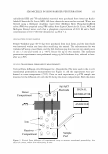
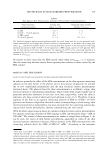
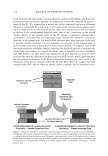
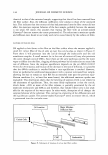
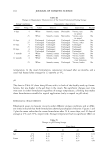
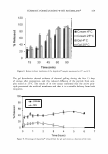
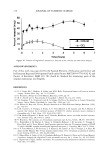
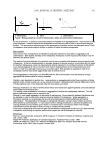
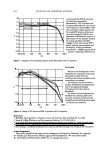
SDS MICELLES IN SKIN BARRIER PERTURBATION 115 IN VITRO SKIN ELECTRICAL CURRENT AND SKIN ELECTRICAL RESISTIVITY MEASUREMENTS During each skin permeation experiment, two Ag/ AgCl electrodes (E242, In Vivo Metrics, Healdsburg, CA) were placed in the donor and in the receiver compartments to measure the electrical current and the electrical resistivity across the p-FTS sample (see Figure 1). A 100 m V AC voltage (RMS) at 10 Hz was generated by a signal generator (Hewlett-Packard, Atlanta, GA) and was applied across the two electrodes for 5 s. The electrical current across the skin was measured using an ammeter (Hewlett-Packard, Atlanta, GA). This ammeter was used to measure low AC currents and was accurate in the 0.1 µA range. The electrical resistance of the p-FTS sample was then calculated from Ohm's law (7). Because the measured skin electrical resistance is the sum of the actual skin electrical resistance anl the background PBS electrical resistance, the latter was subtracted from the measured skin electrical resistance to obtain the actual skin electrical resistance. The skin electrical resistivity was then obtained by multiplying the actual skin electrical resistance by the skin area (A = 1.77 cm2). The skin electrical resistivity, being an intrinsic electrical property of the skin membrane, is a preferred measure in this analysis over the skin electrical resistance, which is an extensive electrical property of the skin membrane (3 3 ). Therefore, by using the skin electrical resistivity, it will be easier to compare differences in the electrical properties of the skin barrier upon exposure of the skin to the SDS and to the SDS + 10 wt% glycerol aqueous contacting solutions. Skin electrical current and resistivity measurements were carried out before and during the permeation experiments at each predetermined sampling point. For each p-FTS sample, an average skin electrical resistivity was determined over the same time period for which the steady-state skin permeability, P! was calculated using equation 1. This average skin electrical resistivity, R! was then analyzed along with the corresponding skin perme ability, P1 in the context of the theoretical framework presented below in the Theoretical section. IN VITRO SKIN RADIOACTIVITY MEASUREMENTS The p-FTS samples were mounted in vertical Franz diffusion cells, as was done in the case of the skin transdermal permeability measurements described above. Following a similar protocol, p-FTS samples were now exposed to aqueous contacting solutions containing 1.5 ml of SDS or 1.5 ml of SDS + 10 wt% glycerol. Each of these contacting solutions also contained about 1 µCi/ml of 14 C-SDS. Diffusion of SDS into the skin took place for five hours, as before, and subsequently, the aqueous contacting solutions were removed and the donor compartment and the p-FTS sample were rinsed four times with 2 ml of PBS to remove any trace chemical left on the skin surface and in the donor compartment. The p-FTS samples were then heat-stripped following a well-known procedure (11). Briefly, a p-FTS sample was placed in a water bath at 60°C for two minutes, and subsequently, the epidermis (the SC and the viable epidermis) that was exposed to the contacting solution was peeled off from the dermis. The exposed epidermis was then dried for two days in a fume hood and weighed. The dried epidermis was dissolved overnight in 1.5 ml of Soluene-350 (Packard, Meriden, CT). After the epidermis dissolved, 10 ml of Hionic Fluor scintillation cocktail (Pack ard) was added to the Soluene-350, and the concentration of radiolabeled SDS was determined using the Packard scintillation counter. Note that we did verify that the

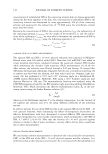
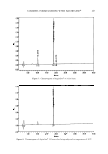
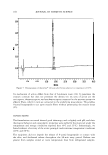
116 JOURNAL OF COSMETIC SCIENCE concentration of radiolabeled SDS in the contacting solution did not change appreciably during the five-hour exposure to the skin. The concentration of radiolabeled SDS in the contacting solution was determined by using afproximately 100 µl of the contacting solution and assaying for the radioactivity of 1 C-SDS using the scintillation cocktail assay described above. Knowing the concentration of SDS in the contacting solution, C sos, the radioactivity of the contacting solution, C raddonor' the dry weight of the epidermis, m, and the radioac tivity of the epidermis, Crad kin ' we were able to determine the concentration of SDS in the dried epidermis, Csvs ,;, in ' using the following equation (11): crad,skin • Csvs CSDS,skin = C rad,donor • m DYNAMIC LIGHT-SCATTERING MEASUREMENTS (2) The aqueous SDS and SDS + 10 wt% glycerol solutions were prepared in Millipore filtered water with 100 mM of added NaCl. Note that 100 mM NaCl was added to screen potential electrostatic repulsions between the negatively charged SDS micelles while performing the dynamic light-scattering (DLS) measurements (11,34,36-39). After mixing, the solutions were filtered through a 0.02-µm Anotop 10 syringe filter (Whatman International, Maidstone, England) directly into a cylindrical scattering cell to remove any dust from the solution, and then sealed until use. Dynamic light scat tering (34) was performed at 25 ° C and a 90° scattering angle on a Brookhaven BI- 200SM system (Brookhaven, Holtsville, NY) using a 2017 Stabilite argon-ion laser (Spectra Physics) at 488 nm. The autocorrelation function was analyzed using the CONTIN program provided by the BIC dynamic light-scattering software (Brookhaven, Holtsville, NY), which determines the effective hydrodynamic radius, R h , of the scat tering entities using the Stokes-Einstein relation (3 5 ): - kBT R =- h 6m1D (3) where k8 is the Boltzmann constant, Tis the absolute temperature, 'YI is the viscosity of the aqueous salt solution, and D is the mean diffusion coefficient of the scattering entities. In order to measure the size of the SDS micelles in the aqueous SDS and in the SDS + 10 wt% glycerol solutions, while eliminating the effects of interparticle interactions, the effective hydrodynamic radii were determined at several different SDS concentrations, and then extrapolated to a zero micelle concentration, which corresponds to the CMC of SDS, 8.7 mM (11,34,36-39). Note that the viscosity of a 10 wt% glycerol aqueous solution is similar to that of water, and hence, viscosity effects did not play a significant role in these measurements. SURF ACE TENSION MEASUREMENTS We used surface tension measurements to determine the critical micelle concentration, CMC, of the SDS and of the SDS + 10 wt% glycerol aqueous micellar solutions. It is well known that as the surfactant concentration, X, is increased, both the hydrophobicity
Purchased for the exclusive use of nofirst nolast (unknown)
From: SCC Media Library & Resource Center (library.scconline.org)