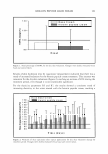
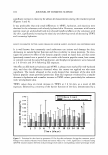
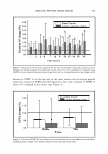
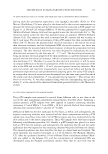
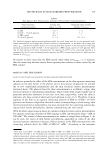
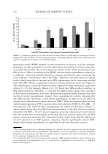
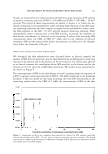
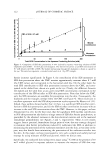
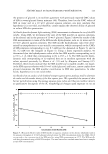
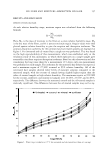
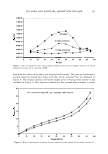
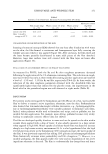
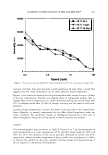
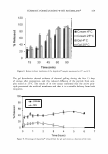
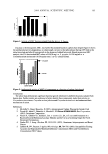
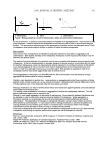
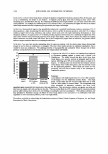
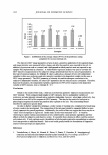
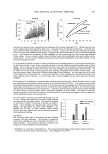
SDS MICELLES IN SKIN BARRIER PERTURBATION 121 Finally, we measured in vitro mannitol skin permeabilities upon exposing p-FTS samples to aqueous contacting solutions of SDS (1-200 mM) and of SDS (1-200 mM) + 10 wt% glycerol. The results of these measurements are shown in Figure 3, in which the dia monds correspond to the permeability values resulting from exposure to the SDS aque ous contacting solutions, and the triangles correspond to the permeability values result ing from exposure to the SDS + 10 wt% glycerol aqueous contacting solutions. These measurements seem to indicate that: (i) the SDS micelles, in general, do contribute to skin barrier perturbation, as reflected in the increasing P values with increasing SDS concentration above the CMC of SDS (8.7 mM), and (ii) the addition of glycerol minimizes SDS micelle-induced skin barrier perturbation, as reflected in the triangles lying below the diamonds in Figure 3. EFFECT OF GLYCEROL ON SDS SKIN PENETRATION We developed the skin radioactivity assay discussed above to directly quantify the amount of SDS that can penetrate into the skin barrier from an SDS aqueous contacting solution in the absence and in the presence of 10 wt% glycerol. Use of this assay allowed us to directly measure the contribution of the SDS micelles, in the absence and in the presence of 10 wt% glycerol, to SDS skin penetration. The results of our measurements are shown in Figure 4. The concentrations of SDS in the skin barrier (in wt%) resulting from the exposure of p-FTS to aqueous contacting solutions of SDS (1-200 mM) correspond to the diamonds in Figure 4. One can clearly see that upon increasing the total SDS concentration in the contacting solution above the CMC (8.7 mM), the concentration of SDS in the skin E � 1.E-03 1.E-03 � 8.E-04 :E cu a, 6.E-04 C :s 4.E-04 ·c C cu 2.E-04 0.E+00 0 CMC of SDS = 8.7 mM I i f I I 40 80 120 160 200 Total SDS Concentration in the Aqueous Contacting Solution {mM) Figure 3. Comparison of the in vitro mannitol skin permeability induced by SDS aqueous contacting solutions (diamonds) and by SDS 1 10 ',Vt% glycerol aqueous contacting solutions (triangles). The dotted vertical line at an SDS concentration of 8.7 mM denotes the CMC of SDS. The error bars represent standard errors based on 6-10 p-FTS samples.

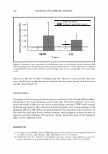
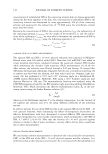
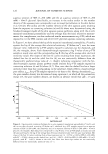
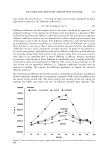
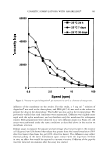
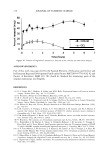
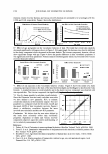
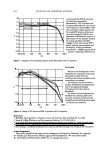
122 � 10 1 9 ... Q) 'E a C: 7 Q) 6 .c: -= 5 � 4 � 3 � 2 JOURNAL OF COSMETIC SCIENCE CMC of SDS = 8.7 mM .I Micelle Contribution - C: 8 1 } Monomer g Contribution o o---=------.._______.._______________......, 0 50 100 150 200 Total SDS Concentration in the Aqueous Contacting Solution (mM) Figure 4. Comparison of SDS skin penetration in vitro induced by aqueous contacting solutions of SDS (diamonds) and of SOS + 10 wt% glycerol (triangles). 'fhe dotted vertical line at an SDS concentration of 8.7 mM denotes the CMC of SDS. 'fhe dashed line passing through the diamonds is drawn as a guide to the eye. 'fhe error bars represent a standard error based on 6-10 p-F'fS samples. barrier increases significantly. In Figure 4, the contribution of the SDS monomers to SDS skin penetration above the CMC remains approximately constant above 8.7 mM (the CMC value), and corresponds to the horizontal solid line. On the other hand, the total SDS contribution to SDS skin penetration increases above the CMC, and corre sponds to the dashed line, drawn as a guide to the eye. Clearly, the difference between the dashed and the solid lines at any given total SDS concentration corresponds to the contribution of the SOS micelles to SDS skin penetration. Note that below the CMC, only the SDS monomers are available for penetration into the skin. Consequently, the diamonds and the triangles overlap below the CMC (see Figure 4). These results are in excellent agreement with the SDS skin penetration results reported by Moore et al. (11). Indeed, these authors showed earlier that: (i) there is a significant SDS micellar contri bution to SDS skin penetration, and (ii) the SDS micellar contribution increases with an increase in the total SDS concentration above the CMC. However, in this paper, we have demonstrated in vitroJ for the first time, that the significant SDS micellar contribution to SDS skin penetration also leads to a large extent of SDS skin barrier perturbation, as quantified by the observed increases in the skin electrical currents and in the mannitol transdermal permeabilities (see Figures 2 and 3, respectively). These in vitro results suggest, from a practical, formulation design point of view, that any strategy designed to minimize skin barrier perturbation induced by surfactants like SDS, in addition to minimizing the penetration of the surfactant monomers into the skin, as was done in the past, may also benefit from minimizing the penetration of the surfactant micelles into the skin. In this paper, we have investigated in vitro such a simple and useful practical strategy by using mixtures of SDS and glycerol, which we discuss next. Specifically, we conducted skin radioactivity assays using 14 C-SDS in the presence of 10 wt% added glycerol in aqueous solution to measure the amount of SDS that may
Purchased for the exclusive use of nofirst nolast (unknown)
From: SCC Media Library & Resource Center (library.scconline.org)