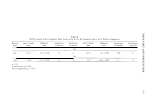
SDS MICELLES IN SKIN BARRIER PERTURBATION 131 SDS aqueous contacting solutions presented in this appendix. Finally, the aqueous pore number density (e/'T) value resulting from the exposure of p-FTS to the SDS aqueous contacting solutions was normalized by the el'T value resulting from the expo sure of p-FTS to the PBS control aqueous solution. We calculated this normalized value, (e!T)n ormal • to be 7 ± 1 (see Table I). ACKNOWLEDGMENTS We thank Dr. Sidney Hornby and Dr. Yohini Appa from Neutrogena Corporation for useful discussions, and for providing partial financial support for this work. REFERENCES (1) R. Scheuplein, and I. Blank, Permeability of the skin, Physiol. Rev., 702, 702-747 (1971). (2) P. M. Elias, Lipids and the epidermal permeability barrier, Arch. Dermatol. Res., 270, 95-117 (1981). (3) P. W. Wertz and D. E. Downing, "Stratum Corneum: Biological and Biochemical Considerations," in Transdermal Drug Delivery: Developmental Issues and Research Initiatives, J. Hadgraft and R. H. Guy, Eds. (Marcel Dekker, New York, 1989), pp. 1-22. (4) R. L. Bronaugh and H. I. Maibach, "In Vitro Models for Human Percutaneous Absorption," in Models in Dermatology, H. I. Maibach et al., Eds. (Karger, Bassel, 1985), Vol. 2, pp. 178-188. (5) M. Heisig, R. Lieckfeldt, G. Wittum, G. Mazurkevich, and G. Lee, Non steady-state descriptions of drug permeation through stratum corneum. I. The biphasic brick-and-mortar model, Pharm. Res., 13, 421-426 (1996). (6) K. D. Peck, A.H. Ghanem, and W. I. Higuchi, Hindered diffusion of polar molecules through and effective pore radii estimates of intact and ethanol treated human epidermal membrane, Pharm. Res., 11, 1306-1314 (1994). (7) H. Tang, S. Mitragotri, D. Blankschtein, and R. Langer, Theoretical description of transdermal transport of hydrophilic permeants: Application to low-frequency sonophoresis,]. Pharm. Sci., 90, 545-568 (2001). (8) K. D. Peck, A.H. Ghanem, and W. I. Higuchi, The effect of temperature upon the permeation of polar and ionic solutes through human epidermal membrane, J. Pharm. Sci., 84, 975-982 (1995). (9) A. Tezel, A. Sens, and S. Mitragotri, Description of transdermal transport of hydrophilic solutes during low-frequency sonophoresis based on a modified porous pathway model,]. Pharm. Sci., 92, 381-393 (2003). (10) G. K. Menon, and P. M. Elias, Morphologic basis for a pore-pathway in mammalian stratum corneum, Skin Pharmacol., 10, 235-246 (1997). (11) P. Moore, S. Puvvada, and D. Blankschtein, Challenging the surfactant monomer skin penetration model: Penetration of sodium dodecyl sulfate micelles into the epidermis,]. Cosmet. Sci., 54, 29-46 (2003). (12) L. D. Rhein, F. A. Simion, R. L. Hill, R.H. Cagan, J. Mattai, and H. I. Maibach, Human cutaneous response to a mixed surfactant system: Role of solution phenomenon in controlling surfactant irrita tion, Dermatologica, 180, 18-23 (1990). (13) T. Agner and J. Setup, Sodium lauryl sulphate for irritant patch testing-A dose-response study using bioengineering methods for determination of skin irritation,]. Invest. Dermatol., 95, 543-547 (1990). (14) L. D. Rhein, "In Vitro Interactions: Biochemical and Biophysical Effects of Surfactants on Skin," in Surfactants in Cosmetics, M. M. Rieger and L. D. Rhein, Eds. (Marcel Dekker, New York, 1997), pp. 397-426. (15) K. P. Ananthapadmanabhan, C. L. Meyers, and M. P. Aronson, Binding of surfactants to stratum corneum,J. Soc. Cosmet. Chem., 47, 185-200 (1996). (16) J. A. Faucher and E. D. Goddard, Interaction of keratinous substrates with sodium lauryl sulfate. I. Sorption, J. Soc. Cosmet. Chem., 29, 323-337 (1978). (17) J. A. Faucher and E. D. Goddard, Interaction of keratinous substrates with sodium lauryl sulfate. II. Permeation through stratum corneum,J. Soc. Cosmet. Chem., 29, 339-352 (1978).

132 JOURNAL OF COSMETIC SCIENCE (18) C. H. Lee and H. I. Maibach, Study of cumulative irritant contact dermatitis in man utilizing open application on subclinically irritated skin, Contact Dermatitis, 30, 271-275 (1994). (19) L. D. Rhein, C. R. Robbins, K. Fernee, and R. Cantore, Surfactant structure effects on swelling of isolated human stratum corneum,J. Soc. Cosmet. Chem., 37, 125-139 (1986). (20) J. Vilaplana, J. M. Mascaro, C. Trullas, J. Coll, C. Romaguera, C. Zemba, and C. Pelejero, Human irritant response to different qualities and concentrations of cocoamidopropylbetaines: A possible model of paradoxical irritant response, Contact Dermatitis, 26, 289-294 (1992). (21) K. P. Wilhelm, M. Samblebe, and C. P. Siegers, Quantitative in vitro assessment of N-alkyl sulphate induced cytotoxicity in human keratinocytes (HaCaT): Comparison with in vivo human irritation tests, Br.]. Dermatol., 130, 18-23 (1994). (22) K. P. Wilhelm, A. B. Cua, H. H. Wolff, and H. I. Maibach, Surfactant-induced stratum corneum hydration in vivo: Prediction of the irritation potential of anionic surfactants,]. Invest. Dermatol., 101, 310-315 (1993). (23) K. P. Wilhelm, G. Freitag, and H. H. Wolff, Surfactant-induced skin irritation and skin repair,]. Am. Acad. Dermatol., 30, 944-949 (1994). (24) J. W. Fluhr, M. Gloor, L. Lehmann, S. Lazzerini, F. Distante, and E. Berardesca, Glycerol accelerates recovery of barrier function in vivo, Acta Derm Venereal, 79, 418-421 (1999). (25) J. Bettinger, M. Gloor, A. Vollert, P. Kleesz, J. Fluhr, and W. Gehring, Comparison of different non-invasive test methods with respect to the different moisturizers on skin, Skin Res. Technol., 5, 21-27 (1999). (26) A. M. Grunewald, J. Lorenz, M. Gloor, W. Gehring, and P. Kleesz, Lipophilic irritants: Protective values of urea and glycerol containing oil in water emulsions, Dermatosen, 44, 81-86 (1996). (27) M. D. Batt and E. Fairhurst, Hydration of the stratum corneum, Int.]. Cosmet. Sci., 8, 253-256 (1986). (28) M. Loden, Urea-containing moisturizers influence barrier properties of normal skin, Arch. Dermatol. Res., 288, 103-107 (1996). (29) D. S. Orth and Y. Appa, "Glycerine: A Natural Ingredient for Moisturizing Skin," in Dry Skin and Moisturizers: Chemistry and Function, M. Loden and H. I. Maibach, Eds. (CRC Press, Boca Raton, FL, 2000), pp. 213-228. (30) C. L. Froebe, F. A. Simian, H. Ohlmeyer, L. D. Rhein, J. Mattai, R. H. Cagan, and S. E. Friberg, Prevention of stratum corneum lipid phase transitions in vitro by glycerol-An alternative mechanism for skin moisturization,]. Soc. CoS1net. Chem., 41, 51-65 (1990). (31) A. Rawlings, C. Harding, A. Watkinson,]. Banks, C. Ackermann, and R. Sabin, The effect of glycerol and humidity on desmosome degradation in stratum corneum, Arch. Dermatol. Res., 287, 457-464 (1995). (32) G. B. Kasting and L. A. Bowman, DC electrical properties of frozen, excised human skin, Pharm. Res., 7, 134-143 (1990). (33) J. Kushner, D. Blankschtein, and R. Langer, Experimental demonstration of the existence of highly permeable localized transport regions in low-frequency sonophoresis,]. Pharm. Sci., 93, 2733-2745 (2004). (34) L. Magid, "Light Scattering in Micellar Systems," in Dynamic Light Scattering: The Method and Some Applications, W. Brown, Ed. (Oxford University Press, Oxford, 1993), pp. 554-593. (35) A. Einstein, Investigation on the Theory of Brownian Movement (Dover, New York, 1956), vol. 58. (36) W. Brown, J. Fundin, and M. G. Miguel, Poly(ethylene oxide)-sodium dodecyl sulfate interactions studied using static and dynamic light scattering, Macromolecules, 25, 7192-7198 (1992). (37) P. J. Missel, N. A. Mazer, G. B. Benedek, and M. C. Carey, Influence of chain length on the sphere to-rod transition in alkyl sulfate micelles,]. Phys. Chem., 87, 1264-1277 (1983). (38) A. Rohde and E. Sackman, Quasieleatic light-scattering studies of micellar sodium dodecyl sulfate solutions at the low concentration limit,]. Colloid Interface Sci., 70, 494-505 (1979). (39) P. L. Dubin, J. H. Grubner, J. Xia, and H. Zhang, The effect of cations on the interaction between dodecylsulfate micelles and poly(ethyleneoxide),j. Colloid Interface Sci., 148, 35-41 (1992). (40) T. R. Carale, Q.T. Pham, and D. Blankschtein, Salt effects on intramicellar interactions and micell ization of nonionic surfactants in aqueous solutions, Langmuir, 10, 109-121 (1994). (41) M. Mulqueen and D. Blankschtein, Theoretical and experimental investigation of the equilibrium oil-water interfacial tensions of solutions containing surfactant mixtures, Langmuir, 18, 365-376 (2002). (42) W. M. Deen, Hindered transport of large molecules in liquid-filled pores, AIChEJ., 33, 1409-1425 (1987).
Purchased for the exclusive use of nofirst nolast (unknown)
From: SCC Media Library & Resource Center (library.scconline.org)