SDS MICELLES IN SKIN BARRIER PERTURBATION 129 nuity of the lacunar domains, thereby resulting in a reduction in the radius, and/or in the number density of the aqueous pores in the SC. On the other hand, in vitro as well as in vivo studies document that surfactants like SDS have an opposite effect on the SC lipids and on the corneocyte keratins. SDS has been shown to induce direct alteration to the structure of the intercellular lipid mortar (48,49), as well as to disrupt the keratin structure of the corneocytes in the SC (16,50,51). Both of these effects can induce the formation of additional lacunar domains, as well as enhance the structural continuity of existing lacunar domains. This is how SDS may induce an increase in the radius, and/or in the number density, of the aqueous pores in the SC. A mixture of SDS and glycerol in an aqueous contacting solution will result in: (a) glycerol reducing and (b) SDS increasing the radius and the number density of the aqueous pores in the SC. These considerations may help rationalize how adding 10 wt% glycerol to an SDS aqueous contacting solution can reduce the radius and the number density of the aqueous pores induced by SDS in the SC. CONCLUSIONS According to a well-accepted view in the cosmetics literature, surfactant micelles cannot penetrate into the skin due to size limitations, and as a result, surfactant-induced skin barrier perturbation should be determined solely by the concentration of the surfactant monomers (11-23). Moore et al. (11) have recently shown that this is not the case for a model skin irritant, the surfactant SDS. Instead, they hypothesized that SDS micelles can penetrate into the skin barrier and induce skin barrier perturbation. In this paper, for the first time, using mannitol transdermal permeability and average skin electrical resistiv ity measurements in the context of a hindered-transport aqueous porous pathway model, we have demonstrated in vitro that SDS induces an increase in the average radius of the skin aqueous pores, from 20 ± 3.A to 33 ± 5.A, such that the SDS micelles of size 19.5 ± 1.A can penetrate into the SC through these aqueous pores. In addition, SDS induces a sevenfold increase in the number density of these aqueous pores, thereby significantly enhancing the SDS micellar contribution to SDS skin penetration and to skin barrier perturbation in vitro. Using in vitro skin radioactivity measurements, we demonstrated that adding 10 wt% glycerol to an aqueous SDS micellar contacting solution significantly reduces: (i) the total extent of SDS skin penetration and (ii) the SDS micelle contribution to SDS skin penetration. This is due to the fact that glycerol eliminates almost completely the contribution of the SDS micelles to SDS skin penetration. Through dynamic light scattering measurements, we have verified that glycerol does not increase the size of the SDS micelles, which if increased, could have minimized the SDS micellar contribution to SDS skin penetration. In addition, through surface tension measurements that were used to determine the CMC values of SDS in water and in a 10 wt% glycerol aqueous solution, we have shown that glycerol does not reduce the concentration of the SDS monomers contacting the skin, which if reduced, could have minimized the SDS mo nomeric contribution to SDS skin penetration. Using in vitro transdermal permeability and average skin electrical resistivity measurements upon exposure of tllP kin to ;::i]nFous contacting solutions of SDS and of SDS + 10 wt% added glycerol, in the context of a hindered-transport aqueous porous pathway model, we have conclusively demonstrated

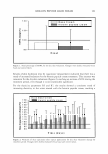
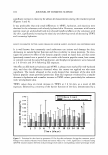
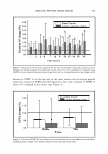
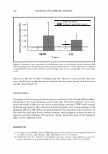
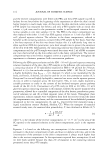
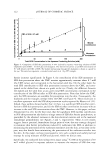
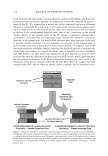
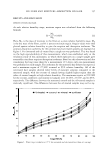
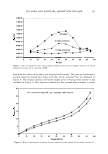
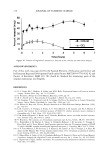
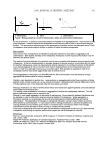
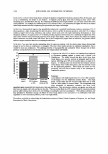
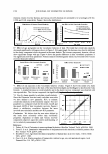
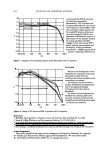
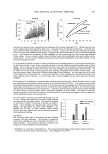
130 JOURNAL OF COSMETIC SCIENCE that the addition of 10 wt% glycerol prevents SDS micelles from penetrating into the skin barrier by: (a) reducing the radius of the skin aqueous pores induced by the SDS aqueous contacting solution, from 33 ± 5A to 20 ± 5A, such that an SDS micelle of radius 18.5 ± 1A in an aqueous SDS micellar solution with 10 wt% added glycerol experiences steric hindrance and cannot penetrate into the SC, and (b) reducing the number density of the skin aqueous pores by more than 50%, thereby further reducing the ability of the SDS micelles to penetrate into the SC and induce skin barrier pertur bation. APPENDIX DETERMINATION OF THE RADIUS AND THE NUMBER DENSITY OF THE SKIN AQUEOUS PORES RESULTING FROM EXPOSURE OF p-FTS TO SDS AQUEOUS CONTACTING SOLUTIONS Average skin electrical resistivities, R! and mannitol-skin permeabilities, P! were mea sured upon exposure of p-FTS to SDS aqueous contacting solutions, as discussed in the text, and the resulting log P vs log R plot is shown in Figure 6 (see diamonds and the dashed line). It is noteworthy that the slope of the best-fit straight line (the dashed line) through the diamonds in Figure 6 is 0.98 ± 0.06, which is statistically similar to the theoretical value of -1 (see equation 4). The R 2 value is 0.96, which is close to 1. Hence, these results lend further support to the validity of the hindered-transport skin aqueous porous pathway model developed by Tang et al. (7). The intercept value in Figure 6 is -2.90 ± 0.03. The infinite-dilution diffusion coefficient of mannitol, v , is 0.672 x 10- 5 cm2/s at 25°C (6,7). The hydrodynamic radius of mannitol, r p , is 4.44 A (6,7). Because skin electrical currents were measured in PBS that contained Na + and Cl - as the dominant ions, the Na+ ions were used to model the current-carrying ions present in the solution. The infinite-dilution diffusion coefficient of the Na+ ions, v: n , is 1.33 x 10- 5 cm2/s at 25°C (7). The hydrodynamic radius of the Na + ion, r io n, is 2.2 A (7). In addition, we have used the following parameter values in C (see equation 4) in the Theoretical section): k 8 = 1.38 x 10- 23 J/K (Boltzmann constant), T = 298 K, F = 9.6485 x 10⁴ C/mol (Faraday constant), z = 1 (in the PBS solution, since NaCl is the dominant electrolyte), c ion = 0.137 M, and e 0 = 1.6 x 10- 19 C. Using these parameter values, along with the experimentally determined value of C, we were able to determine the value of the ratio: H(A p )/H(A ion ) (see the expression for C in the Theoretical section). Next, using: (i) equation 5, (ii) the hydrodynamic radii values of mannitol and Na+, that is, 4.44 and 2.2 A, and (iii) the value of the ratio H(A p )/H(A ion ), we were able to numerically solve for the average pore radius, r pore · The average pore radius, r pore was found to be 33 ± 5 A, which we have taken as the radius of the skin aqueous pores. Note that H(A p ) and H(A i01,) are each less than 0.4, which is necessary for equation 5 to be valid (6,7,42). Having determined the aqueous pore radius, r pore ' the pore number density was determined using equation 6, in which all the parameters, except for e!T, the pore number density, are known in advance (since .6.X = 15µm) (6,7). The aqueous pore number density, e!T, for p-FTS exposed to the PBS control aqueous solution was determined using a calculation similar to the one for p-FTS exposed to the
Purchased for the exclusive use of nofirst nolast (unknown)
From: SCC Media Library & Resource Center (library.scconline.org)