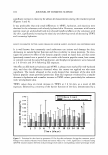
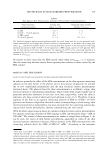
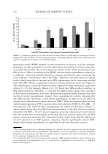
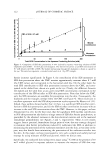
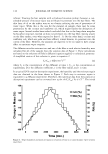
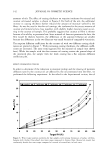
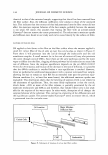
136 JOURNAL OF COSMETIC SCIENCE to examine how the sorption of water vapor is affected by various oils applied to hair in relation to film thickness, which was controlled by the amount of oil applied to hair. No attempt has been made to determine film thickness on the hair surface. For this study, three oils, namely coconut, mineral, and sunflower oils, were chosen based on their performance in an earlier study (1). Among these, coconut oil was known to penetrate the whole fiber, whereas sunflower oil showed limited penetration, especially into the cortex (3). Mineral oil was found not to penetrate the hair (2,3). The sorption and desorption of water vapor 24 hours after oil treatment, with the application of heat, and after removal of the oil film from the surface were studied. Additionally, hair samples were treated with various amounts of oil in order to demonstrate the effect of the film thickness on water vapor sorption behavior. It is known that oils have different abilities to penetrate into the cortex of the hair (1,3). In this study, we are attempting to see how the sorption of the water vapor is affected by the oil in the interior of the fiber and the oil film on the surface. EXPERIMENTAL All treatments were performed on dark brown European hair (purchased from DeMeo Brothers Inc., New York), which was washed with 1 % sodium lauryl sulfate solution and rinsed thoroughly. The oils used for this study were commercially available mineral oil, coconut oil, and sunflower oil. Oils were applied to hair tresses in a ratio of 0.1 ml of oil per gram of hair. The oils were gently massaged into the hair swatch, and the samples were kept for 24 hours at room temperature (-25°C) before testing. Another set of tresses was treated with each of the oils as described above and then exposed to heat after the 24-hour time period. The samples were heated with a hair dryer on medium heat (-60-80°C) and air flow for 15 minutes before testing. Additionally, samples were treated with a larger amount of coconut and mineral oil to form a thicker layer on the hair surface. This was achieved by applying oil in a ratio of 1.2 ml of oil per gram of hair. Finally, measurement on a coconut oil-treated sample was performed after the removal of the surface oil. This tress was treated with O .1 ml of coconut oil, and kept for 24 hours. Then a Kimwipe® was wetted with acetone and the hair sample was pulled through the wipe multiple times until the fibers no longer showed any visual signs of the coconut oil treatment. Sorption and desorption of water vapor was determined gravimetrically using a dynamic vapor sorption analyzer (DVS-1 from Surface Measurement Systems, NA, Allentown, PA). The description of the apparatus has been covered elsewhere (5). All experiments were conducted at 25°C and a total gas flow of 200 ml/min. Approximately 25 mg of hair snippets cut from the hair tress were dried overnight at 0% RH under dry nitrogen gas. Relative humidity was then increased by steps of 10% up to 90%, and then to 95%. Relative humidity was then decreased through the same steps back to 0%. The samples remained at each stage until its mass reached "equilibrium" (arbitrarily defined by a change in mass of less than 0.0015% per minute for 20 minutes). For the studies on the thicker oil coatings, only the sorption half of the experiment was performed.

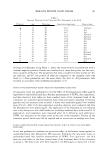
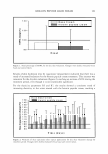
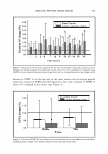
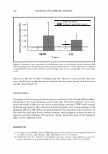
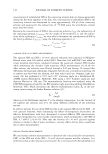
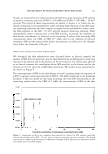
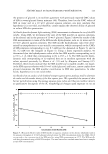
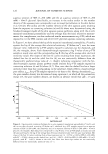
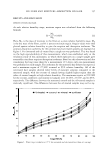
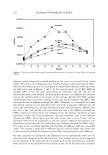
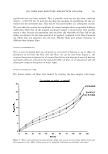
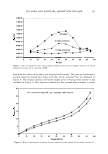
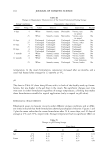
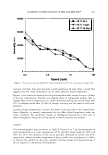
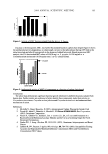
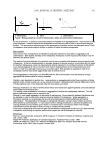
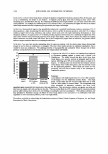
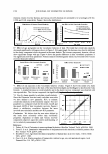
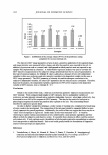
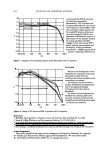
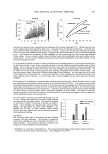
OIL FILMS AND MOISTURE ABSORPTION ON HAIR 137 RES UL TS AND DISCUSSION EFFECTS OF THIN OIL FILMS At each relative humidity stage, moisture regain was calculated from the following formula: Mv R=-x 100% MD (1) Here, Mv is the mass of moisture in the fibers at a given relative humidity stage, M D is the dry mass of the fibers, and R is percent moisture regain. Regain values were then plotted against relative humidity to give the sorption and desorption isotherms. The sorption-desorption isotherms for the untreated and oil-treated samples are displayed in Figure 1. For untreated and oil-treated hair a single run was performed. This was based on the high reproducibility of this measurement, which was established early in the validation study of this instrument, in which three replicates on a single sample gave essentially coincident sorption-desorption isotherms. Based on this observation and also considering the long time taken for a measurement (2.5 days), only one measurement was performed on each sample. The isotherms for the untreated hair behaved as expected, and a maximum regain of 27 .38% occurred at 95% relative humidity. All of the oil-treated hair samples showed lower levels of moisture sorption compared to the untreated sample, with the coconut oil sample having slightly higher regain than the other oil-treated samples at high relative humidity. The maximum regains at 95% RH for the coconut, sunflower, and mineral oil samples were 23.65%, 22.53%, and 22.05%, respectively. The difference between the untreated control and the oil-treated samples is statiscally significant. The differences between the oil-treated samples may not be sig- 30 .-------------------------------------, 25 20 10 5 0 10 --- Untreated -+-coconut --¼- mineral -e-sunflower 20 30 40 50 Target RH (%) 60 70 80 90 Figure 1. Water vapor isotherms at 25 ° C for untreated and oil-treated hair (thin oil coating). 100
Purchased for the exclusive use of nofirst nolast (unknown)
From: SCC Media Library & Resource Center (library.scconline.org)