158 JOURNAL OF COSMETIC SCIENCE collagen and elastin fibers to similar stresses. As a result, the skin becomes contracted into a permanent expression wrinkle, where the extracellular matrix of collagen and elastin has been found to break down (4). Several processes are vulnerable to alteration from skin wrinkling in cosmetic terms (5 ): • Neuronal exocytosis involves neurotransmitter release from synaptic vesicles into the synaptic space. Synaptic vesicles bearing neurotransmitters are taken up by the soluble N-ethylmaleimide-sensitive factor attachment protein receptor (SNARE) complex and fused with the cell membrane, releasing neurotransmitters in the process. The receptor complex consists of three proteins: synaptobrevin (VAMP), syntaxin, and synaptosomal-associated protein (SNAP-25) (6). • Contraction and relaxation of fibroblasts, the cells that produce collagen and elastin and are responsible for maintaining the extracellular matrix, are transmitted to the connective tissue, where these forces successively stretch and relax the skin. Specifically, type A botulin toxin produced by Clostridium botulinum acts by irreversibly destroying SNAP-25 protein in the SNARE complex, thus preventing the release of acetylcholine and paralyzing the involved muscle (7). Between 15 and 20 days after infiltration, new nerve endings are formed, and these endings become active within two or three months. After three to six months, nerve signals to the muscle are completely restored (8). A novel aspect of Argireline® is its ability to act via topical application, which offers multiple advantages in comparison to formulations based on botulin toxin. The main advantage of Argireline® lies in its lower toxicity per unit weight. One gram of botulin toxin is enough to kill one million persons, whereas Argireline® is about 4000 times less potent, and thus constitutes a safer alternative for treating wrinkles (9). With the latter, injections to the face, which are potentially uncomfortable or painful, are unnecessary. Moreover, Argireline® can be used as an interim treatment between botulin toxin injections, since it prolongs the effects of Botox and reduces the frequency of microin jections. The synthetic peptide is cheaper, and is indicated for persons who have devel oped immunity to botulin toxin after prolonged use. Argireline® (acetyl hexapeptide-8), the active principle in the formulations studied here, is a hexapeptide formed from a chain of six amino acids linked via a synthetic process. This peptide has two main actions. One is muscle relaxation by inhibiting the SNARE complex, but unlike botulin toxin, Argireline® does not irreversibly destroy the SNAP- 25 protein, but modifies its conformation and competes with it for sites in the SNARE complex. The hexapeptide, an analog of the N-terminal end of the SNAP-25 protein, does not completely destroy the SNARE complex but only destabilizes it slightly, such that the synaptic vesicles cannot bind and release acetylcholine efficiently (10). As a result, a degree of neurotransmission is preserved in equilibrium with muscle relaxation, muscle contraction is attenuated, and wrinkle formation is prevented (11). Argireline® is also able to relax fibroblasts that relax the collagen and elastin matrix, through a mechanism involving calcium ion uptake. The main objective of this study was to develop a formulation that ensured transfor mation of the active principle (acetyl hexapeptide-8) into a cosmetically active product. We therefore studied stability, defined as the ability of the formulation to maintain its initial characteristics. The parameters we measured as relevant to structural changes that can occur in cosmetic formulations were changes in organoleptic characteristics (a fun-

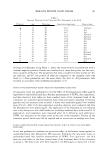
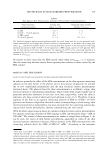
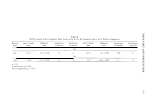
COSMETIC FORMULATIONS WITH ARGIRELINE® 159 damental consideration for user acceptability), heat stability, and rheological character istics over time and at different temperatures. MATERIAL AND METHODS MATERIALS The products used as components in our formulations were: • Argireline® (acetyl hexapeptide-8), Batch Fl460/04, supplied by Lipotec (Barcelona, Spain). • Neo PCL o/w Autoemulsionable® (cera alba, stearyl heptanoate, cetearyl octanoate, cetyl palmitate, stearyl alcohol, steareth-7, steareth-10, stearyl caprylate, isopropyl myristate, myristyl alcohol, dimethicone, paraffinum liquidum), Batch 0512651, supplied by Roig Farma-Fagron (Terrasa, Spain). • Tefose 2561 (PEG-6 stearate, Ceteth-20, glyceryl stearate, Steareth-20), Batch 0503697, supplied by Roig Farma-Fagron (Terrasa, Spain). • Cyclomethicone pentamer (cyclopentasiloxane), purity 99.26%, Batch 0509565, sup plied by Roig Farma-Fagron (Terrasa, Spain). • Sorbitol 70%, Ph. Eur., purity 70.1 %, Batch 0405020, supplied by Roig Farma Fagron (Terrasa, Spain). • Glycerol, Ph. Eur., purity 99.8%, Batch 05F0204, supplied by Roig Farma-Fagron (Terrasa, Spain). • Hispagel 200®, Batch 0409242, supplied by Roig Farma-Fagron (Terrasa, Spain). • Propylene glycol, Ph. Eur., water content 0.1 %, Batch 04K23FP, supplied by Roig Farma-Fagron (Terrasa, Spain). • Phenonip® (phenoxyethanol, methylparaben, butylparaben, ethylparaben, propyl paraben), Batch 0510592, supplied by Roig Farma-Fagron (Terrasa, Spain). • Kathon CG® (methylchloroisothiazolinone 1.5%, methylisothiazolinone 0.37%), pu rity 75.2%, Batch 0504885, pH 2.6. • Deionized distilled water, supplied by Interapothek (Murcia, Spain). METHODS Preparation of formulations. We prepared an oil/water emulsion for normal-to-dry skin and a cream for oily skin. Argireline® is sold under the brand name Lipotec® as a transparent aqueous solution that contains 0.5 g/1 acetyl hexapeptide-8, 0.5% Phenonip®, and 99.45% water. It was refrigerated upon arrival at the laboratory and kept at 4°C, and added cold to all formulations at a concentration of 5 % Argireline® solution. The compositions of the cream and gel formulations are listed in Table I. The cream was prepared by weighing the ingredients of the oil and water phases, heating the oil phase until all components had melted, heating the water phase to the same temperature under gentle shaking to ensure homogeneity, and obtaining the emulsion by adding the water phase to the oil phase. The system was stabilized by gentle shaking while the formulation cooled to room temperature. The gel was prepared by weighing all ingredients, slowly adding water, and shaking gently (to avoid the formation of bubbles) until a gel had formed. The formulations were
Purchased for the exclusive use of nofirst nolast (unknown)
From: SCC Media Library & Resource Center (library.scconline.org)