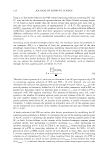
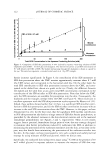
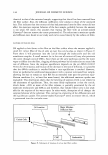
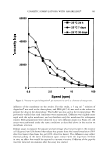
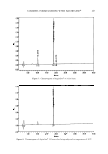
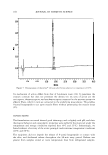
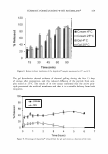
160 Formula Gel Cream JOURNAL OF COSMETIC SCIENCE Table I Formulas for the Gel and Cream Formulations with Argireline® Composition Hispagel 200 25% Propylene glycol 3% + Argireline® 5% Phenonip 0.3% Water to a volume of 100 ml Oil phase Neo PCL 0/W 23% Tefose 1.5% Cyclomethicone pentamere 2% Water phase Sorbitol 4% Glycerine 4% Kathan 0.1% Water to a volume of 100 ml + Argireline® 5% stored at 4°C and room temperature (25°C). To prepare cream and gel we used a propeller Heidolph RZR 1. Organoleptic characteristics. Organoleptic characteristics were classified with descriptive terms (12) as thick, hard, creamy, smooth, soft, dry, thin, spreadable, cool, or warm. The cream and gel were scored for color, odor, texture, consistency, and appearance (exudates) 24 h after preparation and after storage at both temperatures for 30, 60 and 90 days, six months, and 12 months. pH. Chemical stability was evaluated as pH during storage for three months to predict the behavior of the formulations in contact with human skin. To measure pH we used a Crison 501 digital pH/mV-meter with the electrode for viscous samples. Rheological characteristics. The rheological properties of the formulations were studied as viscosity, a parameter closely related with stability (13). Assays were run at increasing shear rates in a Brookfield DV II+ viscosimeter (Brookfield Engineering Laboratories, Stoughton, MA) connected to a PC with the appropriate software. Rheological data were recorded periodically during a maximum period of 30 days. Stability. The activity of Argireline® peptide was studied as the effect of temperature on the stability of the active principle. Samples of the commercially available Argireline® solution were stored at 25°C, 40°C, and 60°C in an incubator for 24 h, and activity was then determined with high-performance liquid chromatography. In vitro release Assays with no membrane. To avoid manipulations and vehicles that might interfere with the cutaneous release of Argireline®, we studied release from the gel and cream formulations in vitro. In this study we tested diffusion in a system with no membrane, in which the excipient and the receptor phase were in direct contact (14, 15 ). Both formulations were also studied in an in vitro release system that simulated the physi ological conditions of drug desorption (16). To simulate these conditions, the formu lations were placed in a 32°C bath at 60 rpm in the release media phosphate-buffered solution (PBS) at pH 5.6. Release was measured by spectrophotometry over time and at

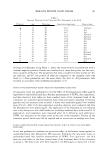
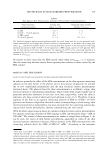
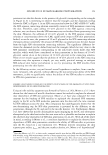
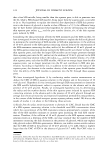
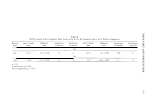
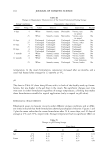
COSMETIC FORMULATIONS WITH ARGIRELINE® 161 a wavelength of 260 nm, at which absorption of the active principle is maximal. The same formulation with no active principle was assayed as a control. Diffusion across a membrane. Most published studies involve Franz-type cells (17-19). The FDC-400 cell (Vidra-Foe, Barcelona, Spain) consists of two compartments with a membrane clamped between the donor and receiver chambers. As the receptor phase we used a phosphate-buffered solution at pH 5 .6 (normal skin pH). Three types of mem brane (all 47 mm in diameter with 0.45-µm pore size) were tested: methylcellulose, nylon, and polysulfone (supplied by Millipore, Madrid, Spain). The concentration of Argireline® in the receptor cell was measured by UV spectrophotometry at 260 nm (A.max). The method was previously validated and verified for accuracy, precision, and linearity (20). A Perkin Elmer UV/Vis Lambda 40 UV spectrophotometer was used for all measurements. RESULTS AND DISCUSSION The data are given as the mean and standard deviation of six determinations made with samples of each formulation at each temperature and after each storage period. All results were compared by analysis of variance (ANOV A) for a 95 % confidence level to identify significant differences. ORGANOLEPTIC CHARACTERISTICS Tables II and III show the changes in organoleptic properties with time in the gel and cream formulations, respectively. The temperature or duration of storage did not sig nificantly affect the external appearance or texture of either formulation after 12 months. After 30 days, refrigerated samples showed better consistency than samples stored at room temperature. Consistency tended to decrease in the gel formulation after 12 months, with no differences between samples stored under refrigeration or at room Table II Changes in Organoleptic Characteristics of the Gel Formulation During Storage Storage conditions Organoleptic characteristics Time Temp. (°C) Color Texture Odor Consistency Exudate 0 days 4 Transparent Smooth, thin, cool Noticeable Viscous, easy No to spread 25 Transparent Smooth, thin Noticeable Viscous, easy No to spread 30 days 4 Unchanged Unchanged Unchanged Unchanged No 25 Unchanged Unchanged Unchanged Thinner No 60 days 4 Unchanged Unchanged Unchanged Unchanged No 25 Unchanged Unchanged Unchanged Unchanged No 90 days 4 Unchanged Unchanged Unchanged Unchanged No 25 Unchanged Unchanged Unchanged Unchanged No 6 months 4 Unchanged Unchanged Unchanged Unchanged No 25 Unchanged Unchanged Unchanged Unchanged No 12 months 4 Unchanged Unchanged Change Decrease Yes 25 Unchanged Unchanged Change Decrease Yes
Purchased for the exclusive use of nofirst nolast (unknown)
From: SCC Media Library & Resource Center (library.scconline.org)