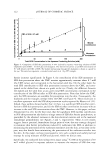
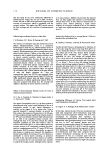
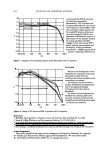
182 JOURNAL OF COSMETIC SCIENCE ANTIPERSPIRANT TECHNOLOGY: THE CHEMISTRY AND FORMULATION PROPERTIES OF ANTIPERSPIRANT ACTIVES Allan H. Rosenberg, Ph.D. Summit Research Labs Antiperspirant actives are the ingredients in antiperspirant products that actually cause sweat inhibition. The two major types of actives are aluminum chlorohydrate (ACH) and aluminum-zirconium-glycine (AZG) salts both in liquid and powder form. The chemistry of these materials is quite complex and significantly impacts the in-vivo performance of these materials in the finished antiperspirant product. These actives consist of cationic aluminum and zirconium polymers which can vary in number, size and distribution depending upon the active in question. In order to produce commercial high performance actives, three steps are required. Firstly, experimental techniques must be available which can separate, detect, and quantitatively measure the aluminum and zirconium polymer distributions present in the actives. This allows us to monitor the aluminum and zirconium chemistries of these systems as a function of reactant starting materials, synthesis routes, heat, dilution, aging etc. Second, the chemical information is correlated with in-vivo clinical efficacy studies to determine which aluminum and zirconium chemistries result in optimum clinical performance. Finally, processing methodology is developed to maintain the targeted chemistries in the final commercial product. Several experimental techniques have been developed to characterize antiperspirant active systems with emphasis on the macromolecular properties (i.e. aluminum and zirconium polymer properties). These include C 13 and Al27 NMR, Size Exclusion Chromatography (SEC) using low pressure and high pressure columns, Inductively Coupled Plasma Spectroscopy (ICP), and Light Scattering. Details of these techniques and their limitations will be presented. Correlating chemical information obtained from the above mentioned techniques with clinical efficacy studies provide a framework for identifying which specific chemical properties result in improved clinical performance. Some of the most important findings are given below. 1. Aluminum-zirconium-glycine actives (AZG) are superior to aluminum actives with respect to clinical performance. 2. There exists a specific aluminum polymer species (so called peak 4 aluminum polymer) that provides increased efficacy when present in appreciable amounts in the active.

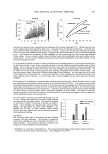
2006 ANNUAL SCIENTIFIC MEETING 183 3. Low molecular weight zirconium polymer distributions in AZG actives result in increased efficacy and is the single most important criteria for achieving superior efficacy. 4. Zirconium polymerization can easily occur during manufacturing and must be controlled in order to maintain low molecular weight zirconium polymer distributions necessary for superior efficacy. Factors to consider are choice of zirconium starting materials, preparation of the zirconium glycine component, mixing of the aluminum and zirconium-glycine components and spray drying parameters. Proprietary processing techniques have been developed to address the above findings. Some of these are as follows: 1. A unique, cost-effective activation process resulting in actives containing large amounts of the peak 4 aluminum polymer. 2. Minimal contact time between the aluminum and zirconium-glycine reactant components before spray drying to the final AZG powder product. In addition to chemical considerations, there are other properties of the actives which are important in formulating the final antiperspirant product. Particle size and shape of powder actives vary depending upon the dosage form in question. For aerosol products particle size is selected to minimize valve and actuator clogging. Both milled and spherical particle actives are used. For sticks and soft solid applications a much finer particle size is normally used compared to aerosol products. The main considerations for these products are application, feel and low residue properties. In combination with good masking agents, spherical particle actives have somewhat better low residue properties than milled particle actives. Also spherical actives provide better glide-on properties during product application. Liquid actives are used in aqueous based roll-ons, gels, and creams. For these dosage forms concentration, color, clarity and refractive index are important factors for formulating these products. Liquid actives are usually available at 35% and 45-50% (by weight) concentration. The higher concentration actives offer added flexibility to the formulator. Color and clarity are important for clear roll-on and gel applications. Refractive index of the active must be such that matching the refractive index of the oil and aqueous phases of clear gel products is easily accomplished.
Purchased for the exclusive use of nofirst nolast (unknown)
From: SCC Media Library & Resource Center (library.scconline.org)