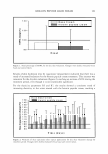
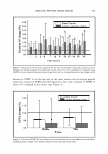
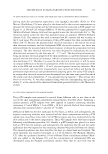
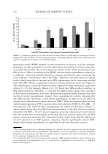
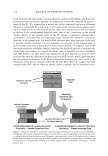
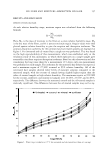
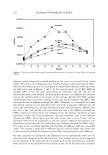
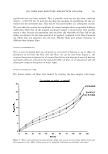
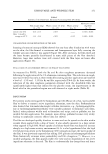
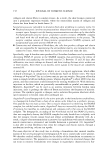
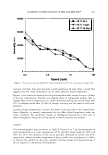
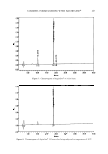
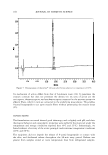
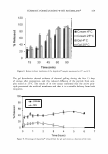
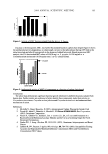
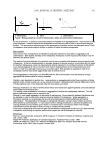
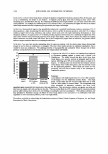
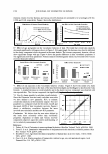
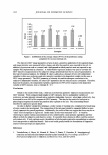
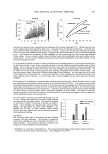
184 JOURNAL OF COSMETIC SCIENCE ANTIMICROBIAL COMPOUNDS (AMC'sJ AS INHIBITORS OF BACTERIAL GROWTH CAUSING SWEAT MALODOR Nava Dayan 1, Ph.D., Philip Wertz2, Ph.D. and D. Drake2 1 Lipo Chemicals, Inc., Paterson, NJ, 07504 2 Dows Institute N450 DSB, University of Iowa, Iowa City, IA 52242 Introduction Over the past decade the anti-perspirant and deodorant market, have shown a very mild steady growth of about 0.3% a year. While companies search for the breakthrough in innovation they mostly focus on expending their existing lines and pursuing different marketing approaches such as gender and age segmentation (1). Others upscale their products by incorporating pro-vitamins and improve skin smoothness, or prolong odor control by using a delivery system. Interestingly, in 2005 Kao Brands launched a new product based on a patented technology using phellodendron plant extract to inhibit sweat bacterial degradation that is known to cause malodor (2). Sweating is known to assist with regulation of body temperature and skin moisturization. It was also shown to contain natural antibiotics, dermicidins, to protect the skin. It does, however, generate undesired malodor that is believed to be caused by the degradation of sweat component by enzymes released from the Corynebacterium species (3 ). While deodorants are limited in masking the odor, antiperspirants possess even bigger concerns. They are associated with safety issues related to the absorption of aluminum species into and through the skin that may cause topical disorders such as contact dermatitis or systemic disorders such as Alzheimer's disease and breast cancer (4). We suggest a novel approach for growth inhibition of the malodor causing bacteria. A group of compounds isolated from human skin, AMC' s, were shown to inhibit bacterial growth and are believed to be the natural controlling elements for bacterial growth in the skin. The data presented and future studies are designed to evaluate the effectiveness of AMC's on microbial species as an approach to control malodor. Methodology Isolation of AMC' s from the skin AMC's were collected from skin surface of the arms and legs of human volunteers, fractionated by preparative TLC and tested. Antimicrobial testing The anti-microbial activity of AMC's was tested against strains of Staphylococci and Corynehacterium. The growth inhibitory activity of a range of different AMC concentrations were tested as well as correlation between 'activity and chain length of AMC' s. The methodology was adapted from Lambert and Pearson (5). The bacteria were cultured in Brain Heart Infusion Broth (BHIB) for 24 hours. The cells were isolated via centrifugation and then suspended in BHIB. Assays were done in standard micro-liter plates. The bacterial suspensions were diluted to concentration of 5x10⁵ cfu/mJ and standardized at an absorbance of 660 nm. The growth inhibitory activity was assessed at 2-hour intervals for 12 hours. At 24 hours, an automated micro-liter plate reader assessed the growth inhibitory activity. The growth inhibitory activity of the lipids was measured using the area of an absorbance/time curve in comparison to a control. Minimum and non-inhibitory concentration values were determined. Experiments were performed at a minimum of three times to assess variability of the MIC and NIC values from experiment to experiment. Preliminary Results The different fractions isolated from the skin. included compounds with different chain lengths and polarities. In the absence of AMC' s, an initial CFU/mJ of I 06 had increased to I 011 or 2 orders of magnitude during incubation of Staphylococcus aure�s. Fraction #1 of AMC's slightly enhanced bacterial growth, possibly by serving as a nutrient. Fractions 2 and 3 had no effect on growth, and fractions 4 and 5 demonstrated significant growth inhibition, with#4 being the most potent one (Figure 1).

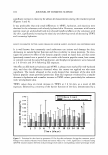
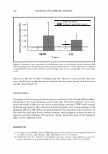
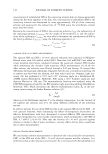
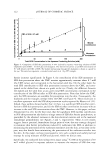
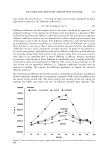
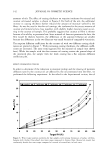
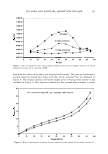
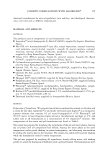
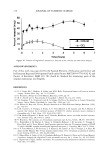
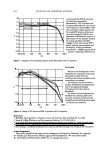
2006 ANNUAL SCIENTIFIC MEETING 185 AMC! AMC2 AMC3 AMC AMCS Figure 1: Activity of AMC fraction isolated from the skin vs. S. Aureus Fraction 4, the most potent AMC, was further fractionated based on carbon chain length. Figure 2 shows the antibacterial activity dependency on chain length. Arrows to the right indicate the log (CFU)/rnl in the initial inoculum and after 8 hours growth in the absence of added fatty acids. Based on previous MIC analysis, the C16 fraction had MIC values of 0.0078 mg/ vs. S. pyogens, 0.0156 mg/ml vs. a Corynebacterium isolate and 0.0156 against one S. aureus clinical isolate. 7..---------, ......... ,,,.,,_. �fnoculum 2 0 8 .. g N carbon number Figure 2: Antibacterial activity of AMC #4 components as a function of carbon chain length Conclusions The above data demonstrate significant bacterial growth inhibition by different fractions isolated from human skin. Further studies are underway to better identify these compounds, study their activity on Corynebacterium stiatum, Corynehacteriumjeikeium and Corynebacterium bovis and understand their mechanism of action. References 1. McArdle N., Happi Magazine, 3 (2005), Antiperspirants Update: Playing the Gender Card 2. Toyoki H., Akira F., Shunichi A, Hiroshi K., US Patent# 20050100520, Kao Corporation, (2005), Deodorant Composition 3. Natsch A, Gfeller P.O., Schmid J., Intl. J. Cosmet. Sci., 27, 115-122 (2005) Isolation of a Bacterial Enzyme Releasing Auxiliary Malodor and Its Use as a Screening Target for Novel Deodorant Formulations . . 4. Darbre P.O., J. Inorg., Biochem, 99, 1912-1919, (2005), Aluminum, Antiperspirants and Breast Cancer 5. Lambert RJ.W., Pearson J. Applied Microbiology, 88, 784-790, (2000). Susceptibility Testing: Accurate and Reproducible Minimum Inhibitory Concentration (MIC) and Non Inhibitory Concentration (NIC) Values
Purchased for the exclusive use of nofirst nolast (unknown)
From: SCC Media Library & Resource Center (library.scconline.org)