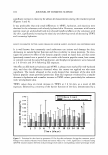
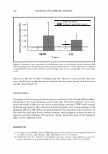
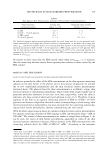
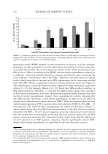
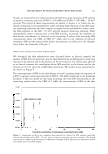
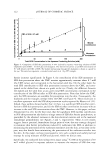
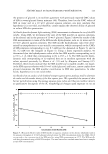
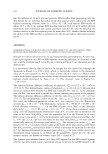
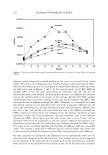
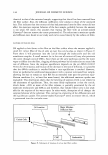
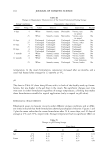
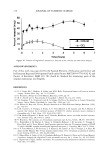
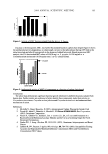
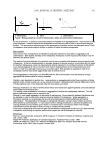
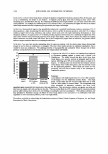
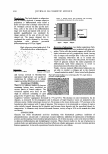
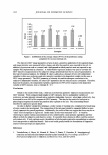
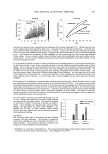
106 JOURNAL OF COSMETIC SCIENCE * c=J Base Cream - - Keratin peptide ere am ';!. 180 � 160 C u � 140 CJ) C ·u 120 � �Q. 100 C � en 2h30s 24h Time Figure 6. Variation of skin capacitance for well-hydrated skin at two different intervals following SLS exposure. Changes were doubly evaluated versus basal and control values (*p 0.05, significance is evaluated using ANOVA variance analysis between each percentage result and its corresponding control percentage result). Exposure to SLS has the effect of dehydrating skin. However, results showed that there was a significantly smaller decrease in hydration for skin zones treated with the keratin peptide cream (Figure 6). CONCLUSIONS Treatment with keratin peptide hand cream on undisturbed skin showed different effects depending on the initial hydration status of the skin. The keratin peptide cream treat ment had beneficial effects on d ry skin as evidenced by a decreased TEWL and increased hydration and elasticity. Skin treated with keratin peptide cream is more resistant to the damaging effects of SLS. While the applied peptides may not prevent the interference of SLS with the lipid layer of the stratum corneum, they do appear to assist the skin in retaining moisture following SLS exposure, thereby preventing some of the damaging effects of the surfactant insult. REFERENCES (1) V. Rogiers and the EEMCO Group, EEMCO guidance for the assessment of transepidermal water loss in cosmetic sciences, Skin Pharmacol. Appl. Skin Physiol., 14, 117-128 (2001). (2) E. Berardesca and H. I. Maibach, Transepidermal water loss and skin surface hydration in the non invasive assessment of stratum corneum function, Derm. Beruf Umwelt., 38(2), 50-53 (1990).

KERATIN PEPTIDE HAND CREAM 107 (3) E. Berardesca and the EEMCO Group, EEMCO guidance for the assessment of stratum corneum hydration: Electrical methods, Skin Res. Tech., 3, 126-132 (1997). (4) L. Rodrigues and the EEMCO Group, EEMCO guidance to the in vivo assessment of tensile functional properties of the skin, Skin Pharmacol. Appl. Skin Physiol., 14, 52-67 (2001). (5) R. A. Tupker, C. Willis, E. Berardesca, C.H. Lee, M. Fartasch, T. Agner, and J. Serup, Guidelines on sodium lauryl sulphate (SLS) exposure tests: A report from the Standardization Group of the European Society of Contact Dermatitis, Contact Dermatitis, 3 7, 5 3-69 (1997). (6) L. Coderch, M. de Pera, J. Fonollosa, A. de la Maza, and J. L. Parra, Efficacy of stratum corneum lipid supplementation on human skin, Contact Dermatitis, 47, 139-146 (2002). (7) M. de Pera, L. Coderch, J. Fonollosa, A. de la Maza, and J. L. Parra, EtTect of internal wool lipid liposomes on skin repair, Skin Pharmacol. Appl. Skin Physiol., 13, 188-195 (2000).
Purchased for the exclusive use of nofirst nolast (unknown)
From: SCC Media Library & Resource Center (library.scconline.org)