186 JOURNAL OF COSMETIC SCIENCE HISTORICAL REVIEW OF ANTIPERSPIRANT TESTING James P. Bowman, Linda P. Oddo and John E. Wild Hill Top Research Introduction Benefiting from a 30 year history of analyzing and reviewing antiperspirant test data, a discussion of data from a historical perspective will be presented. The data will provide a foundation for understanding the myths and factors. affecting antiperspirant testing. Some of the myths include: Heavier people sweat more than lighter people Younger people sweat more than older people People sweat more in the summer than in the winter Materials and Methods Antiperspirant efficacy studies conducted at Hill Top Research utilize the following basic test schedule. Potential test subjects are enrolled into a conditioning phase where they are given a deodorant product that has no antiperspirant efficacy to use in their axilla for a period not shorter than 17 days. Subjects then report to the test facility and are placed in the hot room (I00°F, 35% humidity) where baseline sweat output is measured. Subjects that qualify for the study participate in a supervised axillary wash and are treated with antiperspirant test product according to the study randomization (treatment under one axilla and placebo under the other). Post-treatment sweat collections are then conducted at time points specified in the test protocol. Analyses are conducted and estimates of product efficacy are calculated. Individual baseline sweat outputs are tracked over time as well as the ratio between the output from the right axilla to the left axilla. Individual results (baseline sweat output, percent reduction-treated versus placebo) are utilized to evaluate the following questions: 1. What does the distribution of individual sweat output (in milligrams) look like? 2. Does a subject's sweat output change over time? 3. Does the ratio of sweat output (R/L) change over time? 4. Do subjects sweat differently in the summer versus the winter? 5. Is there a relationship between baseline milligram sweat output and age and body weight? 6. Is there a relationship between efficacy (percent reduction) and age, body weight and the amount of sweat produced at baseline? 7. Is a subject's efficacy (percent reduction) to a particular product consistent from day to day? 8. Is efficacy different between genders? Data are reviewed from three time periods, the 1980's, the 1990's and the 2000's.

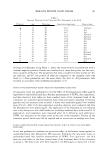
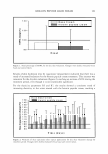
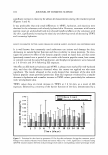
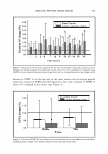
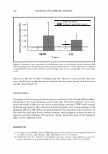
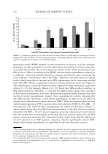
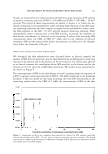
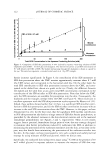
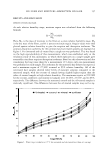
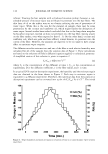
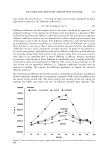
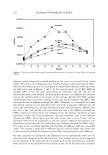
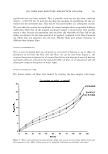
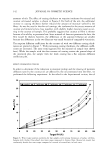
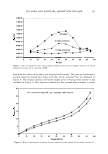
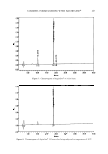
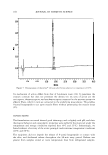
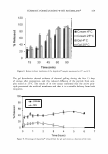
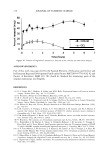
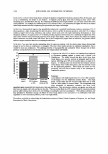
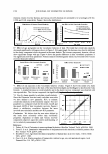
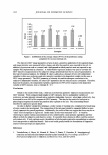
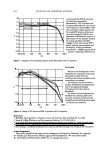
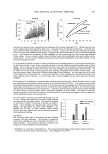
2006 ANNUAL SCIENTIFIC MEETING 187 Results The analysis of data from three distinct time periods each provided similar answers to the questions posed. 1. Graphing 5000 or more data points of axillary sweat output shows that these data are skewed and explains the use oflog transformation for comparison of treatment effects. 2. Individual average baseline milligram sweat output over time The graph of a specific individual subject's sweat output over time indicates consistent variability of output between 200 and 600 milligrams, another subject's output varies from 800 to 1200 milligrams. These are indicative of the patterns of output for subjects in general. Additionally, the patterns do not show any increasing or decreasing trend in milligram sweat output. 3. Consistency of individual right over left axilla output ratios ( sweat output from the right axilla divided by sweat output from the left axilla) Viewing right over left ratios of milligram output over a long period indicates consistency. Data from one subject indicates an average ratio of 1.0 with a range from 0. 8 to 1. 2. Another subject is similarly consistent with a mean around 0. 8 and a range from 0.6 to 1.0. These are representative of the panel of subjects at large. 4. Seasonal sweat output: Winter vs. Summer In an attempt to determine whether subjects sweat more in the summer than the winter, we plotted the difference between subject's average output during summer months and winter months. The mean difference was essentially zero. 5. Relationship between baseline milligram sweat output and age and body weight Milligram output does not seem to be a function of age nor is sweat output related to body weight. 6. Relationship between efficacy (Percent Reductions) and age, body weight and baseline sweat output. Our historical data do not indicate a relationship between product efficacy and age. Similar profiles are seen in older and younger test subjects. Our data also indicate that efficacy is not related to sweat output nor is it related to body weight. 7. Daily variation in percent reduction (day to day). Individual subjects efficacy will vary from day to day, despite a treatment showing consistent efficacy (i.e. consistent percent reduction estimate from one evaluation time point to the next). 8. A comparison of percent reductions indicates that product efficacy is not related to gender. Conclusions Reviewing data from three time points over the past few decades confirms our original conclusions concerning some of the myths of axillary sweat output and the evaluation of antiperspirant products.
Purchased for the exclusive use of nofirst nolast (unknown)
From: SCC Media Library & Resource Center (library.scconline.org)