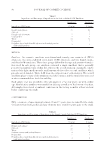
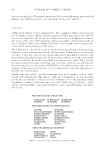
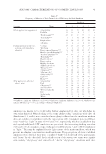
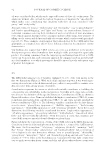
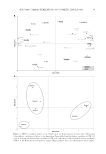
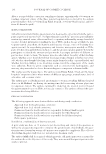
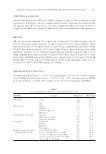
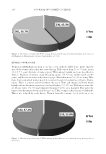
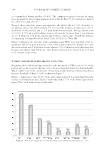
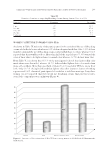
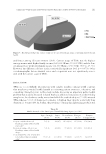
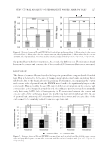
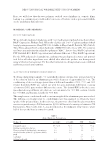
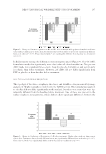
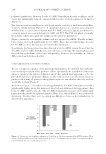
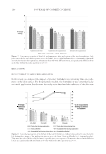
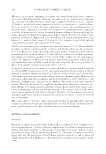
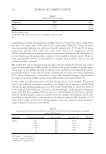
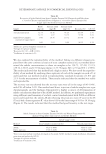
JOURNAL OF COSMETIC SCIENCE 110 FACTORS ASSOCIATED WITH CURRENT USAGE OF TPAs Table VI presents the sociodemographic factors associated with the current usage of bleaching agents among women. Usage was the highest among those of the middle age (26–40 years) and lowest among those aged over 40 years (50% vs. 17.9%). The difference was statisti- cally signifi cant (p 0.001). Current usage of TPAs was signifi cantly associated with women’s educational level (p = 0.007) being the highest among females that are university graduated or higher (48%) Figure 5. Parti cipants’ knowledge regarding harmful chemicals to human health, which could be one of the components of bleaching creams. Figure 6. Health knowledge that overuse or misuse of topical bleaching creams could harm the skin.

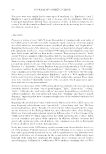
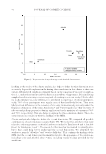
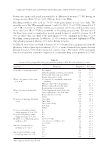
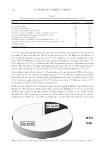
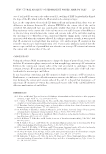
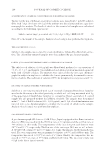
HEALTH KNOWLEDGE AND ATTITUDE REGARDING BLEACHING AGENTS IN WEST SAUDI ARABIA 111 and lowest among illiterate women (20%). Current usage of TPAs was the highest among women with higher family income ( 20,000 SR/mo 5,000 USD) and the low- est among those with lower family income ( 2,000 SR/mo 500 USD 50% vs. 29.5%). However, the difference did not reach a statistically signifi cant level (p = 0.073). Other sociodemographic factors (marital status and occupation) were not signifi cantly associ- ated with the current usage of TPAs. DISCUSSION TPAs use is a worldwide phenomenon with variable incidence among world countries that may have potential health hazards necessitating patient awareness, education, and counseling. Strength points in this study include discussing an important public health problem that is rarely discussed in Saudi Arabia in addition to inclusion of a relatively big sample size. In a Sudanese study, more than half of the studied subjects (55.4%) misused TPAs whereas 51.6% of them used cosmetics to lighten their skin for a relatively long duration (1–3 years) (18). In Jordan, the prevalence of using skin lightening products was Figure 7. Health k nowledge that overuse or misuse of topical bleaching creams could harm their body and health. Table IV Health Attitude of the Participants Toward Bleaching Agents (n = 389) Agree Strongly N (%) Agree N (%) Do not know N (%) Disagree N (%) Disagree Strongly N (%) Do you consider the use of bleaching creams sold at herbal stores safe? 5 (1.3) 34 (8.7) 113 (29.0) 87 (22.4) 150 (38.6) Do you encourage others to use bleaching creams sold at herbal shops? 5 (1.3) 32 (8.2) 79 (20.3) 109 (28.0) 164 (42.2) Do you want the color of your skin to be lighter than its normal color? 59 (15.2) 156 (40.1) 70 (18.0) 62 (15.9) 42 (10.8)
Purchased for the exclusive use of nofirst nolast (unknown)
From: SCC Media Library & Resource Center (library.scconline.org)