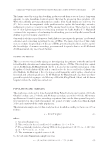
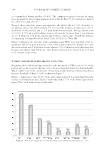
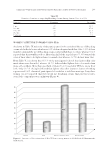
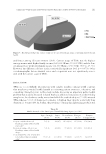
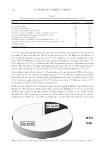
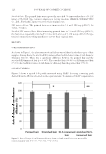
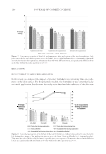
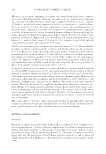
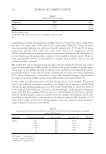
JOURNAL OF COSMETIC SCIENCE 122 However, many of these studies have dealt with the effect of permanent wave treatment on hair that was not wrapped around perm rods. For this reason, the relationship between hair curl shapes and disulfi de bonds may not have been fully understood. One factor is curl fallout: Curl fallout is the phenomenon by which, through daily hair care, the waves formed through perm treatment begin to deteriorate after roughly 1 mo. Although this issue of hairstyle maintenance poses problems to many, this phenomenon has not been studied, and the cause of curl fallout has not yet been clarifi ed. Because permed hair falls out its waves without any chemical treatment, we investigated changes in the microstructure of the hair rather than in disulfi de bonds. Because of recent developments of scanning microbeam small angle X-ray scattering (SAXS) technology, it is now possible to examine the inner microstructures of hair (6–11). The relationship between the shape of hair curls in naturally curly hair and the orienta- tion of intermediate fi laments (IFs) in the hair could, thus, be explored (12). The present study aims to clarify the cause of curl fallout, by investigating the relationship between the IF’s orientation and the curl shape of permed hair. To investigate the relationship, fi ve types of hair samples were prepared. The fi rst samples were hairs without perm treatment. The second samples were permed hair. The third samples were permed hairs repeatedly stretched. The forth samples were permed hair immersed sodium lauryl sulphate (SLS) solution. The Last samples were permed hairs stretched and immersed SLS solution. These samples were examined by scanning microbeam SAXS for structural analysis, and the relationship between curl shape and microstructure was discussed. MATERIALS AND METHODS CURL DIAMETER EFFICIENCY MEASUREMENTS Asian blended untreated hairs were used. Each hair bundle curl diameter was measured in a room where the temperature and humidity were adjusted to 25°C and 50% Relative Humidity (RH), respectively. The “curl diameter effi ciency” was calculated using the formula: Curl diameter effi ciency (%) = Rod diameter (mm)/Curl diameter (mm) × 100. Fifteen millimeter diameter spiral rods were used. The curl diameter effi ciency was deter- mined after the perm treatment and after each subsequent treatment (described in the following text). Each treatment was performed fi ve times, and average data was used for analysis. CHEMICAL TREATMENTS FOR CURL DIAMETER EFFICIENCY MEASUREMENTS Bleached hair. A bleach treatment was carried out for 35 min at 30°C using 1.0 wt% ammonia aq. and 3.0 wt% hydrogen peroxide aq. (pH 10.2) (⇒ bleached hairs). The scale of curl fallout was not suffi ciently large in virgin hairs after only a perm treatment to get reliable results. Hairs were, therefore, fi rst bleached and then permed, making the measured differences more prominent. We used bleached hairs as a control.

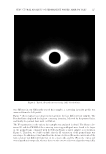
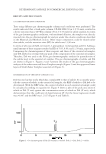
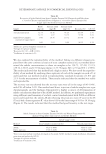
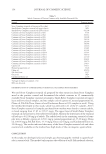
STRUCTURAL ANALYSIS OF PERMANENT WAVED HAIR BY SAXS 123 Permed hair. Bleached hairs were wrapped around a 15-mm-diameter spiral rod, and were treated for 15 min at 30°C using 6.0 wt% thioglycolic acid aq. and 0.8 wt% ammonia aq. (pH 9.4). After washing with water, the hairs were treated for 15 min at 30°C using 7.0 wt% sodium bromate aq. (pH 6.9) (⇒ permed hairs). Stretched hairs. The permed hairs were combed through fi ve times. This treatment was repeated 30 times. SLS-immersed hair. The permed hairs were immersed in 5.0 wt% SLS aq. (pH 8.5) for 3 min. This subsequent treatment was repeated 30 times. Stretched SLS-immersed hair. The permed hairs were immersed in 5.0 wt% SLS aq. (pH 8.5) for 3 min. After immersing the hairs in water for 2 min, they were combed through fi ve times. This subsequent treatment was repeated 30 times. SAXS MEASUREMENTS Asian untreated hairs, with a diameter of 70–90 μm, from a single head were used. In addition, naturally curly hairs were excluded and only straight hairs ware selected. Con- cerning naturally curly hair, it has been commonly believed that the biased distribution of the paracortex-like structure on the concave side and the orthocortex-like structure on the convex side was related to curl (13). On the other hand, it is known that straight hair possesses the homogenous distribution of two types of cortical cells (13). The hair samples (15 hairs per specimen) described in the following text were measured using a scanning microbeam SAXS (beamline BL40XU) at the large synchrotron radiation facility SPring-8 (Proposal No. 2012B1388). The temperature and humidity in the facility were 26°C and 30% RH, respectively. The measurement conditions were as follows: X-ray wavelength: 0.083 nm (X-ray energy: 15 keV), camera length: approx. 1612 mm, beam size diameter: approx. Five micrometre (1st pinhole: 5 μm, 2nd pinhole: 200 μm), beam stop diameter: 6 mm, exposure time: 3 s. An imaging intensifi er (4 inch) and CCD camera (ORCA-II-ER Hamamatsu Photonics Co., Ltd., Hamamatsu, Japan) were used as detec- tors. Calibration was carried out using silver behenate (d = 5.838 nm). X-rays were radiated perpendicularly to the fi ber axis. The sample position with respect to the X-ray microbeam was moved by steps of 5 μm from the fi ber periphery to the center of the fi ber. The measure- ment of the perm-treated hairs started from the convex side of the curl. We then extracted a scattering intensity profi le from the two-dimensional SAXS pattern, and simulated the equatorial intensity profi le around the scattering vector S = 0.118 nm-1 to obtain the dis- tance between IFs by using the method proposed by Briki et al. (14). Based on the scattering intensity profi le in an azimuthal direction around S = 0.118 nm-1, the full width at half maximum (FWHM) of the peak derived from IFs was obtained and used as an index of the IF orientation with respect to the hair longitudinal axis (expressed in degrees). The t-test was used to evaluate signifi cant differences in all the statistical analyses (bilateral distribution, α = 0.05, *p 0.05, **p 0.01, ***p 0.001). CHEMICAL TREATMENTS FOR SAXS MEASUREMENTS Bleached hair. Bleached hairs were prepared in the same manner as described previously. Permed hair. Permed hairs were prepared in the same manner as described previously.
Purchased for the exclusive use of nofirst nolast (unknown)
From: SCC Media Library & Resource Center (library.scconline.org)