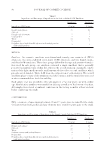
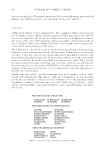
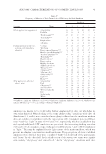
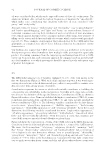
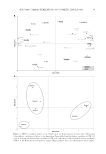
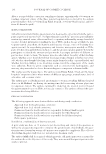
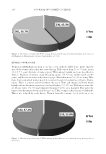
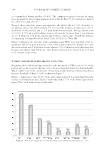
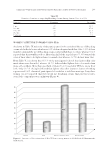
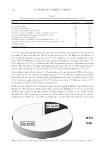
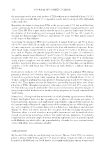
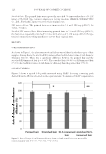
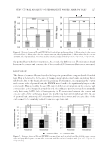
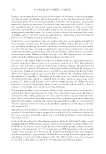
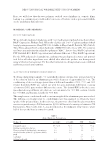
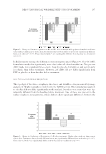
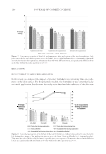
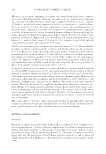
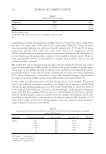
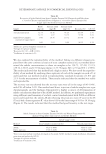
JOURNAL OF COSMETIC SCIENCE 140 DISCUSSION PRODUCT IMPACT ON SKIN DURING APPLICATION In this study, we analyzed the impact of product formulations containing skin care poly- mers on the skin surface. For the polymers studied, the formulation was somewhat tacky on initial application, but became less tacky as it dried and the tackiness of the skin was Figure 7. Consum er perception of skin feel and appearance after application of the test formulations. Sub- jects were asked to rate their responses on a scale from 1 (not at tightened/smooth) to 6 (extremely tightened/ smooth) for the fi rst three questions. Treatments denoted with different letters are signifi cantly different from each other within the same question (p 0.05). Figure 8. Consumer perception of tacky feel of the test formulations. Subjects were asked to rate the tacky feel during three stages of the application process on a scale from 1 (not at all tacky) to 6 (extremely tacky). They were also asked if the tacky feel was acceptable (yes or no response). Treatments denoted with different letters are signifi cantly different from each other within the same question (p 0.05).

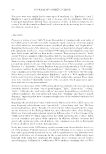
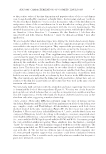
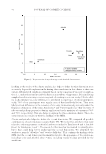
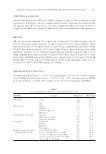
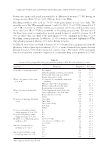
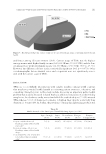
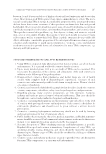
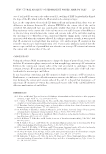
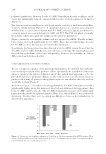
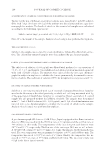
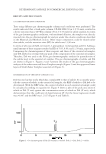
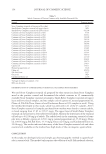
REDUCING FACIAL WRINKLE SIZE USING POLYMERS 141 never unacceptable to most study participants. After application, the skin felt and ap- peared tightened for the polymer formulations, but not smoother than with the formula- tions without polymer. The tighter feel and appearance was confi rmed by the measurements of the mechanical properties of the skin surface using two independent instrumental methods. Moreover, the surface roughness and visibility of fi ne lines and wrinkles were reduced with the 4% AMC formulation. Total wrinkle volume decreased for 2% AMC, but total wrinkle area was unchanged, indicating that wrinkle depth decreased. These results are consistent with the effects on skin produced by a drying and contracting polymer fi lm. The mechanical measurements, optical observations and consumer feedback prove that the reduced wrinkle visibility is not due to an optical blurring effect. The poly- mer fi lms have an evident mechanical impact on the skin surface and skin microstructure. During drying of the aqueous polymer solution, a continuous thin polymer fi lm is formed covering all or most of the skin surface. This fi lm contracts and smoothens out the skin, reducing wrinkle depth and producing a perceivable tightening sensation to test subjects. MECHANISM OF SHRINKING STRESS GENERATION The fi lm contraction is analogous to fi lm shrinkage as observed in polymer latexes. The mechanism may be very similar as well, although the particle coalescence step would not occur. For our study we selected skin care polymers, AMC and PVP, with a relatively high Tg at high moisture levels. As the polymer fi lm dries, the moisture level in the fi lm decreases until the glass transition is reached and drying stresses are generated (Figure 9). How- ever, the fi lm at that level needs to be strong enough to sustain these stresses without cracking or breaking. If the water content of the fi lm is too low when Tg is reached, the fi lm could be too thin to sustain mechanical stresses without cracking. Hence, for a shrinking polymer fi lm, the water content of the fi lm should be above a certain percent- age when the Tg approximates the skin temperature. The mechanical stresses observed in the AMC and PVP fi lms confi rm this model. In future work, studying the drying phenomena in fi lms of polymers with lower Tg would be interesting as the drying stresses would potentially occur when the fi lm is relatively Figure 9. Glass tran sition temperature of polymer material exposed to different levels of relative humidity versus water content (same data as in Figure 1). As the water content decreases during drying, Tg reaches skin temperature (33°C) and drying stresses start.
Purchased for the exclusive use of nofirst nolast (unknown)
From: SCC Media Library & Resource Center (library.scconline.org)