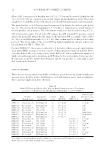
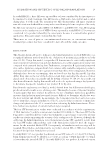
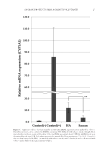
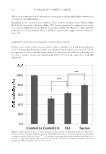
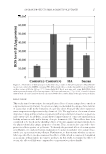
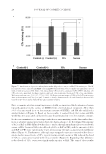
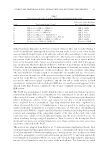
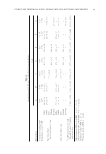
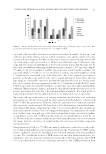
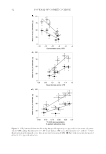
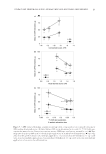
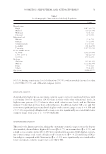
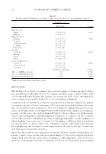
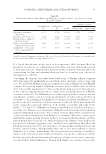
JOURNAL OF COSMETIC SCIENCE 14 SPF value of 15.2 according to ISO 24444 criteria (6). In study RH02117, the number of valid SPF results obtained was deemed insuffi cient, and it was therefore not possible to determine the SPF label for either test product B or test product C. In study RH02385, the mean SPF value for each of test product D and test product E was lower than the in- tended SPF 15. As a result, both lip balm formulations would have been labelled as low sun protection under the ISO 24444 criteria, and labelled SPF 12 and SPF 11, respectively, under the FDA criteria. A key strength of the SPF studies that we conducted is that the methodology we used to determine SPF follows industry standards and protocols as defi ned by the relevant regula- tors [FDA monograph fi nal rule and international standard ISO 24444 (5,6)]. CONCLUSION A new range of lip balm formulations was developed to provide sun protection and mois- turizing abilities. A dry-skin leg model was used to assess the potential moisturizing abilities of one of the new lip balm formulations. Using this model, the test product demonstrated improved leg skin hydration and barrier function properties compared with untreated dry skin, and com- pared with commercially available comparator products. Further testing is required to confi rm these benefi ts on dry lip skin. Data from an exploratory study that used a novel dry-lip hydration model, combining four different assessment methodologies, proved un- reliable. Therefore, further investigation of the lip-hydrating potential of the lip balm formulation is needed. The lip balm formulations studied herein were all rigorously tested to determine their SPF label according to protocols defi ned by relevant regulatory authorities [FDA monograph fi nal rule and international standard ISO 24444 (5,6)]. The SPF values of the tested lip balm formulations did not achieve the intended SPF levels. As such, they will undergo reformulation and retesting to satisfy the required SPF levels. ACKNOWLEDGMENTS The authors would like to thank the participants in these fi ve studies. Editorial support in the form of the development of a draft manuscript in consultation with the authors, and preparation of tables and fi gures was provided by Victoria Pugh, PhD, of Gardiner-Caldwell Communications, Macclesfi eld, UK. FUNDING These studies were funded by GSK Consumer Healthcare (GSK studies RH01927, RH01928, RH02116, RH02117, and RH02385). DISCLOSURES C. Gfeller, G. Hardie, G. Shanga, and H. Mahalingam are all employees of GSK Consumer Healthcare. No additional disclosures to declare.

HYDRATION AND SPF TESTING OF LIP BALM FORMULATIONS 15 REFERENCES (1) B. Dale Wilson, S. Moon, and F. Armstr ong, Comprehensive review of ultraviolet radiation and the cur- rent status on sunscreens, J. Clin. Aesthet. Dermatol., 5, 18–23 (2012). (2) World Health Organization Website, Health Effects of UV Radiation, accessed September 6, 2016, http://www.who.int/uv/health/en/. (3) W. Stebbins and C.W. Hanke, Lip Cancer: Not Uncom mon, Often Overlooked. Skin Cancer Foundation Website, accessed September 6, 2016, http://www.skincancer.org/skin-cancer-information/lip-cancer-not- uncommon. ( 4) M.S. Latha, J. Martis, V. Shobha, R. Sham Shinde, S. Bangera, B. Krishnankutty, S. Bellary, S. Varughese, P. Rao, and B. R. Naveen Kumar, Sunscreening agents: a review. J. Clin. Aesthet. Dermatol., 6, 16–26 (2013). (5) Department of Health and Human Services, Food and Drug Administration, Sunscreen drug products for over-the-counter human use fi nal rules and proposed rules, Fed Regist, 76(117) (2011) Part IV: 21 CFR Parts 201, 310, and 352. (6) ISO 24444:2010(en), Cosmetics—Sun Protection Test Methods—In vivo Determination of the Sun Protection Factor (SPF). ISO Website (2010), accessed September 6, 2016, www.iso.org/obp/ ui/#iso:std:iso:24444:ed-1:v1:en. (7) J. Pinnagoda, R. A. Tupker, T. Agner, and J. Serup, Guidelines for transepidermal water loss (TEWL) measurement. A report from the standardization group of the European society of contact dermatitis, Contact Dermatitis, 22, 164–178 (1990). ( 8) E. Proksch, J. M. Brandner, and J. M. Jensen, The skin: an indispensable barrier, Exp. Dermatol., 17, 1063–1072 (2008). ( 9) D. Antonov, S. Schliemann, and P. Elsner, Methods for the assessment of barrier function, Curr. Probl. Dermatol., 49, 61–70 (2016). ( 10) M. Obata and H. Tagami, A rapid in vitro test to assess skin moisturizers. J. Soc. Cosmet. Chem., 41, 235–241 (1990). ( 11) J. Serup, EEMCO guidance for the assessment of dry skin (xerosis) and ichthyosis: clinical scoring sys- tems. Skin Res. Technol., 1, 109–114 (1995). ( 12) S. L. Zhang, “Monitoring skin hydration by near-infrared spectroscopy and multispectral imaging,” in Bioengineering of the Skin: Skin Imaging and Analysis, K. P. Wilhelm, P. Elsner, E. Berardesca, and H. I. Maibach. Eds. (CRC Press, London, 2006). ( 13) T. B. Fitzpatrick, The validity and practicality of sun-reactive skin types I through VI. Arch. Dermatol., 124, 869–871 (1988). ( 14) T. B. Fitzpatrick, M. Pathak, and J. A. Parrish, “Protection of human skin against the effects of the sunburn ultraviolet (290–320 nm),” in Sunlight and Man: Normal and Abnormal Photobiologic Re- sponses, M. A. Pathak, L. C. Harber, M. Seiji, T. B. Fitzpatrick, and consulting. Eds. (University of Tokyo Press, Tokyo, 1974), pp. 751–765. ( 15) A Cosmetics Europe, Guideline for the Colorimetric Determination of Skin Colour Typing and Predic- tion of the Minimal Erythemal Dose (med) Without UV Exposure. Cosmetics Europe, Brussels, 2007, accessed September 6, 2016, https://www.cosmeticseurope.eu/publications-cosmetics-europe-association/ guidelines.html?view=item&id=63. ( 16) J. Ishikawa, H. Yoshida, S. Ito, A. Naoe, T. Fujimura, T. Kitahara, Y. Takema, C. Zerweck, and G. L. Grove, Dry skin in the winter is related to the ceramide profi le in the stratum corneum and can be im- proved by treatment with a eucalyptus extract, J. Cosmet. Dermatol., 12, 3–11 (2013). ( 17) J. Tan, H. Liu, J. J. Leyden, and M. J. Leoni, Reliability of clinician erythema assessment grading scale, J. Am. Acad. Dermatol., 71, 760–763 (2014). ( 18) Z. Ya-Xian, T. Suetake, and H. Tagami, Number of cell layers of the stratum corneum in normal skin— relationship to the anatomical location on the body, age, sex and physical parameters, Arch. Dermatol. Res., 291, 555–559 (1999). ( 19) H. Kobayashi and H. Tagami, Functional properties of the surface of the vermilion border of the lips are distinct from those of the facial skin, Br. J. Dermatol., 150, 563–567 (2004).
Purchased for the exclusive use of nofirst nolast (unknown)
From: SCC Media Library & Resource Center (library.scconline.org)