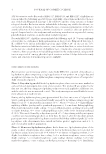
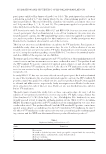
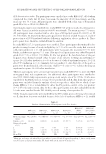
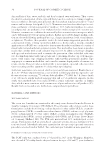
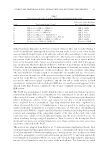
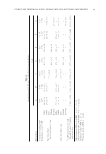
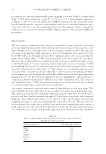
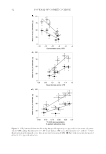
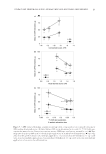
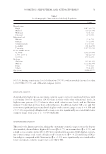
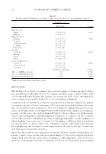
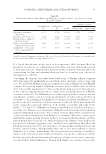
JOURNAL OF COSMETIC SCIENCE 12 Mean ± SD Corneometer at baseline was 24.72 ± 3.14 au and decreased slightly by day 12 to 23.22 ± 4.87 au, suggesting no overall change in skin hydration levels. There was a high level of variability in the Corneometer scores for all four participants at all time points. The mean baseline score following visual assessment of lip dryness for the four participants was 4.0. This decreased only marginally to 3.5 by day 12, suggesting no overall impact of the test product on lip dryness. The lowest mean visual score was recorded on day 8 (2.3). SPF determination studies. For all four SPF studies, the SPF standard P2 positive control achieved a mean SPF within the SD range of the intended SPF according to ISO 24444 (16.4 ± 2.4) and FDA fi nal rule (16.3 ± 3.43), thus confi rming the accuracy of the study protocol. The mean value of the tested SPF lip balm formulations did not achieve the intended labeled SPF 15 (Table IV). In study RH01927, there was a single protocol deviation where one participant under- went initial MED evaluation 18 min outside of the permitted evaluation window. How- ever, this did not affect the study results. Study RH02117 did not achieve the number of valid test results required to determine an SPF value for the test products for test product B, only nine acceptable results were obtained, and for test product C, only eight accept- able results were obtained. SAFETY ASSESSMENTS There were no test product-related AEs or SAEs for any of the fi ve lip balm formulations assessed across the fi ve studies. Furthermore, no local skin reactions, such as irritation, due to product application were observed. Table IV Mean SPF Values and Label for Five New Lip Balm Formulations across Four Studies, as per Protocols Defi ned by the FDA Monograph Final Rule (5) or ISO 24444 (6) Study Product identifi cation Regulatory criteria used n (valid cases) Mean SPF ± SD Mean SPF ± CI, % SPF value and label (protection offered) RH01927 Test product A FDA fi nal rule 10 13.7 ± 4.8 10 (low) RH01927 P2 standard FDA fi nal rule 10 14.5 ± 2.3 NAb RH01928 Test product A ISO 24444 13 15.2 ± 3.9 Low RH01928 P2 standard ISO 24444 13 14.8 ± 3.2 NAb RH02117 Test product B FDA fi nal rule 8 13.4 ± 2.4 Invalid dataa RH02117 Test product C FDA fi nal rule 9 13.4 ± 1.5 Invalid dataa RH02117 P2 standard FDA fi nal rule 13 15.4 ± 3.7 NAb RH02385 Test product D ISO 24444 13 13.9 ± 13.9 10 (low) RH02385 P2 standard ISO 24444 13 14.2 ± 12.0 NAb RH02385 Test product E ISO 24444 12 12.8 ± 16.9 10 (low) RH02385 P2 standard ISO 24444 12 13.9 ± 9.9 NAb RH02385 Test product D FDA fi nal rule 10 14.4 ± 12.6 12 (low) RH02385 P2 standard FDA fi nal rule 10 14.4 ± 12.5 NAb RH02385 Test product E FDA fi nal rule 10 15.5 ± 11.4 11 (low) RH02385 P2 standard FDA fi nal rule 10 14.6 ± 12.9 NAb a 10 Subjects achieved valid test results, insuffi cient to determine an SPF value for test products. b Label value not required for standard only test product.

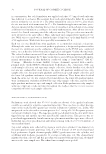
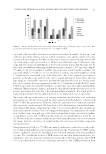
HYDRATION AND SPF TESTING OF LIP BALM FORMULATIONS 13 In study RH02116, three AEs were reported but each was considered by the investigator to be unrelated to study treatment. One AE was also a SAE (acute cholecystitis) and occurred during phase 1 of the study. The remaining two AEs (dysmenorrhea and upper respiratory tract infection) were both mild in severity and occurred during the home-use phase of the study. No AEs were reported in studies RH01928, RH02117, and RH02385. One AE (tingling sensation at the irradiation site of MED #1) was reported in study RH01927 but was not considered to be product related by the investigator because it occurred before product application. This participant continued in the study. There were no cases of prior or concomitant medication use, or concomitant nondrug treatment/procedures that were considered to have affected the study outcomes. DISCUSSION The dry-skin leg model used to help assess lip balm formulations in study RH02116 is a recognized industry method used for the evaluation of moisturizing products on body skin (11,12). Using this model, test product B demonstrated a statistically signifi cant improvement in barrier function and skin hydration across all postapplication time points compared with untreated dry leg skin. Furthermore, test product B signifi cantly improved skin surface hydration compared with four commercially available comparator products, and improved barrier function to a greater extent than three of the comparators. However, although these data are encouraging, they are based on a dry leg skin model. Lip skin differs from skin on the rest of the body in several ways, including the absence of sweat glands (and often sebaceous glands) and by having a thinner SC (18,19). As a result, our data derived from the dry leg skin model will need to be replicated using a dry lip model to determine the specifi c benefi ts of test product B for lip skin. Data from the exploratory novel dry lip model, derived from four different methodologies, produced variable results across all time points. This may be because of the small number of participants that were studied. In addition, the use of multiple methods in parallel to measure skin hydration may have made it more diffi cult to determine which data were the most relevant and reliable. As an example, the Corneometer method can be less sensi- tive to immediate changes in hydration of the SC a method that is sensitive to immediate changes in hydration of the SC is essential when evaluating lip balm formulations. There- fore, further investigation of current methodology is required. The four SPF determination studies were conducted in accordance with the requirements of FDA fi nal rule (5) and the international standard ISO 24444 (6). The mean SPF for the P2 positive control for all four studies was within the accepted range to meet the relevant regulatory criteria supporting the accuracy of the study protocols. However, although the early stage lip balm formulations tested demonstrated some SPF capability, results from the four SPF studies indicated that each of the formulations failed to meet the require- ments for the intended labeled SPF. Consequently, reformulation and retesting will be required. Nevertheless, and importantly, no product-related AEs or SAEs were observed for any of the lip balm formulations assessed. In study RH01927, test product A achieved a mean SPF value of 13.7 the SPF of this lip balm formulation would be labelled as 10 (low), according to FDA fi nal rule (5), which is lower than the intended SPF 15. In study RH01928, test product A achieved a mean
Purchased for the exclusive use of nofirst nolast (unknown)
From: SCC Media Library & Resource Center (library.scconline.org)