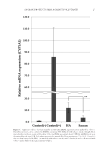
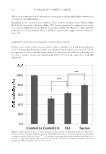
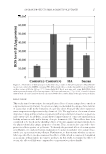
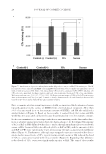
JOURNAL OF COSMETIC SCIENCE 2 permanent skin pigmentation, such as freckles and moles, and actinic keratosis, and may signifi cantly increase the risk of nonmelanoma skin cancer (NMSC) (2,3). Restricting exposure to the sun combined with regular use of sunscreen products with an appropriate sun protection factor (SPF) can limit the damaging effects of UV rays, includ- ing the risk of NMSC (1). SPF is an important measure of effi cacy for sunscreen products, providing an international standard for the level of protection provided against erythema induced by ultraviolet B (UVB) radiation (1). Sunscreen products containing active photoprotectant ingredients must undergo rigorous regulatory testing to ensure safety and effectiveness before approval is granted (4). This in- cludes in vivo UVB testing in accordance with either the U.S. Food and Drug Administration (FDA) monograph fi nal rule requirements (5) or international standard ISO 24444 (6). In addition to safety and effectiveness in the context of SPF, another important consider- ation for the development of new lip balm formulations is their moisturizing abilities, i.e., the reduction of water loss from the underlying tissue. The stratum corneum (SC), a lipid matrix in the outermost layer of the skin, is crucial for skin permeability barrier function and acts to prevent excessive water loss through the skin. One of the most important parameters for determining SC barrier function is transepidermal water loss (TEWL), the loss of water by passive evaporation through the skin (7–9). Separately, skin hydration can be measured using a variety of techniques, and instruments such as Skicon® (I.B.S. Co., Hamamatsu, Japan), DermaLab® (Cortex Technology, Hadsund, Denmark) Moisture Meter (DMM), and Corneometer® (Courage + Khazaka Electronic GmBH, Cologne, Germany) are considered the industry standards for this purpose (10). Newer lip balm formulations have been developed to not only provide protection from the sun, but also with the potential to hydrate dry lips. These new lip balm formulations include emollients and lipids combined with glycerin, and photoprotectant compounds that provide defi ned SPF. To meet regulatory requirements and obtain approval for use, rigorous clinical testing of these new lip balm formulations is required. Data from such clinical studies may also support product claims, including those pertaining to potential skin hydration and/or moisturizing abilities. Here we present data from fi ve clinical studies evaluating a series of novel lip balm formulations. The aim of four of these studies was to determine the SPF of fi ve new lip balm formulations to comply with sun protection labeling as defi ned by the U.S. FDA monograph fi nal rule (5) and international standard ISO 24444 (6). The aim of the fi fth study was to develop a new in vivo methodology to help differentiate lip balm formulations that have the potential to hydrate dry lips. In this study, the moisturizing abilities of one of the new lip balm formulations was fi rst compared with four comparator/reference lip products using a dry-skin leg model and evapo- rimeter (TEWL), Skicon, and Corneometer methodologies. Subsequently, an exploratory, home-use phase was conducted to assess the moisturizing abilities of this lip balm formulation over time using a novel dry-lip model and similar skin hydration assessment methodologies. MATERIALS AND METHODS STUDY DESIGN AND CONDUCT Barrier function and moisturizing abilities study. Study RH02116 was a randomized, six-cell, block design study to evaluate the effect on barrier function and moisturizing abilities of

HYDRATION AND SPF TESTING OF LIP BALM FORMULATIONS 3 a new lip balm formulation, test product B, in comparison with four reference lip balm formulations: comparator A, Aquaphor® Lip Repair + Protect Broad Spectrum SPF 30 (Beiersdorf, Hamburg, Germany) comparator B, Blistex Five Star Lip Protection® SPF 30 (Blistex, Oak Brook, IL) comparator C, Carmex® Everyday Protecting Lip Balm Stick SPF 15 (Carmex, Franklin, WI) and comparator D, Neosporin® Lip Health™ Daily Hydra- tion Therapy Sunscreen SPF 20 (Johnson & Johnson Consumer, Inc., New Brunswick, NJ). The study was conducted between November 2013 and January 2014 at cyberDERM Clinical Studies, Broomall, PA. The study was approved by the institutional review board and was conducted in accordance with Good Clinical Practice (GCP) guidelines and the ethical principles of the Declaration of Helsinki. The investigator and site staff were re- sponsible for identifying, documenting, and reporting adverse events (AEs). SPF determination studies. Four studies were conducted to determine the SPF value of a total of fi ve new lip balm formulations. All SPF studies were evaluator-blind, randomized, complete-block design trials. The SPF standard P2 (7% padimate O, 3% oxybenzone) positive control, with an accepted SPF of 16, was included in the four SPF studies to confi rm the accuracy of the protocols being used. Study RH01927 was conducted between July 2013 and August 2013, whereas study RH01928 was conducted in August 2013. Study RH02117 was conducted between October 2013 and November 2013. These three studies were conducted at the TKL Re- search, Inc., Paramus, NJ. The fourth study, RH02385, was conducted between March 2014 and April 2014 at proDERM Institute, Hamburg, Germany. Studies RH01927 and RH01928 determined the SPF of a lip balm formulation, test product A, in accordance with the FDA monograph fi nal rule (5) and ISO 24444 (6), re- spectively. The protocols were approved by the IntegReview Ethical Review Board. Study RH02117 determined the SPF of two lip balm formulations, test product B and test product C, in accordance with the FDA monograph fi nal rule (5), with the approval of the study protocol by the IntegReview Ethical Review Board. Study RH02385 determined the SPF of two further lip balm formulations, test product D and test product E, according to both the FDA monograph fi nal rule (5) and ISO 24444 (6). The protocol received approval from the Freiburg Ethics Commission Interna- tional. All studies were conducted in accordance with GCP guidelines and all participants pro- vided written informed consent in accordance with the requirements of the Declaration of Helsinki. The investigators and site staff for each of these studies were responsible for identifying, documenting, and reporting any AEs. PARTICIPANTS Barrier function and moisturizing abilities study. Eligibility criteria for participants in study RH02116 included the following: females aged 18–45 years who are self-identifi ed dry-leg sufferers and scored between 2 and 4 on the nine-point dry-leg scale (0–4 in increments of 0.5) on visual inspection (11,12). Exclusion criteria included marks, scars, scratches, tattoos, or other blemishes on the test site a history of active eczema, psoriasis, ichthyo- sis, or any other skin condition an intolerance or hypersensitivity to the study materials and use of antihistamines 3 days before visit 1 or during the course of the study.
Purchased for the exclusive use of nofirst nolast (unknown)
From: SCC Media Library & Resource Center (library.scconline.org)