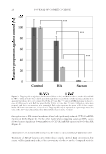
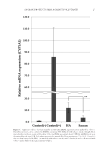
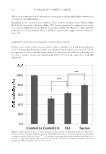
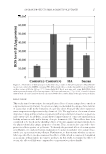
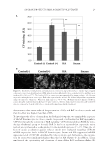
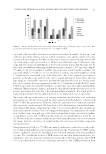
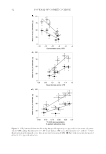
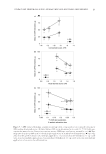
JOURNAL OF COSMETIC SCIENCE 30 initiated by tobacco smoke (Figures 5–7). The effects of sacran also were higher than those of HA. The reduction in CP level was understood to originate from the improving effects of sacran on skin conditions from the aspect of oxidation because the long-term ap- plication of sacran reduced CP levels in corneocytes obtained from healthy volunteers (25). Sacran is a unique cyanobacteria-derived sulfated polysaccharide that is composed of 11 kinds of monosaccharides, which contain a sulfate group in 11% of them and a carboxyl group in 22% of them. However, the detailed structure of sacran regarding its amino acid sequence and amounts of lesser components has not been identifi ed. Considering the manner of the shielding effects indicates the possibility that polysaccharides trap BaP and/or ACs in their matrix. However, sacran and HA showed different intensities in their shielding effects, despite the difference in the presence or absence of sulfate groups in their chemical structures. Because carrageenan (a sulfated polysaccharide) did not show a shielding effect in a preliminary study (data not shown), it is hard to explain the differ- ence in the shielding effects between sacran and HA against BaP or ACs according to the presence or absence of sulfate groups. In our previous study, we found that sacran and HA showed different emulsifi cation abilities against squalene (data not shown). Sacran was able to emulsify squalene itself, but HA failed to emulsify squalene. Those results sug- gested the possibility of the presence of the hydrophobic domain to hold nonpolar chem- icals in the matrix formed by sacran. It might be considered that the hydrophobic domain in the matrix of polysaccharides depends on the difference of molecular weights. How- ever, the manner of the shielding effects of sacran is not beyond a region of hypothesis. Clarifying the mechanism involved in the shielding will require further study. CONCLUSION We conclude that sacran protects against adverse effects initiated by exposure to tobacco smoke, which is a representative air pollutant, because of shielding effects. These fi ndings strongly support the possibility that skin care products formulated on sacran will protect the skin against air pollutants. ACKNOWLEDGEMENTS We are grateful to Mr. Y. Waki, CEO of DAITO KASEI KOGYO CO., LTD., for his un- derstanding and cooperation on this research. REFERENCES (1) World Health Organization Publication, Ambient Air Pollution: A Global Assessment of Expo- sure and Burden of Disease, 2016, accessed April 25, 2018, http://www.who.int/iris/bitstream/ 10665/250141/1/9789241511353-eng.pdf?ua=1” title=”http://www.who.int/iris/bitstream/10665/ 250141/1/9789241511353-eng.pdf?ua=1” http://www.who.int/iris/bitstream/10665/ 250141/1/9789241511353-eng.pdf?ua=1. (2) R. Adelman, R. L. Saul, and B. N. Ames, Oxidative damage to DNA: relation to species metabolic rate and life span, Proc. Natl. Acad. Sci. U.S.A., 85, 2706–2708 (1988). (3) B. Karten, U. Beisiegel, G. Gercken, and A. Konstusk, Mechanism of lipid peroxidation in human blood plasma (a kinetic approach), Chem. Phys. Lipids, 88, 83–96 (1988). (4) E. R. Stadtman, Protein oxidation and aging, Science, 257, 1220–1224 (1992).

SACRAN PROTECTS SKIN AGAINST POLLUTANTS 31 (5) F. Gaboran, P. Moliere, I. Maquis, A. Moysa, M. Geze, and L. Dubertret, Membrane damage induced in cultured human skin fi broblasts by UVA irradiation, Photochem. Photobiol., 58, 515–520 (1993). (6) D. B. Menzel, The toxicity of air pollution in experimental animals and humans: the role of oxidative stress, Toxicol. Lett., 72, 269–277 (1994). (7) B. N. Ames, L. S. Gold, and W. C. Willett, The cause and prevention of cancer, Proc. Natl. Acad. Sci. U.S.A., 92, 5258–5265 (1995). (8) M. Valko, D. Leibfritz, J. Moncol, M. T. Cronin, M. Mazur, and J. Telser, Free radicals and antioxidants in normal physiological functions and human disease, Int. J. Biochem. Cell Biol., 39, 44–84 (2006). (9) M. Kampa and E. Castanas, Human health effects of air pollution, Environ. Pollut., 151, 362–367 (2008). (10) M. Lodovici and M. Bigagli, Oxidative stress and air pollution exposure, J. Toxicol., 2011, 487074 (2011). (11) R. Kohen, Skin antioxidants: their role in aging and in oxidative stress—new approaches for their evaluation, Biomed. Pharmacother., 53, 181–192 (1999). (12) C. Baudouin, M. Charveron, R. Tarroux, and Y. Gall, Environmental pollutants and skin cancer, Cell Biol. Toxicol., 18(5), 341–348 (2002). (13) A. Viekötter, T. Schikowski, U. Ranft, S. Dorothea, M. Matsui, U. Krämer, and J. Krutmann, Airborne particle exposure and extrinsic skin aging, J. Invest. Dermatol., 130, 2719–2726 (2010). ( 14) R. Kamide, L. Misery, N. Perez-Cullell, V. Sibaud, and C. Taïeb, Sensitive skin evaluation in the Japanese population, J. Dermatol., 40, 177–181 (2013). (1 5) M. S. Denison, A. A. Soshilov, G. He, D. E. DeGroot, and B. Zhao, Exactly the same but different: promiscuity and diversity in the molecular mechanisms of action of the aryl hydrocarbon (dioxin) recep- tor, Toxicol. Sci., 124(1), 1–22 (2011). (1 6) T. Ikuta, T. Namiki, Y. Fujii-Kuriyama, and K. Kawajiri, AhR protein traffi cking and function in the skin, Biochem. Pharmacol., 77(4), 588–596 (2009). (1 7) M. Furue, M. Takahara, T. Nakahara, and H. Uchi, Role of AhR/ARNT system in skin homeostasis, Arch. Dermatol. Res., 306, 769–770 (2014). (1 8) T. Mizutani, H. Sumida, Y. Sagawa, Y. Okano, and H. Masaki, Carbonylated proteins exposure to UVA and to blue light generate reactive oxygen species through a type I photosensitizing reaction, J. Dermatol. Sci., 84, 314–321 (2016). (1 9) E. K. Kim, D. Cho, and J. H. Park, Air pollution and skin diseases: adverse effects of airborne particu- late matter on various skin diseases, Life Sci., 152, 126–134 (2016). (2 0) M. K. Okajima, M. Ono, K. Kabata, and T. Kaneko, Extraction of novel sulfated polysacchardes from Aphanothece sacrum, and its spectroscopic characterization, Pure Appl. Chem., 79, 2039–2046 (2007). (2 1) M. K. Okajima, T. Bamba, Y. Kaneso, K. Hirata, E. Fukusaki, S. Kajiyama, and T. Kaneko, Supergiant ampholytic sugar chains with imbalanced charge ratio form saline ultra-absorbent hydrogels, Macromol- ecules, 41, 4061–4064 (2008). (2 2) M. K. Okajima, D. Kaneko, T. Mitsumata, T. Kaneko, and J. Watanabe, Cyanobacteria that produce megamolecules with effi cient self-orientations, Macromolecules, 42, 3057–3062 (2009). (2 3) M. Doi, Y. Sagawa, T. Mizutani, Y. Okano, S. Momose, T. Tanaka, and H. Masaki, Possibilities of sacran- polyol complexes in the skin care -evaluations of chemical and physical aspects, J. Soc. Cosmet. Chem. Jpn., 51(2), 117–125 (2017). (2 4) S. Fukushima, K. Motoyama, Y. Tanida, T. Higashi, Y. Ishitsuka, Y. Kondo, T. Irie, T. Tanaka, H. Ihn, and H. Arima, Clinical evaluation of novel natural polysaccharides sacran as a skincare material for atopic dermatitis patients, J. Cosmet., Dermatol. Sci. Appl., 6, 9–18 (2016). (2 5) M. Doi, Y. Sagawa, S. Momose, T. Tanaka, T. Mizutani, Y. Okano, and H. Masaki, Topical treatment with sacran, a sulfated polysaccharide from Aphanothece sacrum, improves corneocyte-derived parameters, J. Dermatol., 44(12), 1360–1367 (2017).
Purchased for the exclusive use of nofirst nolast (unknown)
From: SCC Media Library & Resource Center (library.scconline.org)