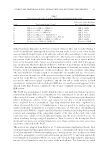
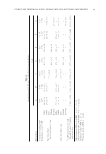
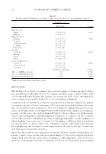
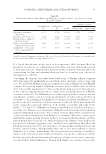
JOURNAL OF COSMETIC SCIENCE 34 skin and hair of dirt, sweat, and oils, and then be rinsed away with water. They contact the skin for a short period of time, typically from tens of seconds up to 2 min per applica- tion nevertheless, the surfactants penetrate the skin and can denature proteins (1–5) and remove and/or disrupt skin lipids (1,3,6,7). Numerous tests have been developed to esti- mate a surfactant’s irritation potential or “mildness” (8,9). Surfactant mildness in cosmet- ics and personal care products is best evaluated under conditions typical of consumer use. However, consumer use conditions do not usually elicit an acute irritation response which can be differentiated between varying products. Rather, more subtle changes in skin condi- tion are observed following prolonged use (e.g., changes in moisture levels, visual dryness, or tightness). Therefore, these products tend to be tested using exaggerated protocols over a short period of time to bring out mildness differences. In this study, a forearm controlled application test (FCAT) was conducted to demonstrate the relative mildness of a variety of mixed surfactant and surfactant–polymer systems. This method has been shown to produce results that correlate with actual consumer response (10). In addition, both tape stripping and cup scrub methods were used to examine the penetration of fi ve individual surfactants into the skin from mixed surfactant systems and to determine whether cup scrub measure- ments could replace tape stripping in future surfactant-skin penetration analysis. Tape stripping is a common method that can be used to examine depth profi les of stratum cor- neum contents. However, when a depth profi le is not required, cup scrub collection is less time-consuming and less expensive to conduct than tape stripping. Surfactant penetration into excised skin has previously been examined. Blankschtein et al. (1,11–13) have implemented an ex vivo method in which pig skin was exposed to sur- factant solutions containing 14 C-sodium dodecyl sulfate (14C-SDS) for 5 h. James-Smith et al. (14) used a similar method using pig skin and a 2.5-h surfactant exposure. In this study, these methods have been replaced with a 2-min surfactant exposure on human skin, which is more consistent with consumer use of personal care rinse-off products (15). Results from in vivo and ex vivo methods are compared and reported here. MATERIALS AND METHODS TEST FORMULATIONS The seven test formulations examined in this study were obtained from the Procter & Gamble Company (Cincinnati, OH) (Table I). The surfactants and polymers used in these formulations include the following: sodium laureth (1) ether sulfate (SLE1S), cocamido- propyl betaine (CAPB), cocamide monoethanolamine (CMEA), sodium cocoyl glycinate (SCG), sodium laureth (3) ether sulfate (SLE3S), sodium lauroamphoacetate (NaLAA), polyvinyl alcohol (PVA), cationic polyvinyl alcohol (CPVA), and EcoSense (Dow Chemi- cal Company, Midland, MI). The PVA raw material had 12% unhydrolyzed acetate groups. Formulations A–F are anion-based surfactant systems, whereas formulation G is nonionic based. Individual surfactants quantifi ed in the tape strip/cup scrub extraction procedures are also listed in Table I. Two surfactants per formulation were quantifi ed. FOREARM CONTROLLED APPLICATION TEST (FCAT) The FCAT study was conducted over a 5-d period in 2015 in the Winnipeg, Manitoba, area. A total of 70 healthy female subjects between the ages of 18 and 55 years (inclusive)

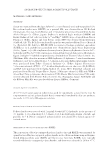
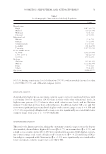
SURFACTANT PENETRATION INTO HUMAN SKIN AND RESULTING SKIN DRYNESS 35 with Fitzpatrick skin types I–IV were recruited. Subjects who had recently (within 3 weeks of enrollment) participated in another forearm study at this or any other facility were excluded from participation. In addition, subjects who were allergic to the ingredi- ents of personal care products or to tapes/adhesives, who had active eczema or psoriasis on any portion of the body, who had a history of cancer, with recent use of topical medica- tions on the forearms, with chronic use of any medication that could inhibit the appear- ance of irritation, who had a history of diabetes, with use of moisturizers on the forearms 24 h before baseline measurements, with demonstration of abrasions or scarring of the forearms, with any immunologic or infectious disease, who were pregnant or lactating, who had insuffi cient forearm length to accommodate the number and size of test sites, and/or who were an employee of the sponsor or testing site were excluded from participat- ing in this study. Because of the cosmetic nature of this study, the use of non-regulated test articles and/or monograph ingredients, and the low risk to study subjects (normal expectation), an institutional review board (IRB) was not used for review/approval of this clinical study. This decision conformed to the sponsor’s standard operating procedure on IRB review. The FCAT was a randomized, double-blinded (subject and grader/instrument operator), round-robin design. Fifteen test formulations were randomized to six sites per subject (three on each forearm), yielding N = 28/formulation. After reviewing study deviations, subject medications, adverse events, and subject/test site drops, 22–24 measurements were completed for each formulation. Tape strip extractions were only completed on a subset of seven of the total 15 formulations as it was not possible to analyze tape strip samples from all 15 formulations in regard to time and cost. The subset of formulations chosen (listed in Table I) comprises mild and harsher treatments, including both internal controls and a sampling of the competitive market at the time of the study. Cup scrub extractions were completed on all study participants, but the results shown here are of a subset matching the tape stripped population. Thus, because of the incomplete block design and our interest in certain formulations over others, sample sizes vary across mea- surements completed in the FCAT. The method was adapted from Ertel et al. (9) with deviations highlighted below. Each study participant had three application areas (5 cm × 5 cm) marked off on the volar surface of each forearm with a laboratory marking pen, totaling six test sites. A clinical assistant wetted the participant’s volar forearm with warm tap water (35°C) and then applied the test formulation, beginning with the site nearest the elbow, by dispensing the appropriate amount of test formulation into the center of the marked area. Test formulations varied Table I Compositions and Codes of the Test Formulations Examined in this Study Code Total composition (% w/v) Surfactants quantifi ed using tape strips and cup scrubs A SLE1S (12), CAPB (2), CMEA (1) SLE1S, CAPB B SLE1S (9), CAPB (5), CMEA (1) SLE1S, CAPB C SLE1S (9), SCG (5), CMEA (1) SLE1S, SCG D SLE1S (11), SLE3S (1.5), NaLAA (8.15) SLE1S, NaLAA E SLE1S (11), SLE3S (1.5), NaLAA (8.15), PVA (8) SLE1S, NaLAA F SLE1S (12), CAPB (2), CMEA (1), CPVA (2) SLE1S, CAPB G EcoSense (12), CAPB (2), CMEA (1) EcoSense, CAPB
Purchased for the exclusive use of nofirst nolast (unknown)
From: SCC Media Library & Resource Center (library.scconline.org)