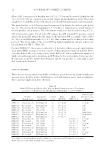
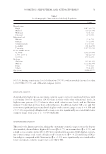
JOURNAL OF COSMETIC SCIENCE 36 in concentration, but each formulation was applied such that 37.5 mg of total surfactant was delivered to each area. The assistant then used a gloved hand to lather by a circular motion within the test site for 10 s. The lather remained on each site for 90 s, after which the site was rinsed with warm water for 15 s. The formulation application and rinse proce- dure was repeated on the remaining fi ve test sites of one subject, with each test site receiving a different test formulation according to the study randomization. After all test sites were rinsed, the clinical assistant patted the subject’s arm dry. This procedure was immedi- ately repeated on the same subject. Thus, each wash visit comprised two washes per test site. Wash visits occurred twice a day for the fi rst 4 d and once on the fi nal day for a total of 18 applications. Wash visits were spaced by a minimum of 3 h. Each test site was divided into four quadrants to accommodate multiple evaluations. Although the entire test site received product application, a designated quadrant within the test site underwent specifi c evaluations. Evaluations in the FCAT were conducted twice, once at baseline before formulation application and again 3 h after the fi nal wash. The order of evaluations was as follows: subject acclimation in a temperature and humid- ity controlled environment for 30 min, visual dryness assessed by an expert grader, instru- mental measurement of skin hydration conducted using a Corneometer® CM 825 (Courage + Khazaka electronic GmbH, Cologne, Germany) operated with a multi- pronged probe (model MT-8C Measurement Technologies, Inc., Cincinnati, OH), cup scrub sample collection, and tape strip sample collection. At the baseline visit, the full test site was evaluated for visual dryness, the upper left quadrant underwent tape strip sample collection, the upper right quadrant underwent cup scrub sample collection, and the lower left quadrant underwent instrumental evaluation. Three hours after the fi nal wash, the entire test site was evaluated for visual dryness, the lower left quadrant under- went instrumental evaluation followed by tape strip sample collection, and the lower right quadrant underwent cup scrub sample collection. Each quadrant was only sampled with tape strips/cup scrubs one time throughout the study so that the test site was not compromised before each sample collection. TAPE STRIP AND CUP SCRUB EXTRACTIONS Preliminary work showed that 85–90% (results not shown) of the applied surfactant could be accounted for using fi ve sequential tape strips. Thus, we chose to collect fi ve tape strips in this study. Each D-squame tape (22 mm in diameter Cuderm Corp., Dallas, TX) was pressed on the skin with a constant pressure for 5 s using a D-500 D-squame pressure instrument (CuDerm Corp.). The tape was gently peeled away from the skin with blunt- tipped forceps and another tape was placed in the same location. This process was re- peated with approximately 1 min between tape placements until fi ve tapes were collected. Individual tapes were placed in vials and extracted using 2 mL of a 50/50 v/v mixture of water and methanol. Cup scrub samples were collected by placing a sterile glass cylinder (2 cm diameter) on the participant’s forearm, pipetting 1 mL of a 50/50 mixture of 100 proof ethanol and high performance liquid chromatography (HPLC) grade water into the cylinder, and scrubbing with moderate pressure for 30 s using a sterile glass rod. The ethanol/water mixture was then collected, and this procedure was repeated with another 1 mL of ethanol/ water on the same sample area. The ethanol/water samples were pooled.

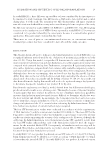
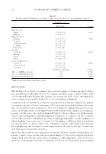
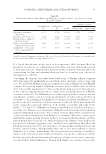
SURFACTANT PENETRATION INTO HUMAN SKIN AND RESULTING SKIN DRYNESS 37 Tape strip and cup scrub samples were analyzed for two individual surfactant components for each test formulation by stable isotope-based reversed-phase HPLC with tandem mass spectrometry using multiple reaction monitoring. Standard curves were constructed based on the peak area ratio of each analyte to the stable isotope internal standard versus the concentration of the standard. The concentration of the analyte in the cup scrub solu- tion was then determined by the peak area ratio of the sample by interpolation from the regression curve. Tape strip results were then pooled. 14 C-SODIUM DODECYL SULFATE (14C-SDS) SKIN PENETRATION EX VIVO This method closely follows that described by McCardy et al. (16). Split-thickness hu- man cadaver skin was obtained from the New York Firefi ghters Skin Bank (New York, NY) and stored at -80°C until use. Excised skin was cut into small pieces approxi- mately 1–1.5 cm2 in size and mounted in Franz diffusion cells (area = 0.79 cm2) with the stratum corneum facing up. Skin samples were allowed to equilibrate in phosphate- buffered saline (PBS Sigma Aldrich, St. Louis, MO) with 0.02% w/v sodium azide (NaN3 Fisher Scientifi c, Pittsburgh, PA) for 1–2 h and then integrity of the skin membranes was assessed by tritiated water (3H2O Perkin-Elmer, Waltham, MA) permeation using the Kasting et al. method (16). Skin samples with water permeation greater than 2 μL/cm2 were discarded. Test formulations were assigned to skin samples using a complete randomized block design with 3 H2O permeation as the blocking factor. Test formulations were prepared at 1.5% w/v total surfactant to simulate realistic cleans- ing exposures. Shampoos are typically formulated with approximately 15% w/v total surfactant, and we have estimated that consumers remove 90% of that material upon initial rinsing. Test formulations were spiked with 10 μCi/mL of radiolabeled 14 C-SDS (American Radiolabeled Chemicals, St. Louis, MO). On the morning of the study, recep- tor solutions were replaced with 4.25 mL of fresh PBS + 0.02% NaN3 and 150 μL of radiolabel-spiked test formulation was dosed into each donor chamber. After 2 min, ex- cess formulation was removed and collected. The surface of the skin was rinsed with three aliquots of 0.5 mL Millipore water by sequential up/down pipetting three times each, and these rinses were collected into one vial. The receptor solution was collected and then the skin sample was wiped once with Whatman fi lter paper (GE Healthcare Life Sciences, Issaquah, WA) soaked with PBS and then three times with Whatman fi lter paper soaked with 70% (w/w) ethanol to remove any residual test formulation. The fi rst three wipes were collected together and the last wipe was collected into a separate vial to ensure the radioactive test formulation had been suffi ciently removed from the skin surface. Skin samples were dissolved in 2 mL Solvable (Perkin-Elmer) at 50°–60°C overnight. Ultima Gold XR scintillation cocktail (Fisher Scientifi c) was added to each component, and these solutions were analyzed for radioactivity in disintegrations per minute using liquid scintil- lation counting via an LS 6500 Beckman counter (Beckman Instruments, Hebron, KY). Results were reported as percent of applied radioactive dose penetrated into the skin, including material that permeated through the skin into the receptor solution. A total of six skin donors were used. Each product was tested on two to three samples of each of fi ve skin donors, and four of the seven products (C, D, E, and G) were additionally tested on one sample of a sixth skin donor.
Purchased for the exclusive use of nofirst nolast (unknown)
From: SCC Media Library & Resource Center (library.scconline.org)