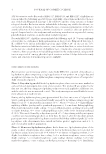
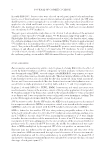
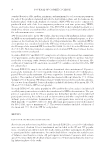
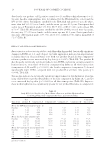
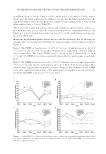
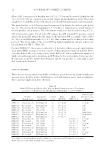
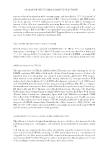
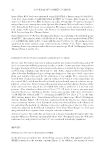
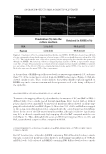
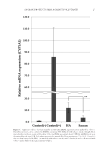
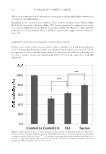
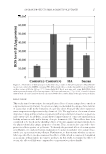
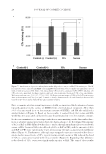
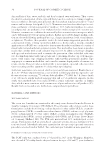
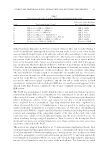
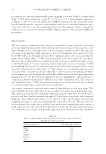
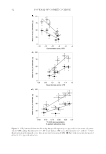
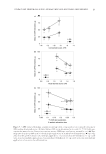
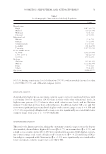
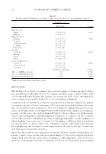
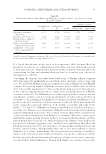
JOURNAL OF COSMETIC SCIENCE 40 penetration into the skin as measured by tape stripping in vivo was found to correlate well with 14 C-SDS skin penetration ex vivo (R2 = 0.996, p 0.05). Interestingly, comparison of Figures 2 and 3 reveals that SLE1S and CAPB penetration into the skin from anion- based formulations has opposite relationships with the in vivo skin hydration mea- sures and with the ex vivo skin penetration measure. For example, higher corneometer readings are associated with decreased SLE1S skin penetration and increased CAPB skin penetration. DISCUSSION The test cleansers examined in this study were formulated using strategies to maintain optimum skin hydration while still providing lather and adequate cleansing effi cacy for rinse-off applications. Although none of these strategies completely offset the skin dry- ness induced by multiple daily exposures to the test formulations over a period of 5 d in the FCAT study, some formulations were able to mitigate adverse effects in a reproducible manner better than others. 14 C-SDS skin penetration ex vivo was found to be a good pre- dictor of clinical skin hydration as quantitated with corneometer and visual dryness scores in the FCAT study. A 5-h exposure of pig skin to surfactant solutions containing 14 C-SDS used in Blankschtein et al. (11) and subsequent publications has been replaced by a 2-min exposure on human skin in this study (15). The changes not only involve exposures more consistent with consumer use of rinse-off products, but they also avoid making inferences about human exposure from pig skin, which has a different array of skin appendages than human skin (17–21). Penetration pathways for polar or amphiphilic compounds are not completely understood and may be different in porcine and human skin. The results of this study show that 14 C-SDS skin penetration may be a useful preclinical test for mild- ness of rinse-off products containing anionic surfactants. Cup scrubs consistently extracted more material than did fi ve pooled tape strips. This may simply be because surfactants are more readily extractable using liquid than tapes. The extraction liquid likely solubilized surfactant molecules that were loosely bound to proteins and those within stratum corneum (SC) lipid layers deep in the skin compared with tape strips, which only remove one SC layer at a time. In execution, the tape strip sampling procedure is easier to perform than the cup scrub collection. The cup scrub col- lection requires the technician to hold the cup in place with enough pressure to ensure a good seal to prevent the solution from leaking out of the cup. The potential for leakage can compromise the sample and provide opportunity for experimental error. However, Tabl e III Ratio of Surfactant Mass Extracted by Five Pooled Tape Strips to Surfactant Mass Extracted by Cup Scrubs Surfactant extracted Tape strips/cup scrubs (%) SLE1S 58.8 CAPB 41.4 SCG 40.0 NaLAA 40.0 EcoSense 40.0 Total 48.9

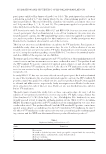
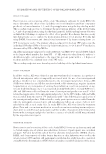
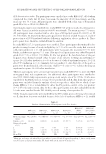
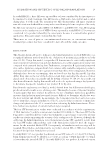
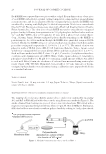
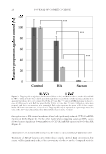
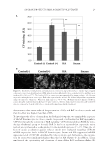
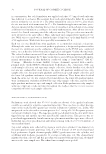
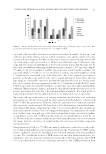
SURFACTANT PENETRATION INTO HUMAN SKIN AND RESULTING SKIN DRYNESS 41 cup scrub collection takes less time in execution and analytical analysis. In the cup scrub collection procedure, there is only one sample to analyze, store, and document versus fi ve (or more) in tape stripping. In addition, tape strips require an extraction step, whereas the cup scrub sample can be processed as is, without any additional steps. Furthermore, tape strips must be extracted individually, as they stick together if placed in the same vial. In this study, it would have taken approximately 8 weeks to analyze 2,100 tape strip samples (70 subjects, six test sites/subject, and fi ve tape strips/site) versus 2 weeks to analyze 420 cup scrub samples (70 subjects, six test sites/subject, and one cup scrub sample/site) if all 15 formulations were tested. Cup scrub collection is also a less expensive procedure to perform, as the glass cups and stir rods can be cleaned and reused many times, whereas tape strips are consumable, expensive, and must be purchased for each use. In this study, the cost to complete the tape stripping procedure for 15 formulations would be $809 versus $187 for cup scrub collection. We, therefore, conclude that cup scrubs can be used for future surfactant skin penetration analysis, and may be the preferred method as they are less ex- pensive and require less time for collection and analytical analysis. If a depth profi le of surfactant penetration into the skin is desired, we recommend the use of tape strips. Tape strip and cup scrub analyses of varying surfactants revealed that total surfactant penetration into the skin as measured by either extraction method did not correlate well with 14 C-SDS skin penetration. However, when the surfactants were examined individu- ally, signifi cant trends emerged. We found some of the distributions of individual surfac- tants extracted from tape strips and cup scrubs to be positively skewed thus, medians are more representative for these data sets compared with means. On examination of correla- tions between tape strip and cup scrub extraction medians versus corneometer reading, visual dryness scores, and 14 C-SDS penetration means, we found similar or better R2 val- ues. However, because similar conclusions are found using the means, we chose to present the means here for consistency in understanding the error associated when comparing various measures. Skin penetration of SLE1S or 14 C-SDS, two anionic surfactants, seems to be a good predic- tor of clinical skin hydration state for anion-based systems. Penetration of CAPB, a zwit- terionic surfactant, can also be a good predictor of clinical hydration state for anion-based systems. The correlations between CAPB extractions and skin hydration measures lost signifi cance when the nonionic formulation was included. This may indicate that CAPB is not a good predictor of nonionic surfactant penetration, but CAPB penetration from F igure 1. Masses of individual surfactants extracted from either fi ve pooled tape strips or cup scrubs. Bars are stacked, and each bar represents the mean of 11–26 samples + SEM.
Purchased for the exclusive use of nofirst nolast (unknown)
From: SCC Media Library & Resource Center (library.scconline.org)