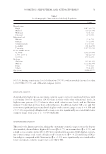
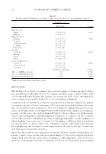
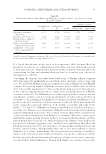
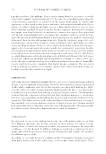
JOURNAL OF COSMETIC SCIENCE 50 Questionnaire on customary cosmetic usage. The scale contains nine items, which identify the frequency of using makeup. It consists of fi ve-point Likert scales (1 = strongly disagree and 5 = strongly agree) (21). Questions 3, 4, 5, and 6 were reversed. The customary cos- metic usage total score was calculated by summing the answers to all nine items. Higher scores would indicate higher makeup usage. Rosenberg self-esteem scale. This 10-item scale measures both positive and negative feelings about the self to evaluate self-worth (22). The answers were rated as follows: 1 (strongly agree), 2 (agree), 3 (disagree), and 4 (strongly disagree). Five questions (3, 5, 8, 9, and 10) were reversed while doing the score calculation. Higher scores indicated higher self- esteem. In our study, the Cronbach alpha was 0.802. Multidimensional body self-relations questionnaire (MBSRQ). Body image was measured using two subscales from the MBSRQ questionnaire: the appearance orientation (AO) question- naire that evaluates how attractive or unattractive and how happy or unhappy the person feels with his physical appearance and the appearance evaluation (AE) questionnaire (23) to assess the time and efforts spent by the person to “look good.” The AO and AE ques- tionnaires consist of fi ve-point Likert scales (1 = strongly disagree and 5 = strongly agree). The AO questionnaire contains 12 items, which identify the degree to which subjects consider appearance to be important. The AE questionnaire contains seven items, which identify the subjects’ attitudes regarding their appearance (23). In our study, the Cronbach alpha for AE and AO were 0.827 and 0.852, respectively. Modifi ed body areas satisfaction scale (BASS). The BASS, a subscale of the MBSRQ, identi- fi es subjects’ satisfaction with various areas of their body (23). For this study, the BASS has been modifi ed to include items on areas of the face and to eliminate areas of the body that are not included. BASS subjects are asked to indicate on a fi ve-point, Likert-type scale (1 = very dissatisfi ed and 5 = very satisfi ed). This scale was used as a measure of facial satisfaction with and without cosmetics use. It includes nine items on overall facial satis- faction. Subjects were asked to fi ll out this scale twice, one time to assess satisfaction while wearing cosmetics and a second time to assess satisfaction while not wearing makeup (23). In our study, the Cronbach alpha for the fi rst time questions while wearing cosmetics was 0.931 and for the second time while not wearing makeup was 0.922. STATISTICAL ANALYSES SPSS software version 23 (Statistical Package for Social Science, IBM Corp., Armonk, NY) was used to conduct data analysis. When comparing two means, we used the inde- pendent sample Student t-test. The Pearson correlation coeffi cient was used to assess the association between two continuous variables. A linear regression was conducted tak- ing the customary cosmetic usage score as the dependent variable. All variables that showed a p 0.1 value in the bivariate analysis were taken as independent variables in the model. Moreover, Cronbach’s alpha was recorded for reliability analysis for all the scales. A p-value less than 0.05 was considered signifi cant. RESULTS The sociodemographic characteristics of the participants are summarized in Table I. The mean age of the participants was 24.84 ± 9.75 years, with the majority being single

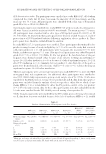
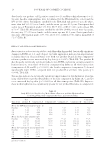
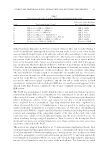
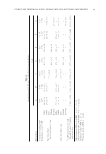
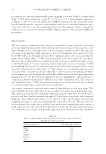
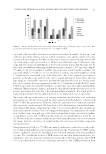
COSMETICS, SELF-ESTEEM, AND ATTRACTIVENESS 51 (69.5%), having a university level of education (73.5%), with a monthly income less than 1,000 USD (70.9%) and of Muslim religion (82%). BIVARIATE ANALYSIS A signifi cantly higher mean customary cosmetic usage total score was found in those with a secondary level of education (28.31) than in those with other educational levels, in high-income persons (29.35) than in those with other income levels, and in Christian women (31.44) than in those from other religions. In addition, higher AE score and AO score were signifi cantly associated with higher total cosmetic usage scores (r = 0.134 and r = 0.510), respectively. A higher self-esteem score was signifi cantly associated with lower cosmetic usage total score (r = -0.047) (Table II). MULTIVARIABLE ANALYSIS The results of a linear regression, taking the customary cosmetic usage score as the depen- dent variable, showed that a higher AO score (β = 0.55), an intermediate (β = 0.99), and a high socioeconomic status (β = 2.18) were signifi cantly associated with higher custom- ary cosmetic usage total scores. A higher self-esteem score (β = -0.21) and being of Mus- lim religion compared with Christianity (β = -1.39) were signifi cantly associated with a lower customary cosmetic usage total score (Table III). Table I S ociodemographic Characteristics of the Study Population Count Marital status Single 1,415 (69.5%) Married 523 (25.7%) Widowed 32 (1.6%) Divorced 67 (3.3%) Education level Illiterate 35 (1.7%) Primary 55 (2.7%) Complementary 152 (7.6%) Secondary 291 (14.5%) University 1,477 (73.5%) Socioeconomic status 1,000 $ 1,392 (70.9%) 1,000–2,000 $ 442 (22.5%) 2,000 $ 130 (6.6%) Ideology Christian 205 (11.1%) Muslim 1,522 (82.0%) Druze 95 (5.1%) Others 33 (1.8%) Age (years) 24.84 ± 9.75
Purchased for the exclusive use of nofirst nolast (unknown)
From: SCC Media Library & Resource Center (library.scconline.org)