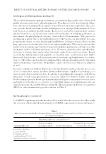
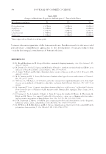
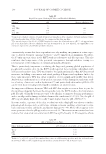
JOURNAL OF COSMETIC SCIENCE 108 irritants to better traverse the epidermal barrier, resulting in fl are-ups of erythematous scratches, bleeding spots, or even eczema-like skin lesions (4). This is a totally man-made disease, which is curative and could be prevented by health education and behavior change. However, there are only few studies concerning the impact of behavior of adher- ence to moisturizers in patients with dry skin in the winter. Seventy-two patients with a diagnosis of dry skin in winter were included and were in- structed to apply moisturizing products as part of their treatment plan which was run from October 2017 to January 2018. Any new dermatology patients who had the ability and willingness to participate in a telephone interview were included. Patients with other chronic diseases were excluded. We contacted the patients via telephone and got consent to participate verbally 2 weeks after the dermatologist appointment. Children less than 16 years old were contacted through their parents. The questionnaire consisted of seven questions, beginning open-ended and becoming more specifi c. Patients were excluded if there was no mention of skin care formulation in their medical record and/or if the child or parents could not give consent. The results showed that 78% of subjects recovered fully, but only 27% of subjects in- cluded moisturizers recommendation when questioned about their plan in an open-ended manner when specifi cally asked, this increased to 51%. Patients who fully recovered are exactly the patients who were able to remember that moisturizers were included in their treatment plan. Only 39% of subjects were able to recall the reasons for using a moistur- izer. Twenty-six percent of subjects did not actually pick up or use a moisturizing product for their dry skin. Patients with a good education had better compliance. Results are summarized in Table I. The results from this study showed that patient adherence to dermatologist-recommended moisturizers is low. Previous research found that frequent washing is associated with dermatitis in winter (4). This concept is further supported by the results in this study that symptoms were generally improved after educating the patients to avoid frequent washing, especially with hot water and to apply moisturizers daily. The results also Table I Result of the Telephone Survey Questions Results How is your recovery going? A full recovery: 78% Recurrent occasionally: 22% What treatment plan was recommended for you by the dermatologist? Included moisturizers in their treatment plan: 27% Included moisturizers treatment after it was explicitly asked: 51% Do you know why you need moisturizers? Can explain why: 39% Have you purchased/used moisturizers? Purchase/use moisturizers: 74% Not purchase/use moisturizers: worried with the side effects: 12% not used to: 8% others: 6% How often do you use your moisturizers? Several times a day: 8% one time daily: 56% occasionally: 10% No: 88% Have you ever picked up any of your medications with a doctor’s prescription? Had a prescription and pick up: 8% Had a prescription, but not pick up: 4% What is your educational background? Illiteracy: 2% junior high school: 43% senior high school: 47% college or above: 8%

DRY SKIN AND MOISTURIZATION 109 suggested that some patients had trouble remembering the doctor’s verbal advise. Of the people who knew a moisturizer was recommended, most had diffi culties remembering the reason for using moisturizers, which are helpful in repairing the skin barrier function. Furthermore, of those who remembered moisturizers as a part of their treatment plan, some could not adhere to moisturizers daily. Dry skin and moisturization are important topics. Application of moisturizers provides a mechanical barrier, protects the skin from additional irritation, and facilitates the healing process. This study indicates that patients need more guidance in their dry skin treat- ment. Better education and more specifi c explanation with schematic diagram or an edu- cational leafl et are possible solutions. This article is from the Project of Social Science and Technology Development (General) of Dongguan City, China (NO. 2018507150351459). REFERENCES (1) G. Egawa and K. Kabashima, Multifactorial skin barrier defi ciency and atopic dermatitis: essential topics to prevent the atopic march. J. Allergy Clin. Immunol., 138, 350–358 (2016). (2) E. F. White-Chu and M. Reddy, Dry skin in the elderly: complexities of a common problem. Clin. Dermatol., 29, 37–42 (2011). (3) P. Chandar, G. Nole, and A. W. Johnson, Understanding natural moisturizing mechanisms: implica- tions for moisturizer technology. Cutis, 84, 2–15 (2009). (4) A. Callahan, E. Baron, D. Fekedulegn, M. Kashon, B. Yucesoy, V. J. Johnson, D. S. Domingo, B. Kirkland, M. I. Luster, and S. Nedorost, Winter season, frequent hand washing, and irritant patch test reactions to detergents are associated with hand dermatitis in health care workers. Dermatitis, 24, 170–175 (2013).
Purchased for the exclusive use of nofirst nolast (unknown)
From: SCC Media Library & Resource Center (library.scconline.org)