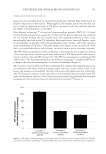
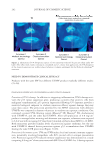
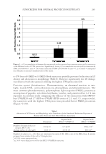
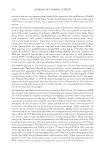
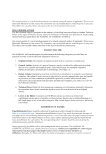
SUNSCREENS FOR OPTIMAL PROTECTION EFFICACY 203 to UV doses of 6 MED to 10 MED. Both sunscreens partially prevented reductions in LC density and alterations to morphology (Table I). However, signifi cantly less LC damage was observed with the sunscreen offering the highest UVA protection (29). Protection agains t photodermatoses. Photosensitivity , an abnormal reaction to sun- light, mainly UVA, covers phototoxicity, photoallergy, and photodermatoses. The most common p hotodermatosis, polymorphous light eruption (PMLE), presents as an eruption of papules, reticulated erythema, vesicles, and pruritus after 1–2 d sun exposure. In outdoor study comparing the efficacy of two sunscreens with SPF50+ but UVAPF28 and 17 (SPF-to-UVAPF (PPD) ratios of 2.1 and 3.5, respectively), the sunscreen with the highest UVA protection provided better PMLE prevention (Figure 4) (30). Figure 3. p53 accumulation in human skin unexposed or after repeated sun exposure pro t ected by sunscreen with different levels of UVA protection. Signifi cantly lower p53 accumulation was noticed for sunscreen A (SPF 25/UVA-PF 14 ratio = 1.8) versus sunscreen B (SPF 25/UVA-PF 6 ratio = 4.2). Control = unexposed area. Results are means ± standard error of the mean. Table I Alteration of LC Density and Morphology after Cumulative Solar Simulated Radiations Exposure of Human Skin Protected with Two Different Sunscreens Unexposed Exposed with SPF25 – UVAPF 14 Exposed with SPF25 – UVAPF6 Number of human leukocyte antigen-DR + cells 815 ± 91 671 ± 85a 540 ± 110a,b Average surface of cells (μm2) 144 ± 17 103 ± 14a 89 ± 14a,b Number of subjects (n = 10). Data are represented in mean ± SD. DR is one of the MHc-Class II present antigens from outside of the cell to T-lymphocytes. a p d 0.05 versus unexposed site. b p d 0.05 versus skin protected by the SPF25 UVAPF14 sunscreen.

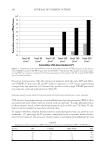
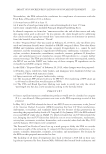
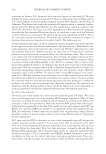
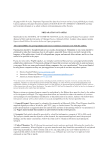
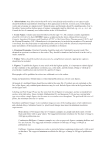
JOURNAL OF COSMETIC SCIENCE 204 Prevention of pig mentation. The effectivenes s of products with the same SPF and differ- ent UVAPFs in skin type III and IV subjects exposed to a UV source representing average daily sun emission (31) showed only products with a high UVAPF prevented sun exposure–induced pigmentation (Table II). TOWARD ADAPTED SU N PROTECTION FOR PATIENTS WITH SKIN PATHOLOGY: ACNE EXAMPLE UVA increases hyp erpigmentation, and postinfl ammatory hyperpigmentation (PIH) is often associated with acne, which itself can worsen with sun exposure. To adapt photoprotection to these patients’ needs, sebum-absorbing materials such as Airlicium® (L’Oréal, Clichy, France) can be included to treat shiny and oily skin. To explore whether adapted dermocosmetics and photoprotection can prevent acne outbreaks, 337 phototype II–IV patients completing local or systemic medical treat- ment were evaluated. An anti-acne dermocosmetic including anti-infl ammatory and Tabl e II Pigmentation Protection Factor (PPF) Afforded by Sunscreens with Different SPF-to-UVAPF Ratio Product SPF UVAPF SPF/UVAPF PPF A 30 15 2 18.9 B 30 9 3.3 9.0 C 50 21 2.4 58.9 D 50 13 3.8 22.3 Figure 4. Comparison of two high SPF 50+ products with different levels of UVA protection in the preven- tion of PMLE reactions [UVA-PF 28 (grey bar) and UVA-PF 17 (black bar)]. The number of patients experi- encing PMLE according to cumulated UVA dose was greater for the lower UVA-PF instead SPF/UVAPF was 3 for both products.
Purchased for the exclusive use of nofirst nolast (unknown)
From: SCC Media Library & Resource Center (library.scconline.org)