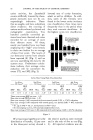
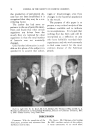
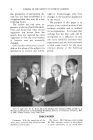
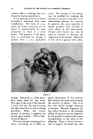
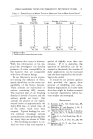
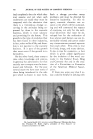
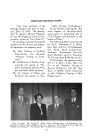
78 JOURNAL OF THE SOCIETY OF COSMETIC CHEMISTS the production of periodontal dis- ease has not been established it is recognized that they may be a con- tributing factor. The author has had some ex- perience in the use of penicillin denti- frices and found that when certain organisms are driven from the mouth they are replaced by other organisms so that the total number of bacteria was not materially changed. Until further information is avail- able on this phase of the subject it is speculative to assume that advan- tages or disadvantages arise from changes in the bacterial population in the mouth. The purpose of this paper is to present a very critical analysis of the evidence available and to indicate its incompleteness. It is hoped that nothing that has been said will be interpreted as a reflection on any who have faithfully recorded their experiments and who work earnestly to find some control for the most common disease of the American people. .. ..t (Left to right) Dr. R. G. Kesel, Dr. S. D. Gershon, Dr. Thomas J. Hill, and Dr. C. J. Henschel at Symposium on Ammoniated Dentifrices, SOCiEa'¾ or COSMETIC CHEMISTS, Dec. 8, 1949.--Photo courtesy Drug Trade News DISCUSSION CHAIRMAN: With the completion of the third paper, questions and comments from the floor are now in order. DR. GLASS: Mr. Chairman, after hearing Dr. Hill's excellent analysis of this subject, it seems unnecessary to say much more.

EVALUATING EVIDENCE ON AMMONIUM DENTIFRICE THERAPY 79 However, there are a few things that I would hke to point out. From the tone of this meeting and advertisements in newspapers and magazines, one would think that Lacto- bacilli are the only acidogenic bacteria in the mouth, and that ammoniated dentifrices are the only answer to the caries problem. The basis for the use of ammoniated denti- frices is largely the reduction in Lactobacilli counts observed following the use of am- monium compounds. The relation between Lactobacilli and caries activity has never been proved recently it has become subject to more and more question. Counts from an individual vary considerably at different times of the day. Furthermore, the studies of the Iowa group (Proc. Soc. Exp. Biol. Med., ?is 535 (1949)) show that the Lacto- bacillus count is not a valid index of caries activity. Dr. Henschel feels that his study confirms the fact that ammoniated dentifrices will reduce dental caries. As Dr. Kesel pointed out, Dr. Henschel's system of "autocontrol" is open to question. Another factor is whether or not dental caries decreases with in- creasing age many investigators feel that it does. If this is true the autocontrol is not valid, since a natural reduction in caries will result anyway. I would like to ask Dr. Henschel ira group of dentists and not just one dentist per- formed the examinations in his study ? Dr.. HE•rscuEL: No, just one dentist. D•.. GLxss: No, the paper was reported, I believe, in the June issue of the 7ournal of Dental Research. Did statistical analysis show that this was significant ? D•.. HENscuuL: Yes, it does there is a statistical expert here whom you may con- sult. D•.. GLAss: All right, thank you. CUA•v.•a•N: Will the gentleman standing please state his name and question? D•.. LF•mco•xz: Perhaps I can clarify some of the doubts that exist on the action of a urea-ammoniated dentifrice on the soft tissues of the mouth. I have just completed a study on twenty patients who applied a toothpaste containing 13% urea and 3% dibasic ammonium phosphate to the soft tissues of the mouth in addition to their nor~ mal hygiene habits. By that I mean, that they were permitted to continue • brushing their teeth as they had previously. The am- moniated dentifrice was also applied as an ointment twice daily. This was done under supervision. Biopsies were taken before the experiment. A second biopsy was taken a month later. There may be objection to the number of cases or the length of time given the test. The areas chosen for examination included both normal and pathological gingiva. I can say that for the time of exposure to the am- moniated dentifrice and the manner in which it was used, there was no significant change in the gingiva. Cu•v.•a•: Are there any other com- ments from the floor ? MR. D•N•v.•.•.s: I would like to know if Dr. Henschel made any tests to determine the effect of "high urea" content on the enzyme activity of the mouth, from the use of this type of dentifrice, and what the prolonged effect is on the combination of both urea and free ammonium ion on the oral mucosa ? D•.. H•sc•EL: I would like to see a stop to the phrase "high urea" right here and now, just because it is almost meaningless. By high urea, we mean a 3 to 5 per cent con- centration of active ingredients in the mouth. It is not what we mean in a bottle. We have to make a very sharp distinction between the formula percentage in a bottle or in a can, and what happens when "Joe" used it in his own mouth, dumps some powder in the palm of his hand, or puts it on the toothbrush, and introduces it in the con- ventional way. Now, there is a percentage. A mucous membrane is still a mucous mem- brane, and the mucous membranes that line other parts of the body are not much dis- similar from the mucous membranes of the mouth the human body can easily tolerate up to 5 per cent of urea all over the body, and the mouth is no different. In fact, the oral tissues are a good deal more resistant to that sort of thing. So that it is not a question of high urea. It is not high urea. The so-called high urea
Purchased for the exclusive use of nofirst nolast (unknown)
From: SCC Media Library & Resource Center (library.scconline.org)